
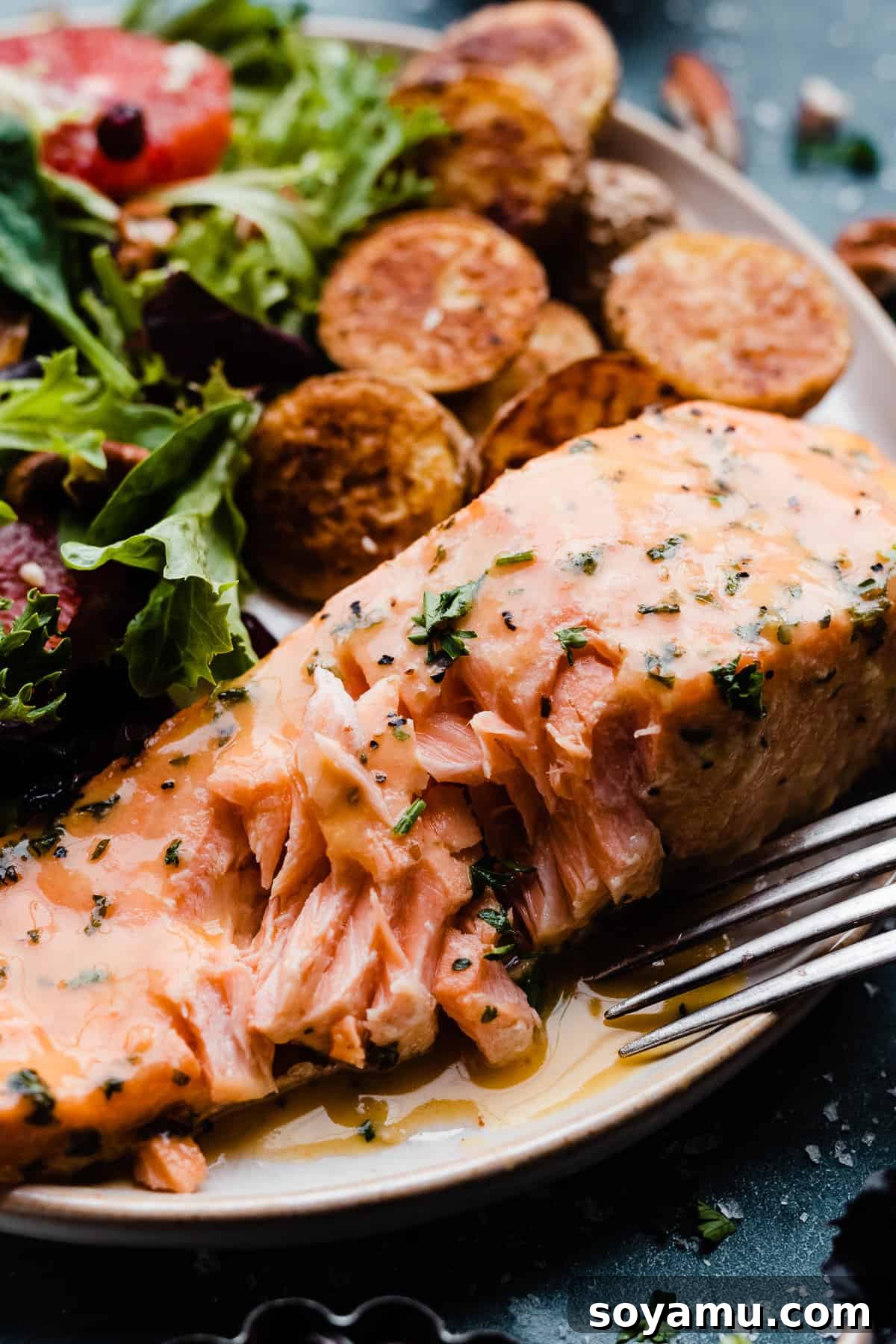
Say goodbye to complicated weeknight meals and hello to this incredible Maple Glazed Salmon with Roasted Potatoes! This recipe delivers an exceptionally easy, healthy, and utterly delicious dinner straight to your table, perfect for those busy evenings. Imagine tender, flaky salmon fillets, bathed in a sweet and savory maple mustard glaze, baking alongside golden, crispy roasted potatoes – all on a single sheet pan. This isn’t just a meal; it’s a culinary experience designed for maximum flavor with minimal effort, making it an instant family favorite.
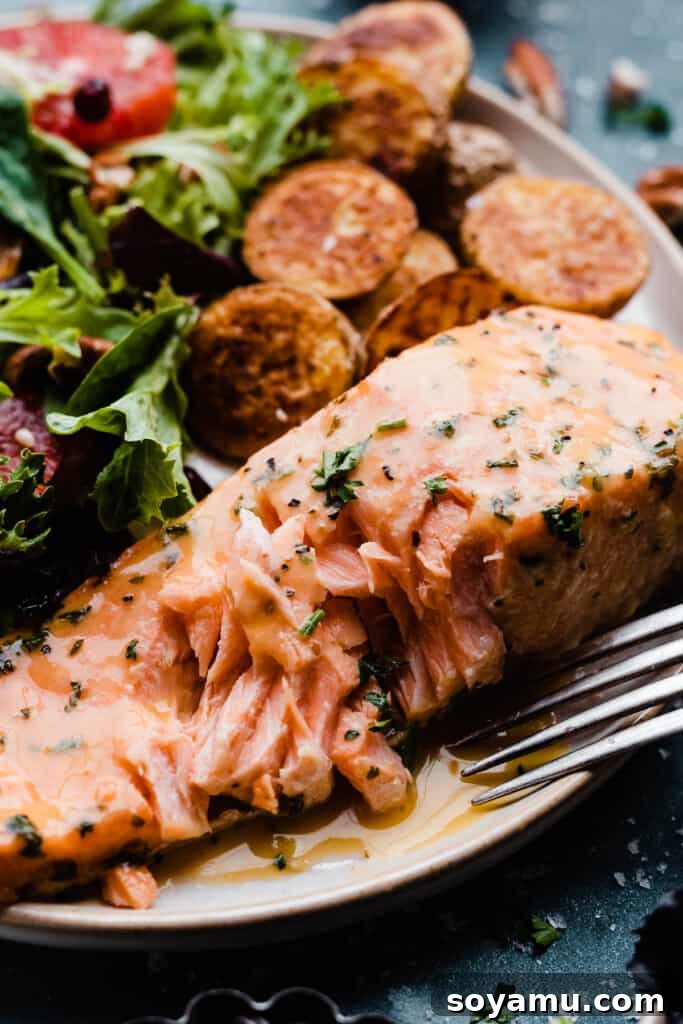
Who doesn’t adore the simplicity and efficiency of sheet pan dinners? They streamline the cooking process, reduce cleanup time significantly, and consistently yield fantastic results. This particular salmon recipe is bursting with vibrant flavors, guaranteed to satisfy even the pickiest eaters. The harmony between the rich salmon, the comforting potatoes, and that unforgettable maple mustard glaze creates a dinner that feels gourmet yet is incredibly accessible. We’re confident this will become a staple in your recipe rotation, offering a healthy and hearty option without the usual fuss. Tell us in the comments what one-pan culinary adventure you’d like to explore next!
Why This Sheet Pan Salmon Will Become Your New Favorite Dinner
There are countless reasons to fall in love with this effortless sheet pan salmon. It checks all the boxes for a perfect weeknight meal: flavor, health, and convenience. Here’s why this recipe stands out:
- Irresistible Maple Mustard Glaze: The heart of this dish is its perfectly balanced maple mustard glaze. Crafted from a handful of basic pantry staples, this simple “shake-it-up” marinade infuses the salmon with an incredible depth of sweet and savory notes. It caramelizes beautifully during baking, creating a luscious coating that’s truly the highlight of this meal and our absolute favorite way to enjoy salmon.
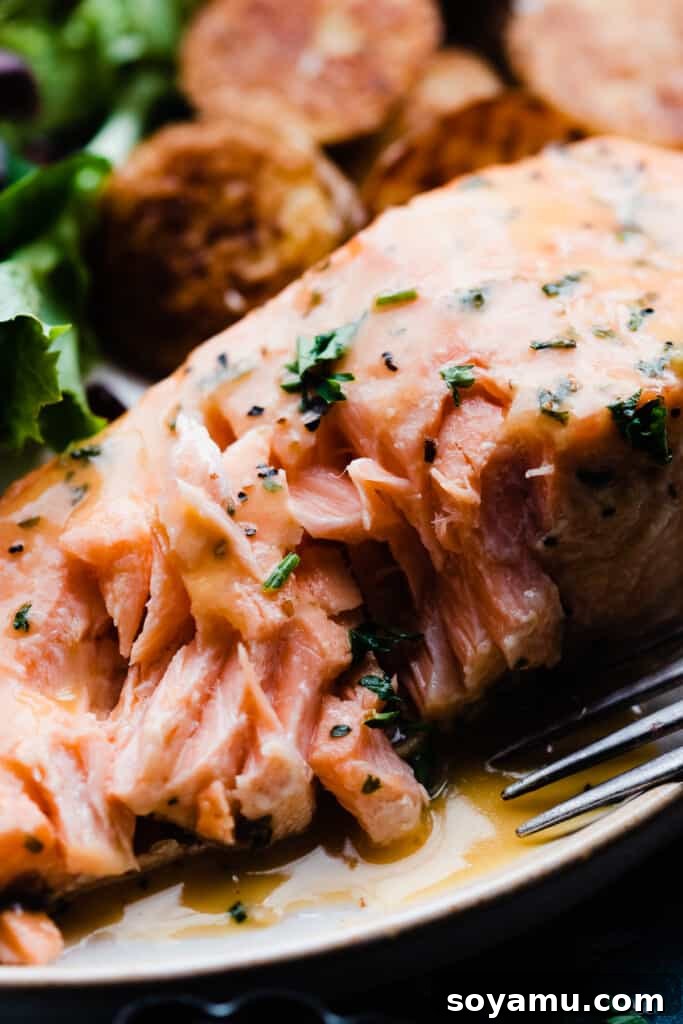
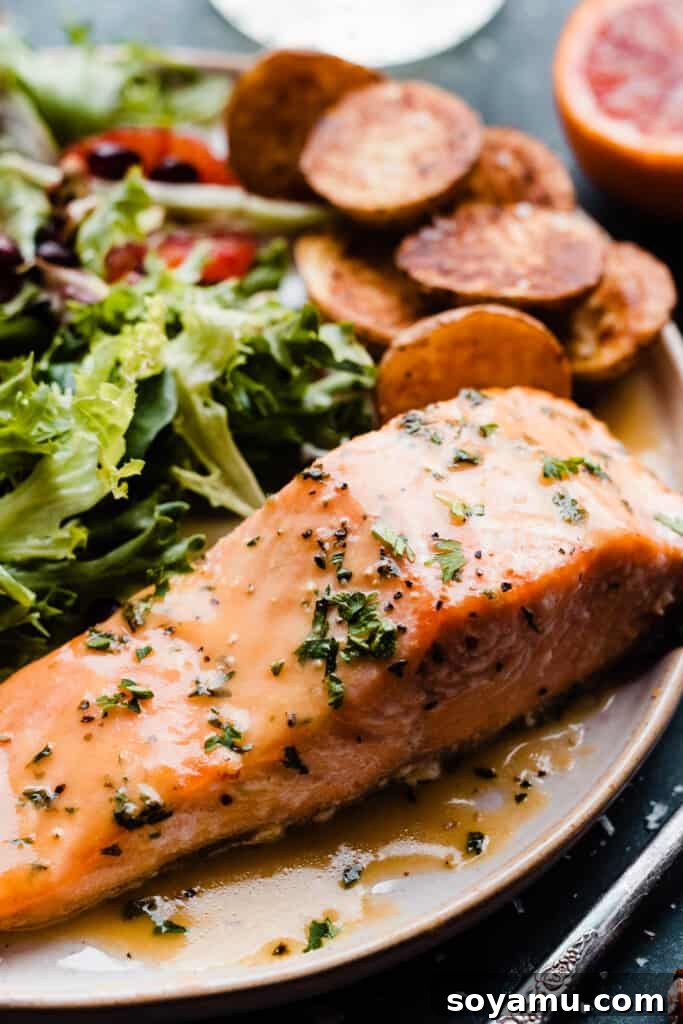
- Flawlessly Flaky Salmon: Achieving perfectly cooked salmon can sometimes feel daunting, but not with this recipe. Your salmon fillets will bake quickly to a tender, juicy, and beautifully flaky perfection. The marinade not only adds flavor but also helps keep the fish moist, ensuring every bite melts in your mouth without being overcooked or dry.
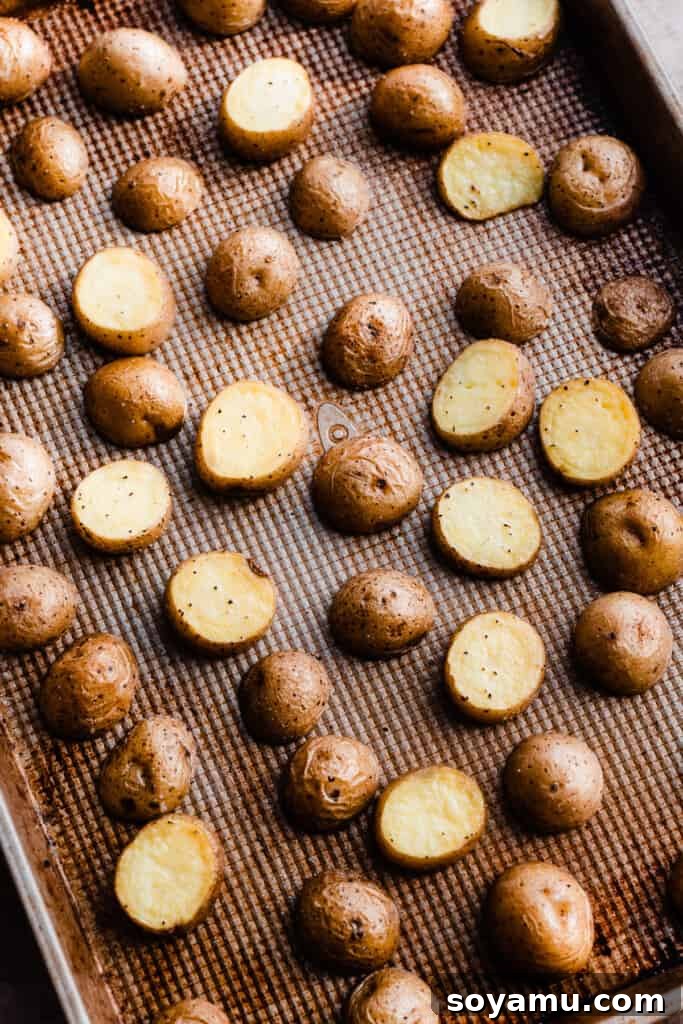
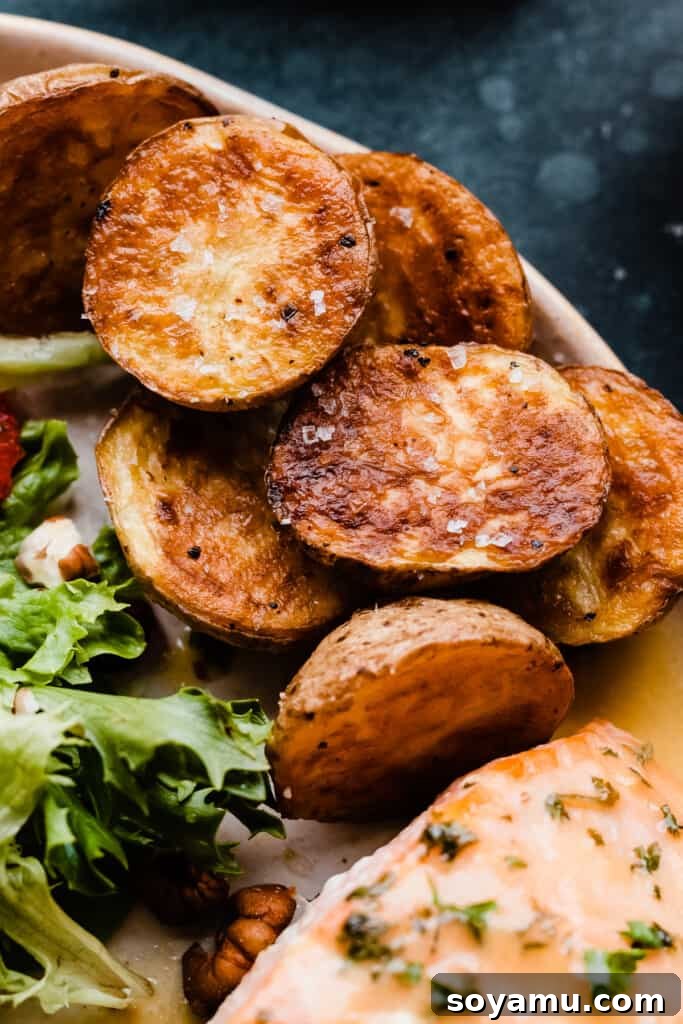
- Golden, Crispy Roasted Potatoes: No soggy potatoes here! We’ve mastered the art of roasting potatoes to achieve that ideal texture: deeply browned and delightfully crisp on the outside, yet wonderfully tender and fluffy on the inside. They absorb the savory flavors on the pan, complementing the salmon wonderfully.
- Time-Saving Sheet Pan Efficiency: This recipe is ingeniously designed for maximum efficiency. Since potatoes require a bit more time to roast than salmon, we start them first. While your potatoes begin their journey to crispy perfection, your salmon marinates, soaking up all that delicious glaze. Then, both components finish cooking together on the same pan, streamlining your dinner prep and ensuring everything is ready at the same time.
- Effortless Cleanup: The beauty of a sheet pan meal is the minimal mess. With everything cooking on one pan (lined with parchment paper for even easier cleanup), you’ll spend less time scrubbing pots and pans and more time enjoying your delicious, healthy dinner.

Key Ingredients for Your Maple Glazed Salmon
Success in cooking often starts with quality ingredients. Here’s a closer look at what you’ll need for this dish and some tips for choosing the best:
- Salmon: The star of the show! When selecting salmon fillets, look for a bright, vibrant pinkish-orange color. Avoid any fish that appears dull, discolored with gray or brown spots, or has a milky white film (which indicates protein denaturing, often from improper handling). While it’s fish, a fresh fillet should have a mild, oceanic scent, not a strong “fishy” odor, which can be a sign of spoilage. For the best flavor and texture, aim for fillets that are roughly 1 to 1.5 inches thick to ensure even cooking.
- Real Maple Syrup: This is non-negotiable for the glaze! Pure maple syrup offers a complex, warm sweetness that can’t be replicated by artificial pancake syrups. Its rich, earthy notes beautifully enhance the savory components of the glaze and caramelize perfectly on the salmon, providing that signature flavor depth.
- Honey Mustard: Our preference for its delightful balance of tang and sweetness. However, feel free to substitute with dijon mustard if you prefer a sharper, spicier kick, or even a grainy mustard for added texture. The mustard acts as an emulsifier, helping the glaze come together smoothly, and provides a crucial savory counterpoint to the maple syrup.
- Fresh Lemon Zest & Juice: Bright, zesty, and essential! Using both the zest and fresh juice from a lemon adds a vibrant burst of citrus that cuts through the richness of the salmon and the sweetness of the glaze. Lemon also helps tenderize the fish slightly and enhances all the other flavors. Don’t use bottled lemon juice for this recipe; the fresh difference is noticeable.
- Garlic Powder: A foundational flavor enhancer. A generous amount of garlic powder in both the salmon marinade and tossed with the potatoes elevates the savory profile of the entire meal. For an even more robust garlic flavor, you can absolutely substitute 1-2 cloves of fresh garlic, finely minced.
- Potatoes: Baby potatoes, like Yukon Golds, are ideal here as they only need to be halved, saving you prep time. If using larger potatoes (Yukon Gold, red, or even russet), simply cut them into uniform, bite-sized pieces (about 1-inch cubes) to ensure they cook evenly and crisp up beautifully alongside the salmon.
- Parsley: Dried parsley is convenient and works well in the marinade. If you have fresh parsley on hand and prefer its brighter flavor, use about three times the amount of dried parsley for a similar impact. Fresh parsley can also be sprinkled on top as a garnish for a burst of color and freshness right before serving.
- Olive Oil: A good quality extra virgin olive oil is used to coat the potatoes, helping them crisp up and providing a lovely richness. It’s also a key component of the salmon marinade, helping to carry the flavors.
- White Vinegar: Just a touch of white vinegar in the marinade provides a subtle tang that balances the sweetness of the maple syrup and honey mustard, enhancing the overall complexity of the glaze.
Exciting Recipe Variations to Try
While this Maple Glazed Salmon with Roasted Potatoes is fantastic as written, it’s also wonderfully adaptable. Feel free to get creative and customize it to your family’s preferences or whatever ingredients you have on hand:
- Potato Power: We love baby Yukon Gold potatoes for their creamy texture and quick prep, but don’t limit yourself! Any variety of potato will work beautifully. Try red potatoes for a slightly firmer texture, or sweet potatoes for a healthier, sweeter twist. Just remember to cut larger potatoes into roughly 1-inch, bite-sized pieces to ensure even cooking. If you opt for sweet potatoes, they might need an extra 5-10 minutes of roasting time; simply remove the salmon, tent it with foil, and return the sweet potatoes to the oven if needed.
- Garlic Butter Salmon Delight: Craving a classic? Transform this recipe by swapping out some ingredients for a rich garlic butter salmon. Replace the olive oil in the marinade with an equal amount of melted butter. Then, omit the honey mustard and white vinegar, and instead, add 2-3 cloves of freshly minced garlic to the marinade. This creates a wonderfully aromatic and indulgent alternative that’s equally delicious.
- Elevated Seasonings: Don’t hesitate to experiment with additional seasonings to personalize your meal. Before roasting, sprinkle the potatoes with a teaspoon of Italian seasoning for an aromatic herby flavor. For a cheesy upgrade, toss the potatoes with 1-2 tablespoons of freshly grated Parmesan cheese (the powdery kind, but from a block, not the shelf-stable green can!) along with the other seasonings before they go into the oven.
- Add More Veggies: This sheet pan meal is incredibly flexible for incorporating more vegetables. Asparagus, broccoli florets, bell peppers, or even cherry tomatoes can be added to the sheet pan during the last 15-20 minutes of cooking. Toss them with a little olive oil, salt, and pepper, and nestle them alongside the potatoes and salmon for a complete, vibrant meal.
Step-by-Step Guide: How to Make This Baked Salmon Recipe
Creating this delicious and healthy meal is straightforward. Follow these simple steps for perfectly cooked maple-glazed salmon and crispy roasted potatoes:
- Preheat Oven & Prep Potatoes: Begin by preheating your oven to a robust 425°F (220°C). While the oven heats, rinse your baby potatoes thoroughly and pat them dry; there’s no need to peel them. Halve the smaller ones or cut larger potatoes into uniform, bite-sized pieces (about 1-inch). Place the prepared potatoes on a large, rimmed baking sheet. Drizzle generously with olive oil, then season with a substantial sprinkle of salt, a dash of black pepper, and the garlic powder. Use clean hands to toss everything together until the potatoes are evenly coated. For now, set the baking sheet aside and don’t put it in the oven yet.
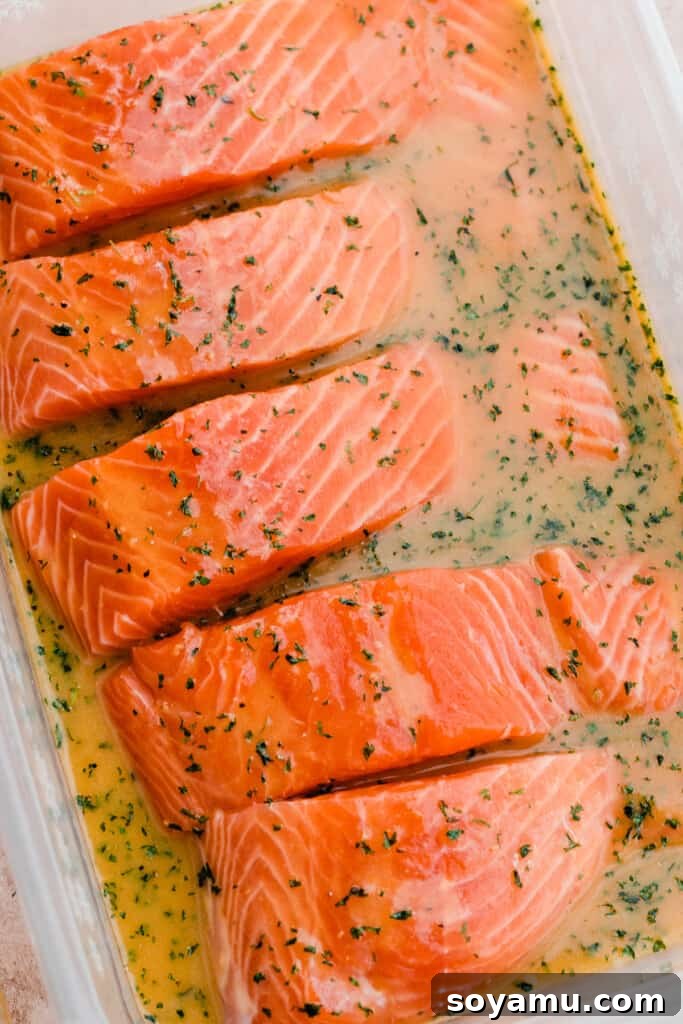
- Craft the Glaze & Marinate the Salmon: Next, prepare your salmon. Pat the salmon fillets dry with paper towels; this helps the seasoning and glaze adhere better and promotes a nicer crust. Season both sides of the salmon generously with salt and black pepper. In a small jar with a tight-fitting lid (or a sealed container), combine all the remaining marinade ingredients: maple syrup, olive oil, honey mustard, lemon zest, fresh lemon juice, white vinegar, dried parsley, and garlic powder. Seal the jar and shake vigorously until all ingredients are well combined and emulsified into a smooth glaze. Place the seasoned salmon fillets in an airtight container or shallow dish, pour the maple mustard glaze over them, ensuring each fillet is coated. Cover the container and place it in the refrigerator to marinate for 15 minutes. Crucially, as soon as the salmon is in the fridge, place your sheet pan of potatoes into the preheated 425°F (220°C) oven to begin roasting for 15 minutes.
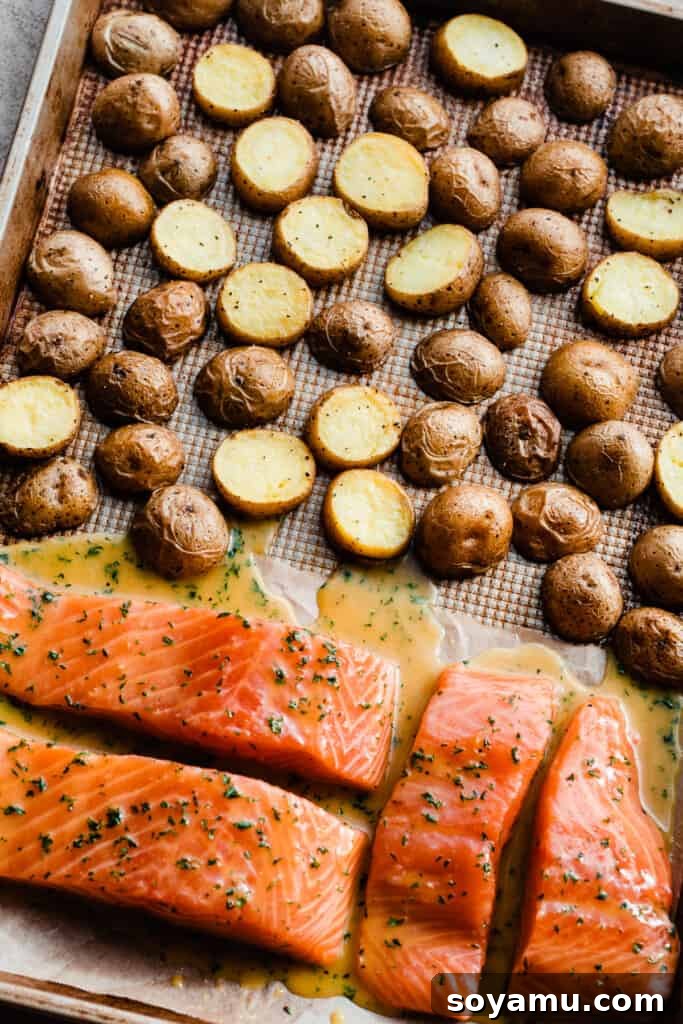
- Combine & Finish Cooking: After the potatoes have roasted for 15 minutes, carefully remove the sheet pan from the oven. At this point, the potatoes should be starting to soften and show hints of golden crispness; you should be able to easily move them with a spatula. If they seem stuck, give them another 2-4 minutes. Now, reduce the oven temperature to 400°F (200°C). Use your spatula to push the potatoes to one half of the baking sheet, creating space for the salmon. Lay a half-sheet of parchment paper on the empty side of the pan for the salmon (this prevents sticking and makes cleanup a breeze). Arrange the marinated salmon fillets, skin-side down, next to the potatoes. Drizzle any remaining excess marinade from the container over the salmon on the pan.
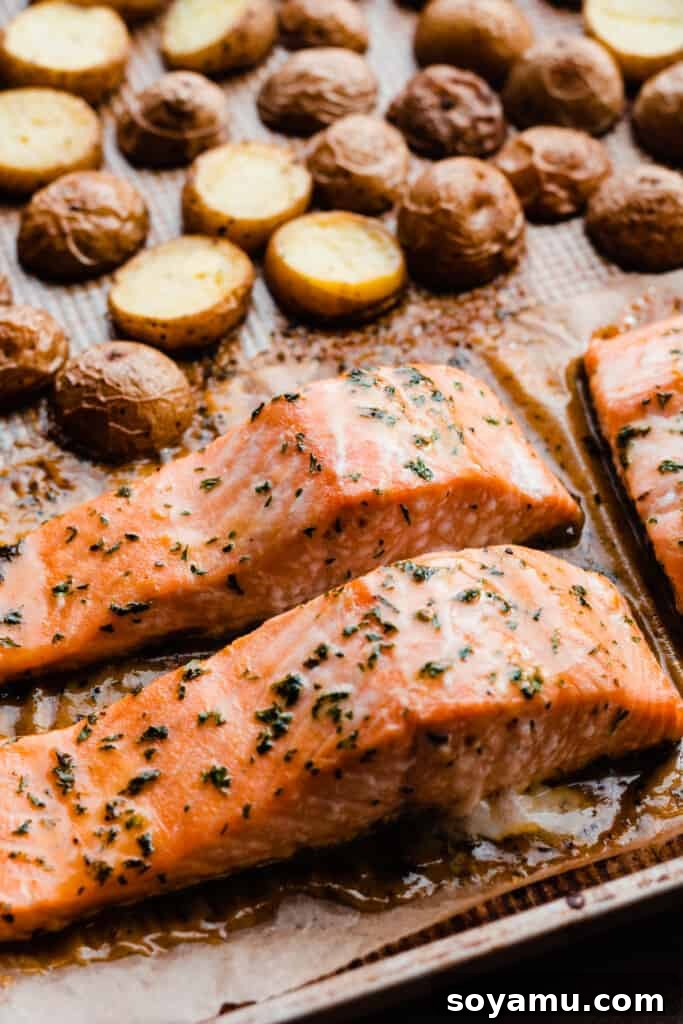
- Bake to Perfection: Return the sheet pan with both the potatoes and salmon to the 400°F (200°C) oven. Continue baking for another 10-15 minutes. The exact cooking time for salmon can vary based on thickness, so keep an eye on it. The salmon is done when it looks opaque throughout and flakes easily with a fork when gently pricked at its thickest part. For precise doneness, use an instant-read thermometer: USDA recommends 145°F (63°C), but many chefs prefer to pull it off the heat around 130-135°F (54-57°C) as it will continue to cook and rise to 140-145°F (60-63°C) while resting.
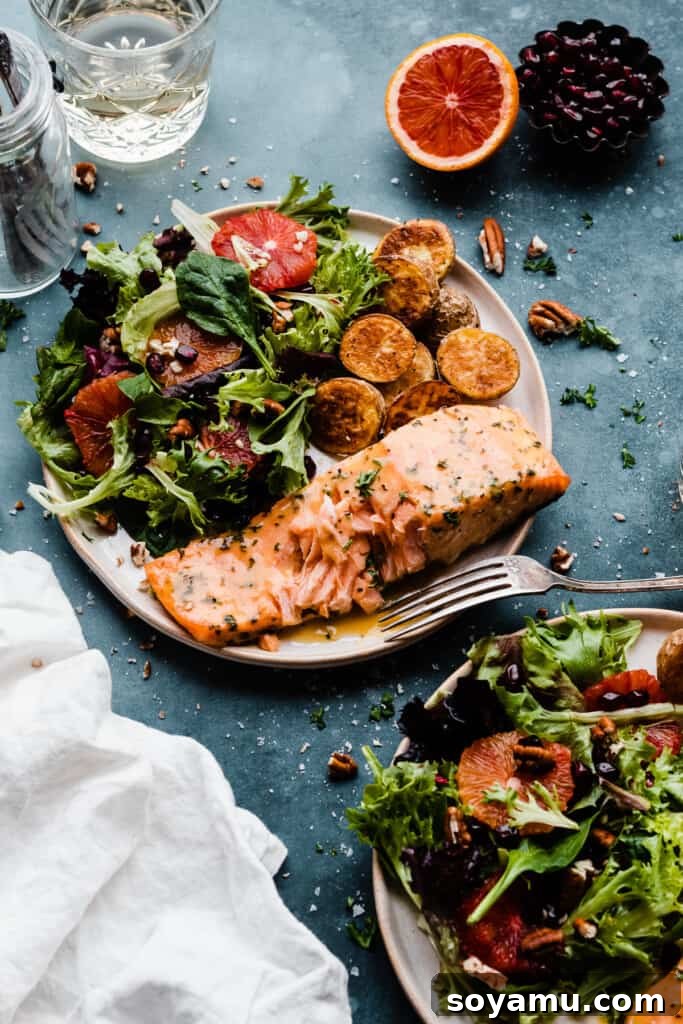
- Serve & Savor: Once cooked, immediately remove the sheet pan from the oven. Let the salmon rest for a few minutes before serving; this allows the juices to redistribute, ensuring maximum tenderness. Serve this delightful meal piping hot! It’s fantastic on its own, but pairs wonderfully with a fresh green salad tossed with a light vinaigrette, or a simple side of steamed green beans or roasted asparagus. The images feature a vibrant side salad adorned with sliced oranges and chopped pecans, offering a lovely textural and flavor contrast.
Serving Suggestions & Storage Tips
This Maple Glazed Salmon and Roasted Potatoes dish is designed to be enjoyed fresh out of the oven, when the salmon is perfectly flaky and the potatoes are at their crispiest. For a complete and balanced meal, consider these serving suggestions:
Serving Ideas:
- Simple Green Salad: A light, crisp green salad with fresh ingredients like cucumber slices, cherry tomatoes, and thinly sliced red onion offers a refreshing contrast to the rich salmon and potatoes. A simple vinaigrette is all you need.
- Roasted Vegetables: While the salmon and potatoes cook, you can easily prepare additional roasted vegetables. Try roasting asparagus or broccoli florets tossed with a little olive oil, salt, and pepper in the oven (if space allows, or on a separate smaller pan) or quickly steam some green beans on the stovetop.
- Citrus & Nuts: As seen in the photos, a side salad dressed with sliced oranges and crunchy chopped pecans adds an elegant touch and a burst of flavor and texture that complements the maple glaze beautifully.
- Garnish: A sprinkle of fresh chopped parsley or a wedge of lemon on the side adds brightness and visual appeal to the finished dish.
Storing Leftovers:
While best enjoyed fresh, leftovers can be stored. Place any remaining salmon and potatoes in separate airtight containers in the refrigerator. They will keep well for 2-3 days. To reheat, gently warm the salmon in the oven or microwave until heated through, being careful not to overcook it, as it can dry out quickly. Potatoes can be reheated in the oven or air fryer for best crispness, or simply microwaved.
Expert Tips for Perfect Results Every Time
Even for a straightforward recipe, a few expert tips can elevate your dish from good to absolutely outstanding. Pay attention to these details for the best Maple Glazed Salmon and Roasted Potatoes:
- The Marinade Method: For a perfectly emulsified and flavorful glaze, don’t try to stir the ingredients in a shallow bowl. Instead, combine all the marinade components in a jar with a tight-fitting lid. Give it a vigorous shake for about 15-20 seconds. This method ensures the oil, maple syrup, and mustard blend seamlessly, creating a uniform, delicious coating for your salmon.
- Parchment Paper is Your Friend: Always cook your salmon on a sheet pan lined with parchment paper, especially if leaving the skin on. Unlike aluminum foil, parchment paper prevents the salmon skin from sticking to the pan, ensuring easy removal and perfectly intact fillets. It also makes cleanup incredibly simple.
- Trust Your Oven Thermometer: Oven temperatures can be notoriously inaccurate, often varying by as much as 25-50 degrees from the setting. An affordable oven thermometer placed inside your oven provides real-time temperature readings, ensuring your oven is truly preheated to the correct temperature. Accurate oven temperature is vital for roasting potatoes to crisp perfection and baking salmon precisely.
- Invest in a Kitchen Scale: While not strictly necessary for this recipe, a digital food scale is a game-changer for baking and highly recommended for general cooking accuracy. Measuring ingredients by weight (especially flour in baking, but also for consistency in savory dishes) is far more precise than volumetric measuring cups, which can vary widely. It guarantees consistency in your results and helps you learn the exact quantities.
- Don’t Overcrowd the Pan: For truly crispy potatoes and evenly cooked salmon, avoid overcrowding your baking sheet. Giving each piece enough space allows for proper air circulation, preventing steaming and promoting browning. If you’re doubling the recipe, use two separate sheet pans.
- Pat Your Salmon Dry: Before seasoning and marinating, always pat your salmon fillets thoroughly dry with paper towels. Excess moisture on the surface of the fish will steam rather than sear or caramelize, preventing that lovely golden crust and flavor development.
- Rest the Salmon: Just like with other meats, letting your salmon rest for 5-10 minutes after it comes out of the oven is crucial. This allows the internal juices to redistribute throughout the fillet, resulting in a more tender, moist, and flavorful piece of fish.
Frequently Asked Questions About Maple Glazed Salmon
The USDA recommends cooking salmon to an internal temperature of 145°F (63°C) for food safety. However, many chefs and home cooks prefer a slightly less cooked salmon for a more tender, moist texture. You can typically remove the salmon from the oven when it reaches about 130-135°F (54-57°C) because it will continue to cook as it rests (carryover cooking) and should reach the recommended 145°F (63°C) after resting for a few minutes. If you prefer your fish very well done or have concerns about doneness, cook it until it reaches 140-145°F (60-63°C) directly in the oven. Always use an instant-read thermometer inserted into the thickest part of the fillet.
Selecting fresh salmon is key to a delicious meal. Look for fillets that have a bright, vibrant pink or orange color, depending on whether it’s wild-caught (darker pink/red) or farmed (lighter pink). The flesh should look moist, firm, and spring back when gently pressed. Avoid any salmon with gray blemishes, brown spots, or a milky, white film, which are signs of age or improper handling. Most importantly, fresh salmon should smell clean and mild, like the ocean, not overtly “fishy,” sour, or like ammonia – these strong odors indicate the fish has spoiled.
Yes, this recipe is quite flexible and can be easily doubled or halved to suit your needs. If you’re doubling the recipe, we highly recommend using two separate large sheet pans to avoid overcrowding. Overcrowding the pan can lead to steamed rather than crispy potatoes and unevenly cooked salmon. For simplicity, you can still start both pans of potatoes first, then add the salmon to both pans after the initial potato roasting time. When halving the recipe, simply divide all ingredient quantities by two and adjust the pan size accordingly.
Beyond using an instant-read thermometer to check the internal temperature (aim for 130-145°F), there are visual cues to look for. Cooked salmon will turn opaque throughout its flesh, losing its translucent, raw appearance. Additionally, when gently flaked with a fork at its thickest point, the salmon should separate easily. The timing can vary based on the thickness of your fillets, so always rely on these indicators rather than strict cooking times alone to prevent overcooking.
Unlike sturdier meats like chicken or beef, fish is much more delicate and can become mushy if marinated for too long, especially with acidic ingredients like lemon juice and vinegar. We recommend marinating salmon for a maximum of 1 hour. For this recipe, marinating for 15 minutes while the potatoes pre-roast is perfectly sufficient to infuse it with delicious flavor without compromising its texture.
There are several excellent types of salmon available. If you’re looking for wild-caught options, focus on Pacific salmon varieties. Atlantic salmon is exclusively farm-raised. Here are some popular choices:
- King Salmon (Chinook): Known for its rich, buttery flavor and velvety texture, often considered the most luxurious and most expensive type.
- Sockeye Salmon: Distinctive for its deep red color and firm texture. It’s high in healthy omega-3 fatty acids, though slightly less fatty than King salmon, and has a robust, distinct flavor.
- Coho Salmon (Silver): Has a milder flavor and lighter color than King or Sockeye, making it a great choice for those new to cooking fish or who prefer a less intense flavor. It’s still rich in nutrients and a versatile option.
Each type offers a slightly different experience, so don’t hesitate to try a few to find your favorite!
Helpful Kitchen Tools for Sheet Pan Success
While you don’t need a gourmet kitchen to make this recipe, a few key tools can significantly enhance your cooking experience and results:
- Quality Sheet Pans: Half sheet pans (18×13 inches) are indispensable for sheet pan dinners, baking cookies, roasting vegetables, and so much more. Investing in a couple of sturdy, heavy-gauge aluminum sheet pans will serve you well for years, ensuring even heat distribution and preventing warping.
- Instant Read Thermometer: The absolute best way to ensure your salmon (or any meat) is cooked to perfection without being overcooked or undercooked is an instant-read thermometer. It provides quick, accurate temperature readings, giving you confidence and consistency in your cooking. This is especially crucial for delicate proteins like fish.
- Parchment Paper: While not technically a “tool,” parchment paper is a must-have for this recipe. It prevents sticking, aids in easy cleanup, and helps delicate foods like salmon maintain their shape and moisture.
- Jar with a Lid: For the marinade, a simple jar with a tight-fitting lid (like a mason jar) is incredibly useful for shaking up the ingredients to create a perfectly emulsified glaze.
More Healthy & Delicious Dinner Inspiration
If you loved the ease and flavor of this Maple Glazed Salmon, you’ll be thrilled to discover more healthy and satisfying dinner ideas. Here are a few to get you started:
- Roasted Heirloom Tomato Basil Soup: A comforting and fresh soup, perfect for a light meal or appetizer.
- Classic Taco Salad with Cilantro Lime Dressing: A vibrant, customizable salad packed with flavor and healthy ingredients.
- Easy Margherita Flatbread Pizzas: Quick, personal pizzas that are simple to make and always a hit.
- Lamb Chops with Smashed Potatoes: An elegant yet approachable meal featuring tender lamb and flavorful potatoes.
- Cornbread Taco Casserole: A hearty and comforting casserole that combines classic taco flavors with a golden cornbread topping.
- One-Pot Lamb Barbacoa Tacos: Flavorful, slow-cooked lamb in a single pot, perfect for delicious tacos.
Did you make this recipe? Share your thoughts and leave a star rating below!
Your feedback is invaluable and helps our small business immensely. Thank you for cooking with us!
One Pan Maple Glazed Salmon with Roasted Potatoes
Ingredients
For the Potatoes
- 24 ounces baby golden potatoes, See Note below
- 1 tbsp olive oil
- generous sprinkle salt, to taste
- 1 tsp garlic powder
- shake of pepper, to taste
For the Salmon:
- 2 lbs salmon filets
- generous shake salt, to taste
- sprinkle of black pepper, to taste
- 2 tbsp maple syrup, 40 grams
- 3 tbsp olive oil
- 2 tbsp honey mustard
- zest of 1 large lemon
- 1 tbsp freshly squeezed lemon juice
- 1 tbsp white vinegar
- 1 and 1/2 tsp dried parsley
- 1 tsp garlic powder
For Serving
- fresh greens or a vegetable of your choice (green beans or asparagus pair beautifully!)
Instructions
-
Preheat Oven: Preheat your oven to 425℉.
-
Prep the Potatoes: Rinse and dry your potatoes (no need to peel). Halve them (or cut into bite sized pieces, similar to the size pictured) and place on a large rimmed baking sheet. Drizzle with olive oil, then add a generous sprinkle of salt, a little pepper, and the garlic powder. Toss everything together with clean hands. Don’t stick them in the oven yet. Prep the salmon first (see below).24 ounces baby golden potatoes, 1 tbsp olive oil, generous sprinkle salt, to taste, shake of pepper, to taste, 1 tsp garlic powder
-
Marinate the Salmon: Pat your salmon filets dry (if you purchased one large filet, slice it into filets similar in size to my photos. Sprinkle with salt and pepper. Add the remaining marinade ingredients (the maple syrup through the garlic powder) to a jar. Seal the lid tightly, then shake well to combine. Place the salmon in a tupperware, and pour the marinade over the filets. Cover and place in the fridge for 15 minutes while the potatoes bake. Add the potatoes to the preheated oven once you stick the salmon in the fridge – cook them for 15 minutes to begin.2 lbs salmon filets, generous shake salt, to taste, sprinkle of black pepper, to taste, 2 tbsp maple syrup, 3 tbsp olive oil, 2 tbsp honey mustard, zest of 1 large lemon, 1 tbsp freshly squeezed lemon juice, 1 tbsp white vinegar, 1 and 1/2 tsp dried parsley, 1 tsp garlic powder
-
Add Salmon to Oven & Finish Cooking: Once the potatoes have cooked for 15 minutes and the salmon has simultaneously marinated for 15 minutes, pull the potatoes from the oven. If the potatoes are ready, they’ll move easily when you try to use a spatula on the pan to flip them. If not, give them 2-4 more minutes.
Reduce oven temperature to 400℉.
Use a spatula to flip your potatoes and slide them together to make room on half the pan for the salmon. (If all your salmon doesn’t fit, that’s ok! Just grab a second pan.) Place a half sheet of parchment paper down for the salmon to cook on.
Place the salmon filets, skin side down, next to the potatoes, and drizzle some of the excess marinade over the salmon on the pan. Pop the potatoes & salmon back in the 400 ℉ oven for 10-15 minutes. Check salmon in the thickest part for an internal temperature of 145 ℉ for well done, or 125 ℉ for medium (the temperature will rise to 140/145 as the salmon rests out of the oven).
-
Serve & Store: Serve immediately! Serve with a vegetable like steamed green beans, or a simple side salad with fresh greens and sliced apples or oranges.
Store leftover salmon and potatoes each in their own airtight container in the fridge, for 2-3 days. Reheat leftovers as desired.
Notes
Nutrition
Nutrition information is automatically calculated, so should only be used as an approximation.
Like this? Leave a comment below!