
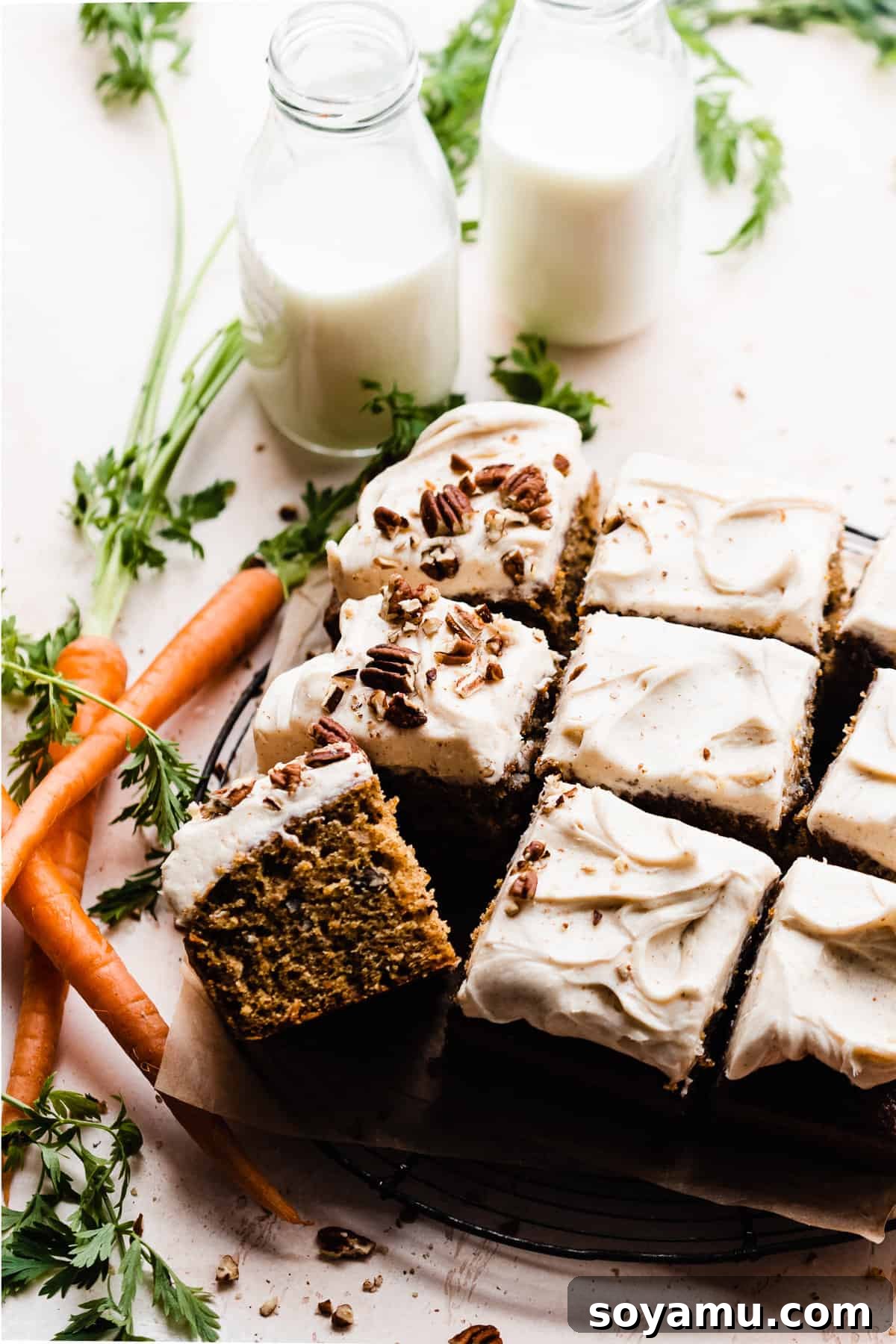
Indulge in the pure delight of our **Mini Carrot Cake**, a remarkably moist and fluffy dessert that comes together effortlessly in a single bowl. This recipe is a celebration of cozy spices, finely grated fresh carrots, and a satisfying crunch from chopped nuts, all perfectly balanced to create a truly irresistible treat. Crowned with a luxurious, silky smooth Brown Butter Cream Cheese Frosting, each slice offers a symphony of flavors and textures, making it an ideal companion to a cold glass of milk or a warm cup of coffee.
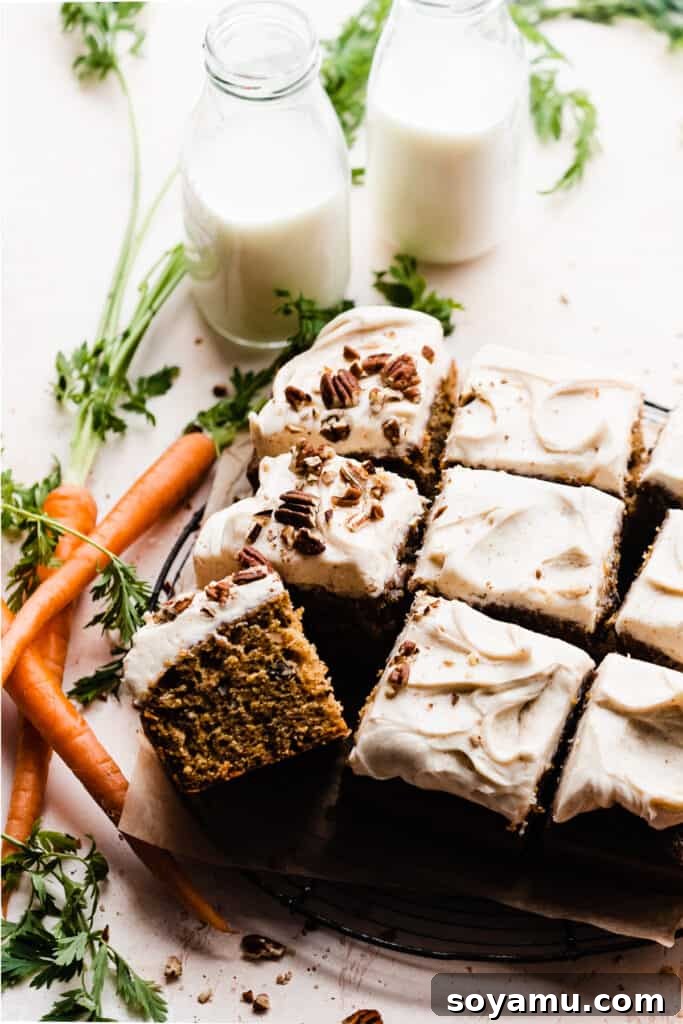
This classic recipe, originally shared in April 2022, has been meticulously updated to ensure an even more moist and tender cake. We’ve fine-tuned the flour ratio and optimized the mixing technique, resulting in a plush, incredibly flavorful carrot cake that will quickly become your go-to!
Why This Mini Carrot Cake Will Become Your Favorite
This 9-inch square cake is specifically designed to be accessible and rewarding for bakers of all skill levels, even those just starting their baking journey. What makes this Mini Carrot Cake truly special is its exceptional moistness and tender crumb, infused with a harmonious blend of warm spices. But the magic doesn’t stop there – it’s generously topped with what we confidently declare the most delectable Brown Butter Cream Cheese Frosting you’ll ever taste. It’s perfect for intimate celebrations, Sunday brunches, or simply satisfying that sweet craving without committing to a large, multi-tiered dessert. Its compact size ensures every slice is fresh and delightful.
Essential Ingredients for Your Perfect Small-Batch Carrot Cake
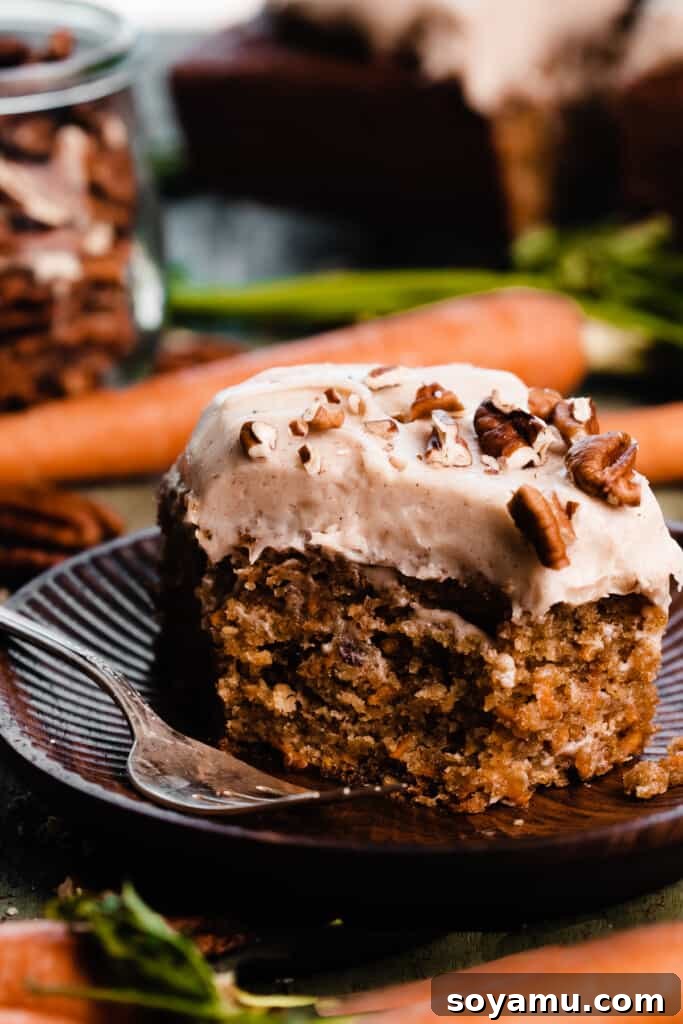
Crafting this delightful small-batch carrot cake begins with selecting the right ingredients. Each component plays a vital role in achieving the cake’s signature moist texture and rich, spiced flavor. Below is an overview of the key ingredients; precise measurements and detailed instructions are provided in the recipe card at the bottom of this page.
- Sour Cream: This is a secret weapon for moisture and tenderness. Always use full-fat sour cream and ensure it’s at room temperature before mixing. Room temperature ingredients emulsify better, leading to a smoother, more consistent batter and a finer cake crumb.
- All-Purpose Flour: Proper flour measurement is paramount to avoid a dry cake. For best accuracy, spoon your flour into the measuring cup, then level it off with a flat knife. Alternatively, using a kitchen scale to weigh your flour (183 grams for this recipe) guarantees precise results, preventing the common pitfall of over-flouring from scooping directly.
- Carrots: The star of the show! Freshly grated carrots are essential. Grate them as finely as possible using either a box grater’s small holes or the grater attachment of a food processor. Finely grated carrots melt into the cake, distributing moisture and flavor evenly without creating large, chewy chunks. Got extra carrots? Use them to whip up our equally delicious Carrot Cake Cookies!
- Butter: For both the cake and the frosting, butter adds richness. We highly recommend using salted butter for its superior flavor profile that beautifully complements the sweet and spicy notes of the cake. If unsalted butter is your preference, feel free to use it, perhaps adding a tiny extra pinch of salt to the batter.
- **Eggs:** Ensure your eggs are at room temperature. This helps them incorporate more easily with other ingredients, creating a more cohesive batter and a lighter, airier cake texture.
- **Sugars (Dark Brown & Granulated):** The combination of dark brown sugar and granulated sugar provides depth of flavor and moisture. Dark brown sugar adds a subtle molasses note and extra moisture, while granulated sugar contributes to the cake’s tender structure.
- **Vegetable Oil:** Oil is key for a super moist cake that stays fresh longer than butter-based cakes. It ensures a tender crumb and prevents dryness.
- **Vanilla Extract:** A touch of vanilla enhances all the other flavors in the cake and frosting, adding a warm, aromatic note.
- **Baking Powder & Baking Soda:** These leavening agents work in harmony to give the cake its light and fluffy rise. They react with the acidic sour cream and brown sugar to create the perfect texture.
- **Spices (Cinnamon, Ground Ginger, Nutmeg, Ground Cloves):** This quartet of warm spices defines the classic carrot cake flavor. They infuse the cake with an inviting aroma and a comforting, complex taste.
- **Milk:** Room temperature milk helps bring the batter to the right consistency and aids in the emulsification process.
- **Pecans:** Chopped pecans add a delightful nutty crunch and an extra layer of flavor. They are optional but highly recommended.
Adapt Your Carrot Cake: Easy Recipe Substitutions
This Mini Carrot Cake recipe is wonderfully adaptable, allowing you to tailor it to dietary needs or personal preferences without sacrificing flavor or texture. Here are some trusted substitutions:
- Dairy-Free Alternatives: To transform this into a dairy-free delight, simply swap out the sour cream for your favorite trusted dairy-free yogurt (plain, unsweetened) or a high-quality dairy-free sour cream alternative. For the butter, use a plant-based butter substitute that bakes well, and opt for a dairy-free cream cheese for the frosting. For the milk, any dairy-free milk (almond, soy, oat) at room temperature will work perfectly. Please note: while many bakers have success with these swaps, I have not personally tested all combinations in this specific recipe.
- Nut Variations: Not a fan of pecans? No problem! Feel free to use chopped walnuts instead, which offer a similar earthy flavor and textural contrast. If you have nut allergies or simply prefer a nut-free cake, you can omit the nuts entirely. The cake will still be incredibly delicious and moist. Alternatively, try toasted coconut flakes for a different kind of texture and tropical flavor.
- Spice Adjustments: While the spice blend provided is classic, you can adjust it to your liking. Love cinnamon? Add a little more! Prefer a hint of cardamom? A quarter teaspoon can add a fragrant twist. Experiment to find your perfect balance.
- Sweetness Level: If you prefer a less sweet frosting, you can slightly reduce the amount of powdered sugar in the Brown Butter Cream Cheese Frosting. Start by using 1.5 cups and add more incrementally until you reach your desired sweetness and consistency.
Step-by-Step Guide: Crafting Your Perfect Mini Carrot Cake
Follow these simple steps to create a truly unforgettable Mini Carrot Cake. The process is straightforward, ensuring delicious results even for novice bakers.
Step 1: Master the Art of Browning Butter. This crucial first step infuses your frosting with an incredible depth of nutty, caramel-like flavor. Begin by melting your cubed butter over medium heat in a light-colored, nonstick pot or pan (a light pan helps you monitor the color changes). Continue cooking, stirring constantly with a whisk or spatula. The butter will first melt, then foam up. As it cooks further, the milk solids will separate and begin to turn golden, then a rich, toasty brown at the bottom of the pan, releasing a wonderfully nutty and caramely aroma. This is the sweet spot! As soon as it reaches a deep golden-brown hue, immediately remove it from the heat to prevent burning and pour it into a heat-safe container. Allow this liquid gold to cool completely to room temperature. It needs to return to a semi-solid, softened butter consistency before you can cream it for the frosting. You can even refrigerate it to speed up the process, but let it soften again before use.
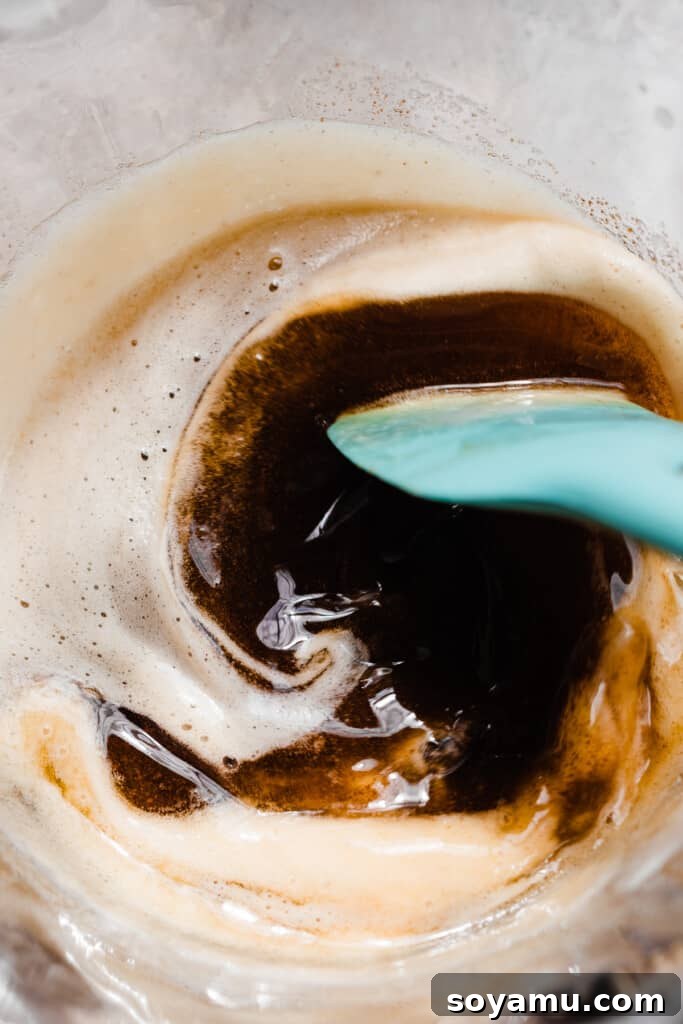
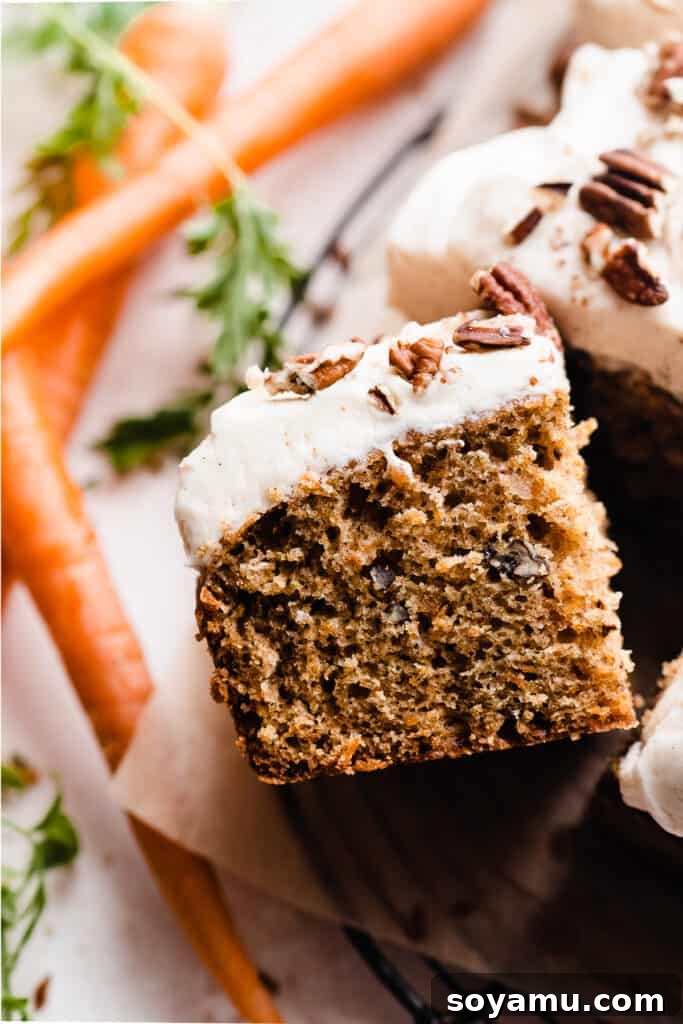
Step 2: Prepare the Moist Carrot Cake Batter. In a large mixing bowl, begin by beating together the room temperature eggs and both sugars (dark brown and granulated) until the mixture becomes light, pale, and thick. This aeration step is crucial for a tender cake. Next, whisk in the vegetable oil, room temperature sour cream, and vanilla extract until everything is smoothly combined. In a separate bowl, briefly whisk your dry ingredients (flour, baking powder, baking soda, salt, cinnamon, ginger, nutmeg, cloves) to ensure they are well distributed. Gently fold half of the dry ingredients into the wet mixture, then pour in the milk, finely grated carrots, and chopped pecans. Add the remaining dry ingredients and continue to fold everything together with a silicone spatula just until no streaks of flour remain. Be careful not to overmix, as this can lead to a dense cake. A few small lumps are perfectly fine and indicate a tender crumb is on its way!
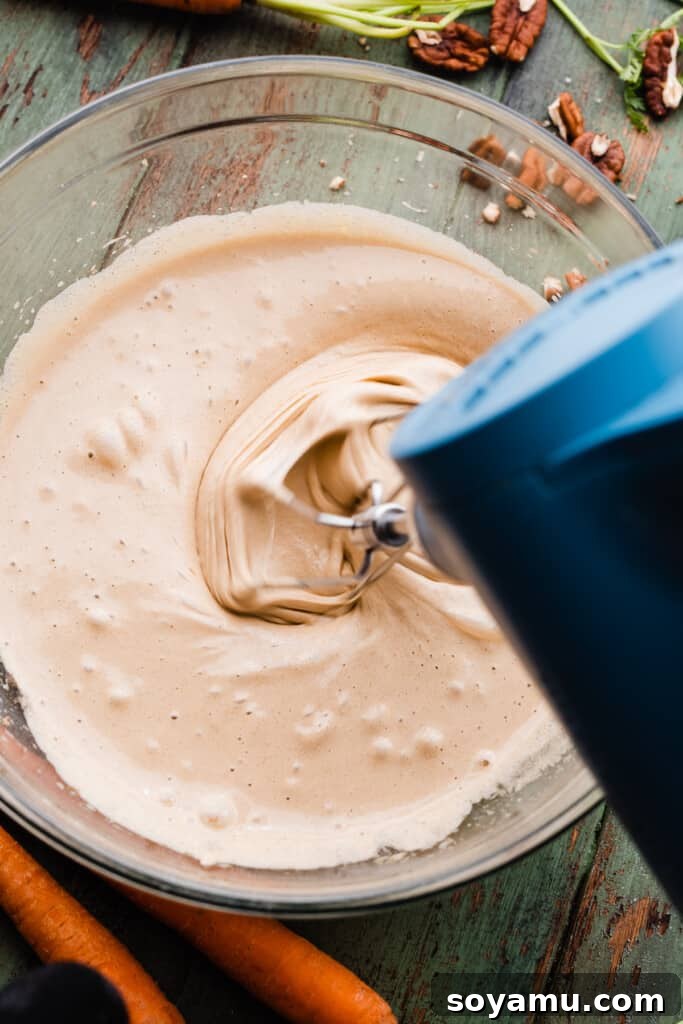
The batter might appear quite thin at this stage, but don’t worry – this is exactly how it should be to achieve that signature moistness and tender crumb!
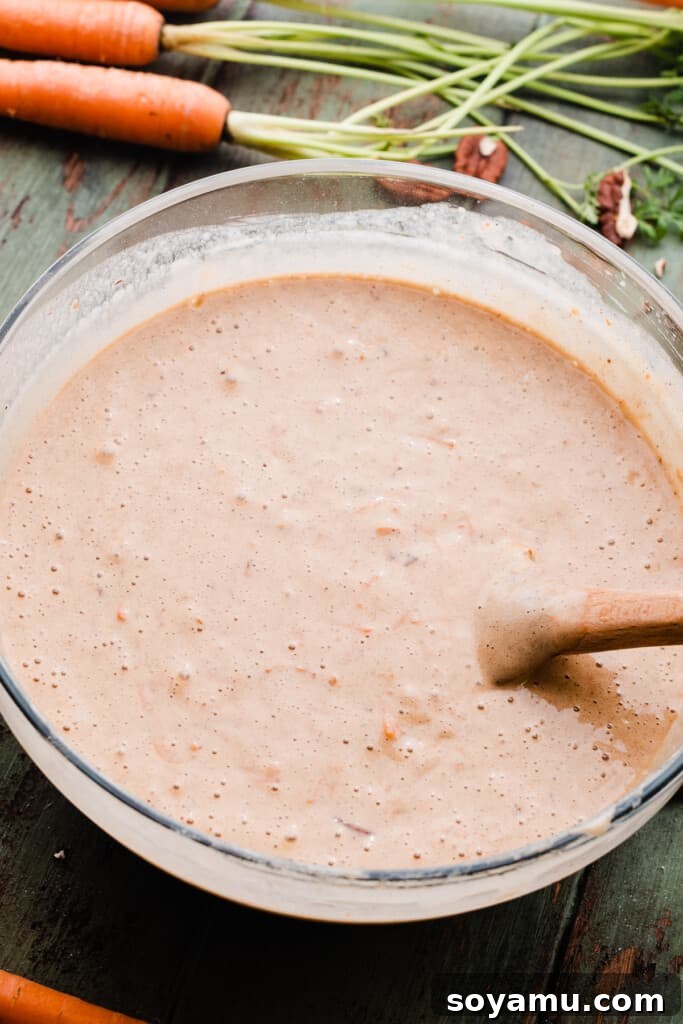
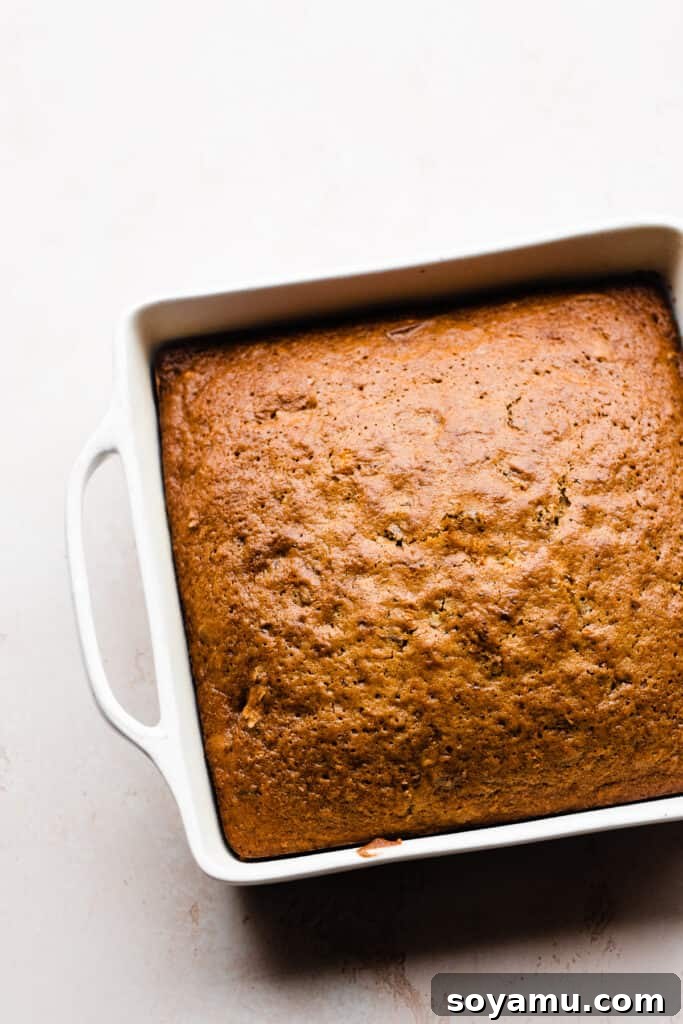
Step 3: Bake Your Delicious Carrot Cake. Pour the prepared batter evenly into your greased and floured 9-inch square baking pan. Bake the cake in your preheated oven exactly as specified in the recipe card below. Baking times can vary slightly depending on your oven, so keep an eye on it. The cake is ready when a wooden skewer or toothpick inserted into the center comes out clean or with a few moist crumbs clinging to it – avoid any wet batter. Once baked, let the cake cool in the pan on a wire rack for about 10 minutes before carefully inverting it onto a plate, then flipping it right-side-up onto the cooling rack. This allows for even cooling and prevents the bottom from becoming soggy. Ensure the cake is completely cool before frosting to prevent the frosting from melting.
Step 4: Prepare the Irresistible Brown Butter Cream Cheese Frosting. In a large mixing bowl, combine your cooled brown butter (which should now be back to a softened, spreadable consistency) with cold cream cheese. Beat these two ingredients together with an electric mixer on high speed until they are well combined and smooth, about one minute. Then, gradually add the powdered sugar, a teaspoon of vanilla extract, a pinch of salt, and a pinch of cinnamon. Continue beating until the frosting is wonderfully creamy and light. If the frosting seems too stiff, you can add 1-2 teaspoons of milk (or dairy-free milk) to achieve the perfect spreading consistency. Always taste and adjust seasonings; the salt and cinnamon are crucial for balancing the sweetness and enhancing the overall flavor profile of the frosting.
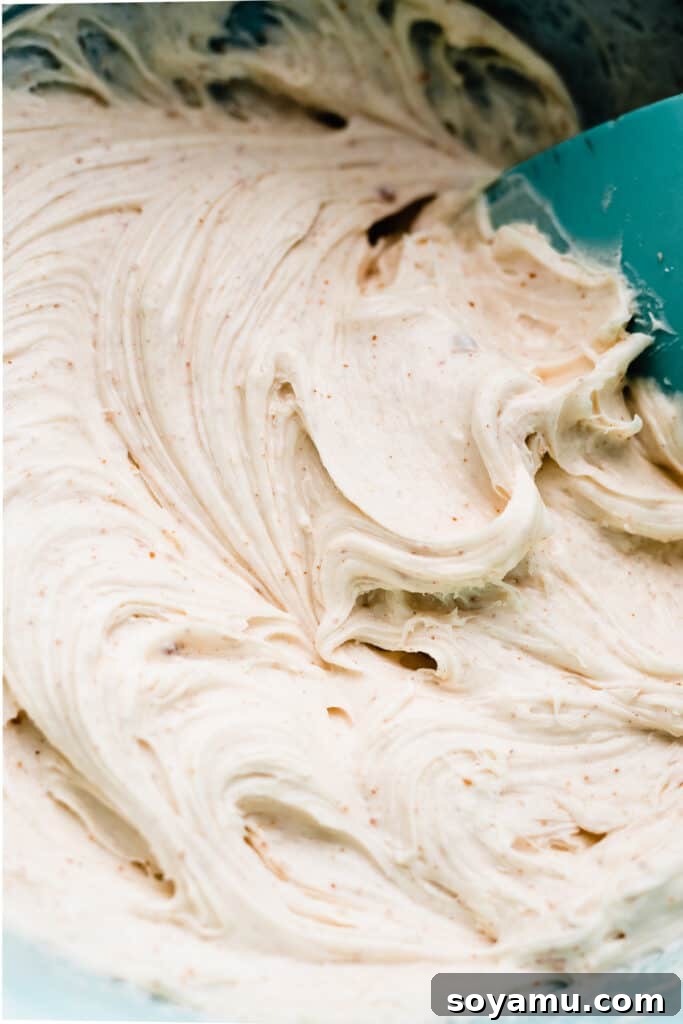
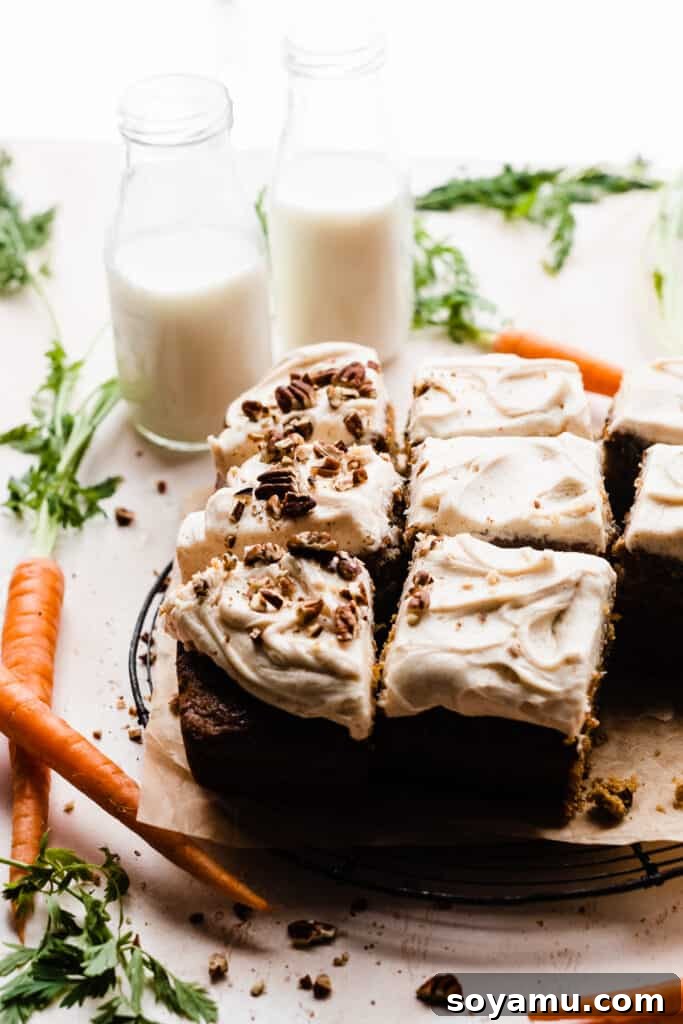
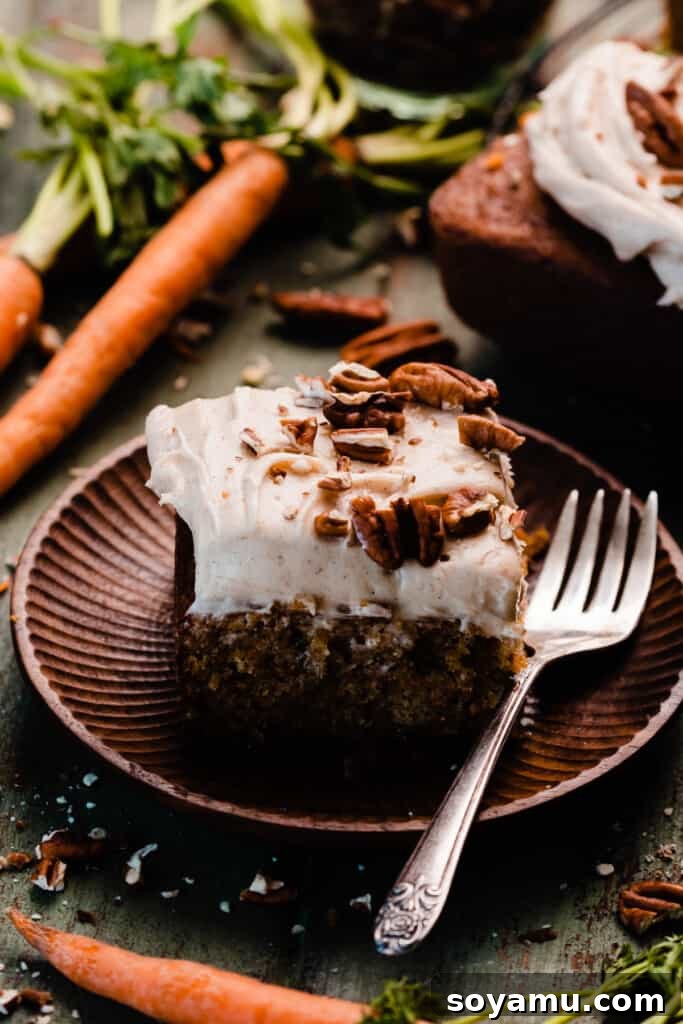
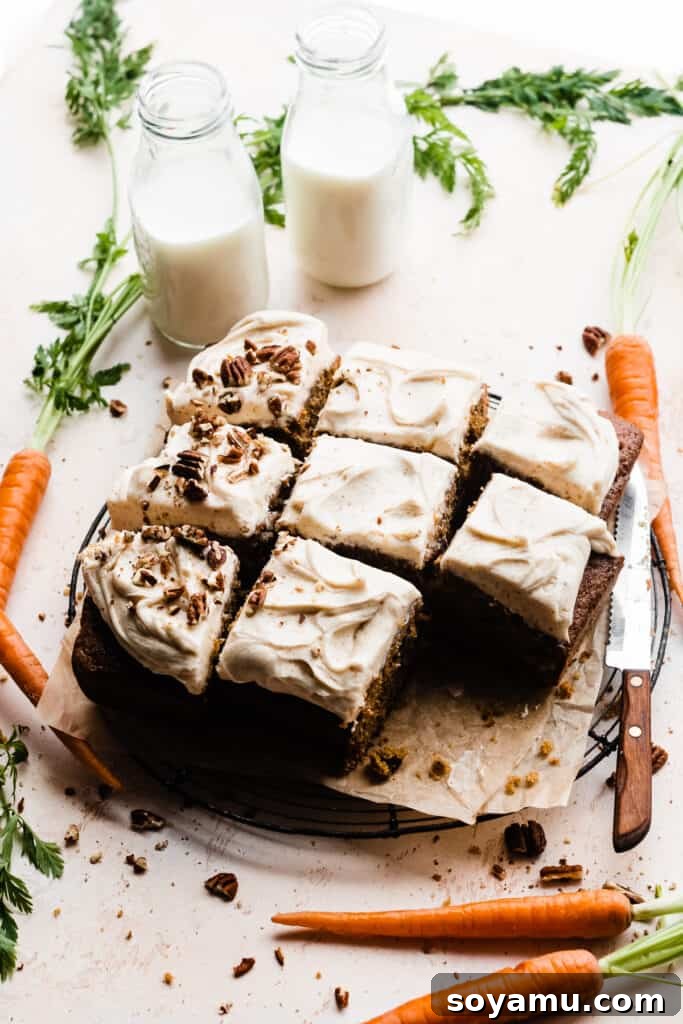
Step 5: Frost and Garnish Your Masterpiece. Once your carrot cake has cooled completely (this is very important!), use an offset spatula or a butter knife to spread the luscious Brown Butter Cream Cheese Frosting evenly over the top. For an elegant and inviting presentation, create beautiful swoops and swirls with the back of a spoon. You can leave the frosting simple or add a final touch with a sprinkle of extra chopped pecans, a dusting of cinnamon, or even some festive sprinkles for a special occasion. Slice, serve, and savor!
Serving Suggestions & Storage Tips for Optimal Freshness
Once frosted, your Mini Carrot Cake is ready to be sliced and enjoyed immediately! Its rich flavors are best savored when freshly made. For any glorious leftovers, proper storage is key to maintaining its exquisite taste and moist texture. Store the cake in an airtight container to prevent it from drying out, and refrigerate it for up to 3-4 days. The frosting contains cream cheese, so refrigeration is essential. For the best flavor and texture experience, allow the cake to come to room temperature for about 15-30 minutes before serving. This softens the frosting and enhances the cake’s tenderness, bringing out all the wonderful spice notes. You can also freeze individual slices, well-wrapped, for up to a month, thawing them in the refrigerator overnight before bringing to room temperature to serve.
Expert Tips for Carrot Cake Perfection
- Grate Your Own Carrots for Superior Texture: Resist the urge to use pre-grated carrots from a bag! These tend to be much drier and coarser, leading to a less moist cake and an inconsistent texture. Freshly grated carrots release more moisture into the batter, ensuring a beautifully tender crumb. Always use the finest holes on your box grater to create delicate shreds that practically melt into the cake. You want flavor and moisture, not big, crunchy chunks.
- Harness the Power of a Food Processor: For a quick and easy solution, use the grater attachment on your food processor to finely grate your carrots. This method is significantly faster and less laborious than manual grating, making prep a breeze.
- Invest in an Oven Thermometer: Many home ovens are not calibrated accurately, meaning the temperature you set might not be the actual temperature inside. An inexpensive oven thermometer is a game-changer for baking consistency. Place it inside your oven to monitor the true temperature and adjust your oven settings accordingly. Accurate oven temperature is absolutely crucial for achieving perfectly baked goods.
- A Kitchen Scale is Your Best Friend: For the most precise and consistent baking results, especially with flour, a food scale is indispensable. The weight of flour can vary dramatically depending on how it’s scooped (packed vs. spooned and leveled), and measuring cups are not always standardized. Weighing your ingredients ensures you’re using the exact amounts specified, eliminating guesswork and significantly improving your baking success.
- Make Ahead Browning Butter: Planning ahead can simplify your baking day. You can brown the butter up to two weeks in advance! Once browned, pour it into an airtight container and store it in the refrigerator. When you’re ready to bake, remove it from the fridge and let it soften back to room temperature, just as you would with regular butter. This small step saves time and ensures a rich, flavorful frosting.
- Room Temperature Ingredients Matter: For the cake batter, ensure eggs, sour cream, and milk are at room temperature. This helps all the ingredients emulsify properly, creating a smoother, more uniform batter and a cake with a much more tender and even crumb. Cold ingredients can cause the batter to seize and affect the overall texture.
- Don’t Overmix the Batter: Once you add the dry ingredients, mix only until just combined. Overmixing develops the gluten in the flour, leading to a tough, chewy cake. A few lumps are perfectly acceptable and often result in a more tender crumb.
Frequently Asked Questions About Mini Carrot Cake
For the absolute best taste and a smooth, tender cake texture, it is crucial to grate fresh carrots very finely. Using the smallest holes on your box grater or the grater attachment of a food processor is recommended. Large pieces of carrot can create an unappealing lumpy batter and result in chewy, distinct carrot chunks within the cake. Even the biggest fans of this small-batch carrot cake prefer the carrots to blend seamlessly into the cake, contributing moisture and flavor without being overtly textural. Think of them as contributing to the cake’s body rather than standing out as individual pieces.
Absolutely! This versatile recipe can easily be adapted to make delicious carrot cake cupcakes. You should yield approximately 18-22 standard-sized cupcakes from this batter. To do this, simply divide the prepared batter evenly among two muffin pans lined with cupcake liners. You’ll need to adjust the baking time: cupcakes typically bake faster, so aim for 18-19 minutes. It’s often best to bake the muffin pans one at a time for even cooking, or side-by-side if your oven has consistent heat distribution. Once baked, let the cupcakes cool in the pan for a few minutes before carefully transferring them to a wire rack to cool completely. Frost them once they are fully chilled.
While you can technically double any recipe, for a consistently perfect larger cake, we recommend using a recipe specifically developed for that scale. For double the amount of cake, specifically a beautiful three-layer cake, we suggest making our dedicated Classic Layered Carrot Cake recipe. It’s based on the same delicious flavor profile but has all the measurements and instructions perfectly adjusted for a grander presentation, saving you the hassle of calculating and ensuring optimal results.
Several factors contribute to a moist carrot cake: using oil (instead of all butter), sour cream, and ensuring your carrots are finely grated. Also, avoid overmixing the batter once the dry ingredients are added, and do not overbake. An oven thermometer helps maintain accurate temperatures, and baking just until a toothpick comes out with a few moist crumbs is ideal.
Yes, you can! Many enjoy adding crushed pineapple (well-drained to avoid excess moisture) or shredded apple to carrot cake for extra moisture and flavor. About half a cup of either can be folded in with the grated carrots. This can add another layer of complexity to your delicious cake.
Explore More Delicious Carrot Cake Creations
- Zesty Pineapple Carrot Cake with Cream Cheese Frosting
- Classic Layered Carrot Cake with Tangy Cream Cheese Frosting
Delightful Desserts Perfect for Easter & Beyond
- Perfect Classic Cheesecake with Homemade Strawberry Sauce
- Bright Lemon Blueberry Thumbprint Cookies
- Festive Easter Egg Blondies
- Easy Easter Seven Layer Bars
- Sweet & Tart Raspberry Lemon Sweet Rolls
Did you try this irresistible Mini Carrot Cake recipe? We’d love to hear from you! Leave a comment and a star rating below!
Your feedback is invaluable to us! Please take a moment to click the little stars in the header of the recipe card below to leave a comment and a star rating. Let us know how much you enjoyed this recipe. We take all feedback seriously, and your ratings immensely support our small business! Thank you for baking with us!
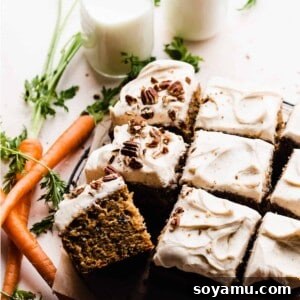
Mini Carrot Cake with Brown Butter Cream Cheese Frosting
Ingredients
For the Cake
- 2 large eggs, at room temperature
- 3/4 cup + 2 tbsp dark brown sugar, packed, 190 grams
- 1/3 cup granulated sugar, 75 grams
- 1/2 cup vegetable oil, 112 mL
- 3 tbsp full-fat sour cream, at room temperature , 40 grams
- 1 tsp vanilla extract
- 1 and 1/3 cup + 1 tbsp all-purpose flour, spooned & leveled or weighed out , 183 grams
- 1 and 1/4 tsp baking powder
- 1/2 tsp + 1/8 tsp baking soda
- 1/4 tsp salt
- 2 tsp cinnamon
- 1 and 1/2 tsp ground ginger
- 1/2 tsp nutmeg
- 1/4 tsp ground cloves
- 2/3 cup milk, at room temperature , I use 2%. 160 mL
- 1 and 1/2 cups finely grated carrots, see note, About 3 large carrots -150 grams (weigh this out for the best accuracy!)
- 1/2 cup pecans, chopped, Can sub walnuts or omit entirely. 50 grams
For the Brown Butter Cream Cheese Frosting
- 6 tbsp salted butter, cubed, See note
- 6 ounces cream cheese, cold
- 2 cups powdered sugar
- 1 tsp vanilla extract
- pinch of salt
- pinch of cinnamon
Instructions
-
Brown the Butter: For the frosting, brown your butter in advance to allow it to cool and firm up. In a nonstick pot or pan over medium heat, melt the cubed butter. Reduce the heat to medium-low and continue to cook, stirring continuously. The butter will first become foamy, then turn a golden color, and finally develop a beautiful nutty, caramel-like brown hue and aroma. As soon as it reaches a deep golden-brown, remove it from the heat immediately and pour it into a heat-safe container to stop the cooking process. Allow it to cool completely to room temperature, where it will return to a softened butter consistency.
Make-Ahead Tip: This step can be done up to two weeks ahead of time and stored in an airtight container in the refrigerator. Just ensure it softens back to room temperature before using, just like regular butter, if it has hardened completely.
-
Prepare Your Pan: Preheat your oven to 350° F (175°C). Thoroughly grease a 9×9 inch cake pan with shortening, using a paper towel to ensure all corners are well-coated. Then, dust the pan with flour, tapping it around to completely coat the shortening. This meticulous preparation guarantees your cake will release perfectly after baking!
Note: If shortening isn’t available, spray the pan with nonstick baking spray, then line the bottom and sides with parchment paper to ensure full coverage and easy removal.
-
Begin the Cake Batter: In a large mixing bowl, add the room temperature eggs and beat them with an electric mixer on medium-high speed for 30 seconds until slightly frothy. Incorporate both the dark brown sugar and granulated sugar, then continue beating on medium-high speed for about 1 minute until the mixture is pale, thick, and well aerated. Next, whisk in the vegetable oil, room temperature full-fat sour cream, and vanilla extract until smoothly combined.
-
Complete the Cake Batter: To the wet ingredients, add all the dry ingredients (all-purpose flour, baking powder, baking soda, salt, cinnamon, ground ginger, nutmeg, and ground cloves). Begin gently folding them in with a silicone spatula until about halfway incorporated. Then, pour in the room temperature milk, finely grated carrots, and chopped pecans. Continue to gently fold the mixture until the very last streaks of flour disappear into the batter. It’s okay if there are a few small lumps; overmixing will lead to a tough cake. The batter will be thin, which contributes to the cake’s ultimate moistness.
-
Bake to Perfection: Pour the prepared cake batter evenly into your greased and floured 9-inch square baking pan. Bake in the preheated oven for 38 to 43 minutes. To check for doneness, insert a toothpick into the center of the cake; it should come out clean or with a few moist crumbs clinging to it, not wet batter. Once baked, let the cake cool in the pan on a wire rack for 10 minutes. Then, carefully invert it onto a plate, and then flip it right-side-up onto the cooling rack to finish cooling completely. It’s crucial for the cake to be entirely cool before applying the frosting, otherwise, the frosting will melt and slide off.
-
Craft the Brown Butter Cream Cheese Frosting: In a medium mixing bowl, combine the cooled, softened brown butter and cold cream cheese. Cream these together on high speed with an electric mixer for about a minute until thoroughly combined and smooth. Gradually add the powdered sugar, vanilla extract, a pinch of salt, and a pinch of cinnamon. Continue mixing until the frosting is creamy and light. If the frosting is too thick, add 1-2 teaspoons of milk (or dairy-free milk) until you achieve your desired spreading consistency. Taste and adjust seasonings; the salt and cinnamon are key to enhancing the frosting’s flavor and balancing its sweetness. Using a butter knife or offset spatula, spread the frosting generously over your completely cooled cake. For an appealing finish, create elegant swoops and swirls with the back of a spoon.
-
Serve & Store: For an extra touch, sprinkle the top of the cake with additional chopped nuts (like pecans or walnuts), festive sprinkles, or a light dusting of cinnamon. Serve the cake immediately to enjoy its fresh flavors. Any leftover cake should be stored in an airtight container in the refrigerator for 3-4 days. For optimal enjoyment, allow individual slices to come to room temperature for 15-30 minutes before serving.
Notes
Note on Brown Butter Frosting: While the brown butter adds an unparalleled depth of nutty flavor to the frosting, if you’re short on time or prefer a simpler approach, you can certainly use regular softened butter (not browned) in a pinch. The frosting will still be delicious, just without that distinct brown butter richness.
Nutrition
Calories: 597kcal,
Carbohydrates: 72g,
Protein: 6g,
Fat: 33g,
Saturated Fat: 12g,
Polyunsaturated Fat: 9g,
Monounsaturated Fat: 9g,
Trans Fat: 0.4g,
Cholesterol: 85mg,
Sodium: 349mg,
Potassium: 219mg,
Fiber: 2g,
Sugar: 54g,
Vitamin A: 4170IU,
Vitamin C: 1mg,
Calcium: 120mg,
Iron: 2mg
Nutrition information is automatically calculated, so should only be used as an approximation.
Like this? Leave a comment below!