
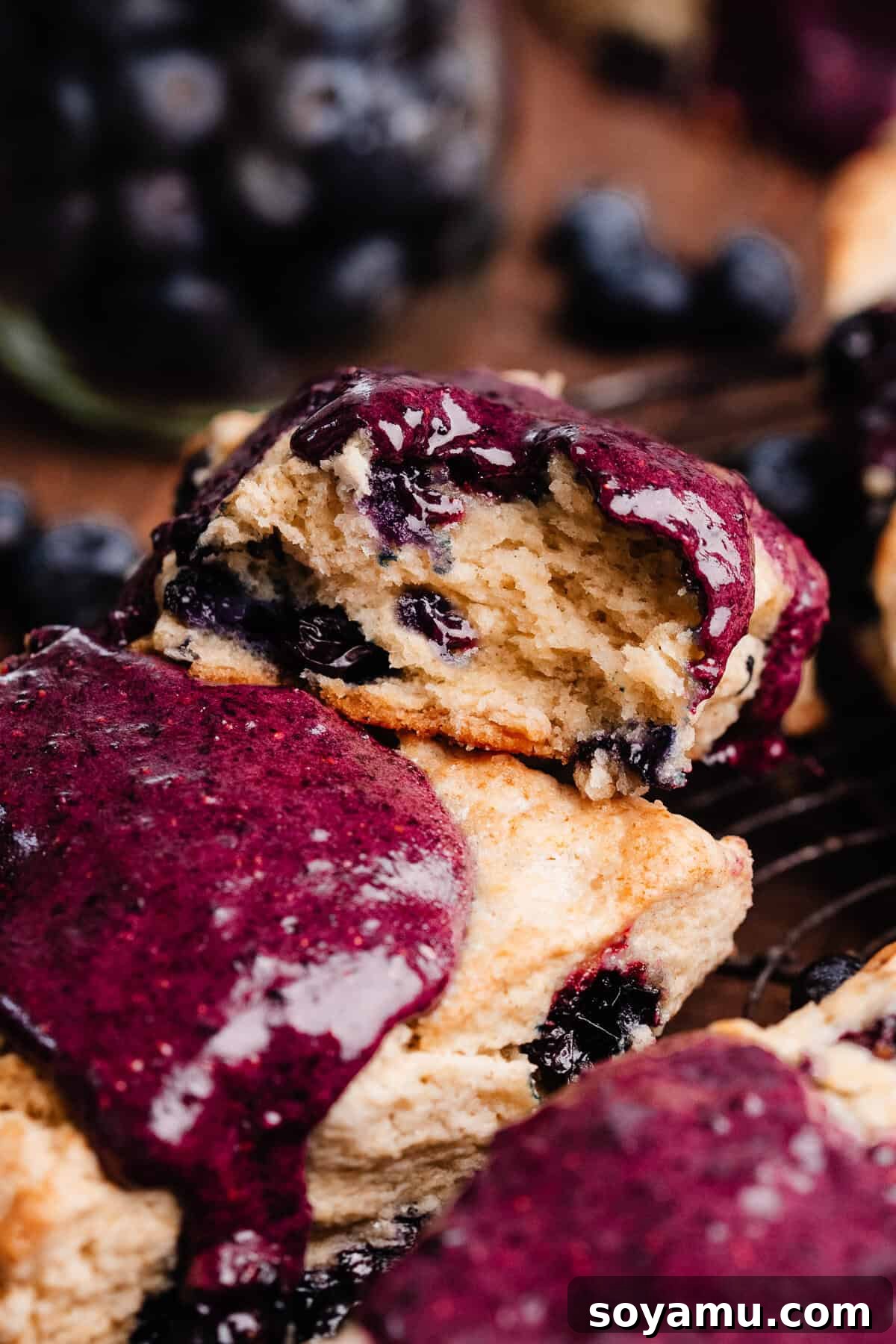
Perfect Blueberry Scones are an absolute dream come true for anyone who loves a tender, flaky pastry bursting with juicy fruit. Imagine biting into a warm scone, where delicate layers give way to pockets of sweet, slightly tart fresh blueberries. This recipe is designed to be a breeze to make, even offering fantastic make-ahead options for stress-free mornings or impressive brunches. To elevate these delectable scones further, they’re crowned with a luscious, naturally vibrant blueberry glaze, its stunning color and intense flavor derived from the concentrated goodness of freeze-dried blueberries. Get ready to bake a batch of pure bliss!
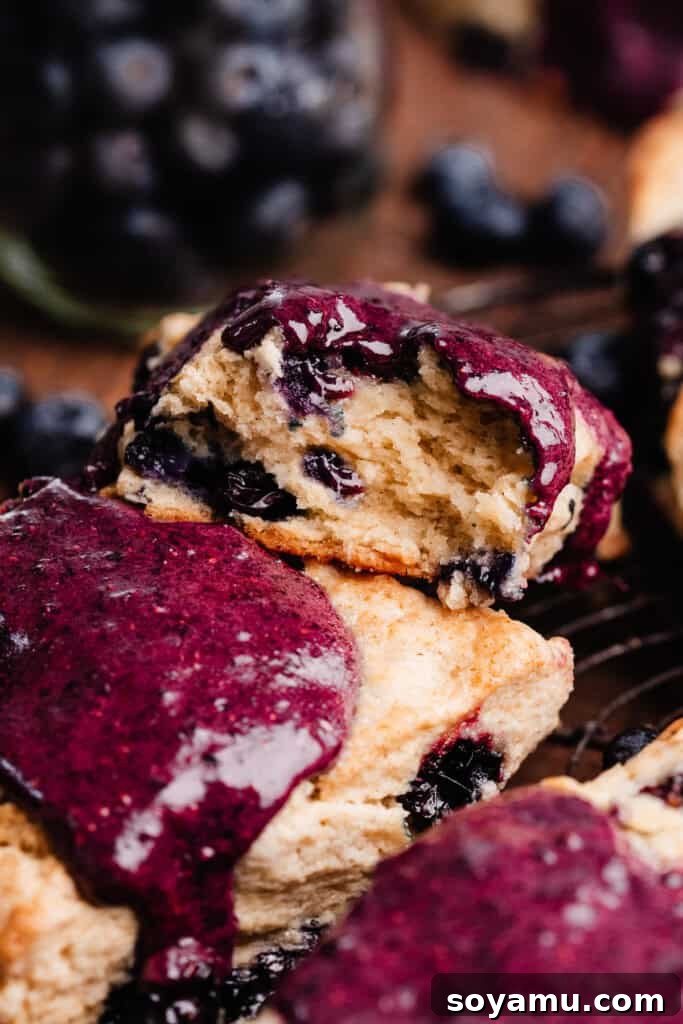
Scones, in general, are truly an underrated marvel in the world of baking! They possess an incredible charm and versatility that often gets overlooked. These delightful pastries are remarkably quick and easy to prepare, making them an accessible baking project for any skill level. Beyond their simplicity, scones are a canvas for endless flavor combinations; whether you prefer sweet, fruit-filled creations or something more savory (like our irresistible Savory Bacon Cheddar Scones), there’s a scone for every palate. Their make-ahead potential is a game-changer, allowing you to prep them in advance and simply bake fresh when needed, transforming any ordinary morning into a special occasion. Embrace the joy of homemade scones and discover a pastry that’s as convenient as it is delicious!
Why You’ll Absolutely Love Our Flaky Blueberry Scones:
- Unbelievably Tender & Flaky Perfection – These aren’t just any scones; they are a masterclass in texture. Crafted with generous amounts of high-quality, cold butter and rich heavy cream, each scone bakes to an impeccable flaky, tender perfection. The exterior boasts a delicate crispness, providing a delightful contrast to the incredibly soft, moist, and layered interior. The secret lies in the cold butter creating steam pockets during baking, resulting in that signature airy and crumbly texture that melts in your mouth with every bite.
- Bursting with Authentic Blueberry Flavor – Prepare for a true blueberry fiesta! Our scones are generously studded throughout with plump, fresh blueberries, ensuring a juicy, sweet, and slightly tart burst of flavor in every single mouthful. But the blueberry experience doesn’t end there! The crowning glory is a homemade, vibrant purple glaze, ingeniously created with pulverized freeze-dried blueberries. This concentrated fruit powder not only imparts a stunning, natural color but also delivers an intensely authentic blueberry flavor, elevating the glaze from a simple topping to an integral part of the scone’s delicious profile.
- The Ultimate Make-Ahead Baking Solution – For busy mornings or leisurely brunches, these blueberry scones are your perfect ally. Scones actually benefit immensely from being super cold when they enter a hot oven – this is crucial for maximizing their rise and flakiness. Our recipe fully embraces this principle by allowing you to prepare the scone dough, cut it into individual portions, and then freeze them solid. You can bake them directly from the freezer whenever the craving strikes, or save them for a future gathering where you desire fresh, warm baked goods without the last-minute fuss of preparation. This flexibility makes them an ideal choice for effortless entertaining or a spontaneous breakfast treat.
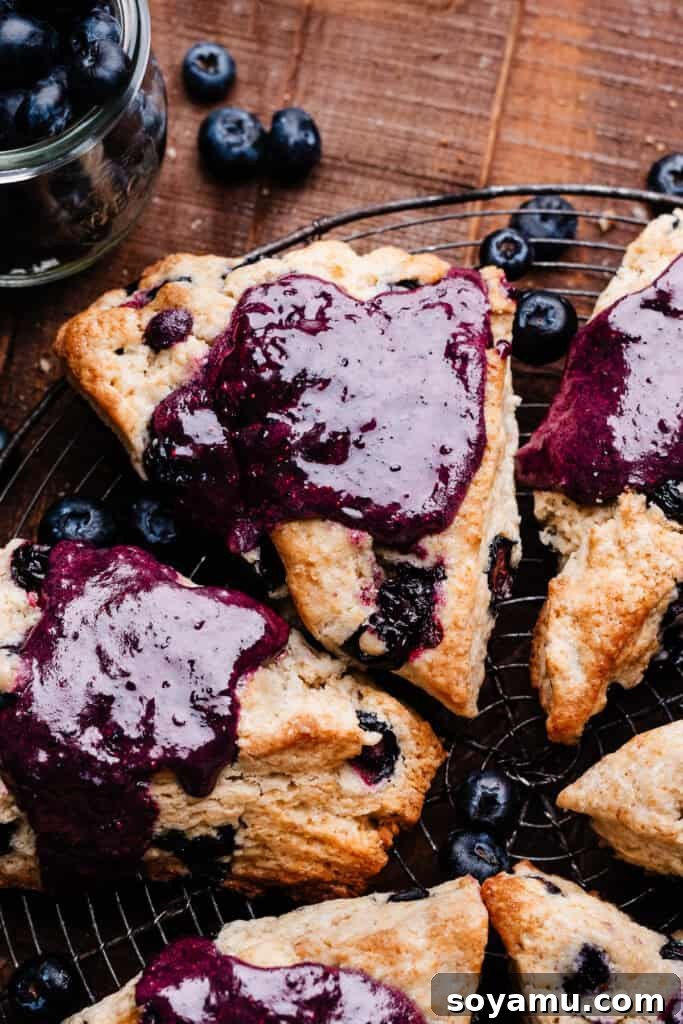
Essential Ingredient Overview: Crafting the Perfect Scone Dough and Glaze
Mastering a recipe begins with understanding its components. Below, we’ll delve into each key ingredient, explaining its role in creating these magnificent blueberry scones. While precise measurements and detailed steps are conveniently located in the recipe card at the bottom of this article, this overview provides deeper insights into best practices and the ‘why’ behind each choice.
- All-Purpose Flour – As the primary structural component, accurately measuring your flour is paramount. For optimal results, spoon your all-purpose flour lightly into your measuring cup, then use a flat utensil, like the back of a knife, to level it off. This method prevents compacting, which can lead to adding too much flour and result in a dry, dense, or crumbly scone rather than a tender one. The most precise approach, highly recommended by professional bakers, is to use a digital kitchen scale and measure the flour by weight (325 grams for this recipe).
- High-Quality Butter (Cold & Salted) – Butter is truly the secret to a flaky scone. We insist on using *cold*, cubed butter because as these tiny pieces melt rapidly in a hot oven, they release steam, which pushes apart the layers of dough, creating that signature flakiness. I personally prefer salted butter for its ability to enhance and balance the overall flavor of baked goods, adding a subtle depth. However, if unsalted butter is your preference, feel free to use it; you might consider adding an extra pinch of salt to the dry ingredients to compensate. Always ensure your butter is kept very cold until the moment it’s incorporated into the dry ingredients.
- Heavy Cream – This ingredient is a non-negotiable for achieving supreme tenderness. The high fat content in heavy cream is critical; it contributes to a rich, moist crumb and helps create those coveted crisp edges without making the scone dry. Avoid substituting with lower-fat alternatives like half-and-half or regular milk, as they simply lack the fat necessary to deliver the incredibly tender texture we’re aiming for.
- Large Egg – A single large egg plays multiple roles: it adds richness to the dough, acts as a binder, and contributes to the scone’s overall structure and a beautiful golden-brown crust. Ensure your egg is cold to keep the overall dough temperature low, which is vital for the butter’s performance.
- Fresh Blueberries – The star of the show! For this recipe, fresh blueberries are strongly recommended. Their natural moisture content and firm texture are ideal for baking directly into the dough, where they burst with sweet-tart flavor. Frozen blueberries, while convenient, can introduce excess moisture into the dough, potentially leading to a soggy texture or a more difficult dough to work with. Stick to fresh for the best bursting pockets of fruit!
- Freeze-Dried Blueberries (for Glaze) – This ingenious addition gives our glaze its vivid color and intensely concentrated blueberry flavor. When blitzed into a fine powder in a food processor, these crispy berries provide pure fruit essence without adding unnecessary liquid, ensuring the glaze maintains its perfect drizzling consistency. It’s a simple step that adds a significant “wow” factor to both the taste and appearance of your scones.
Scone Recipe Substitutions & Exciting Variations: Personalize Your Perfect Scones
While this recipe for blueberry scones is perfected to deliver exceptional taste and texture, the beauty of baking lies in its adaptability. Here are some ideas for substitutions and variations, along with important considerations to keep in mind:
- Gluten-Free or Dairy-Free Adaptations – Experimenting with gluten-free or dairy-free ingredients can be a rewarding journey, though it often requires some trial and error. This specific recipe has not been tested with alternative flours or dairy products. If you plan to make it gluten-free, look for a high-quality 1:1 gluten-free baking blend that includes xanthan gum to provide structure. For dairy-free, you could try plant-based butter alternatives and full-fat coconut cream (chilled) for the heavy cream. Be aware that these substitutes can affect the dough’s hydration and how it handles, potentially requiring slight adjustments to liquid amounts or chilling times. We would love to hear about your successful adaptations!
- Creative Glaze Alternatives – The freeze-dried blueberry powder provides a unique, vibrant, and natural flavor boost to the glaze. However, if it’s unavailable, you have several delicious alternatives. A good quality blueberry jam or preserves can be gently warmed and whisked with powdered sugar and a bit of heavy cream to achieve a lovely, fruity glaze. Alternatively, for a classic, bright finish, simply combine powdered sugar with a splash of milk or lemon juice for a simpler, yet equally appealing, scone topping.
- Exploring Other Fruit Varieties – While fresh blueberries are ideal for this recipe, you can certainly experiment with other small, firm berries such as raspberries, chopped strawberries, or even finely diced peaches. When using other fruits, be mindful of their moisture content. Fruits with higher water content might require a slight adjustment to the dough’s liquid or a light toss in a tablespoon of flour before mixing into the dough to prevent the scones from becoming too wet. Always aim for firm, fresh fruit. For a proven alternative, be sure to check out our dedicated Strawberry Scones recipe!
- Aromatic Citrus Zest – To add an extra layer of bright, fresh flavor, consider incorporating 1 to 2 teaspoons of finely grated lemon or orange zest into your dry ingredients. Citrus notes beautifully complement blueberries, enhancing their sweetness and adding a delightful zing.
- Adding Spices – Beyond cinnamon, you could experiment with a tiny pinch of nutmeg or cardamom in the dry mix for a subtle, warming spice note that pairs wonderfully with blueberries.
How to Make the Best Blueberry Scones: A Detailed Step-by-Step Guide
Crafting these wonderfully tender and flaky blueberry scones is a straightforward and enjoyable process. Follow these detailed instructions meticulously, and you’ll be rewarded with perfect results every time.
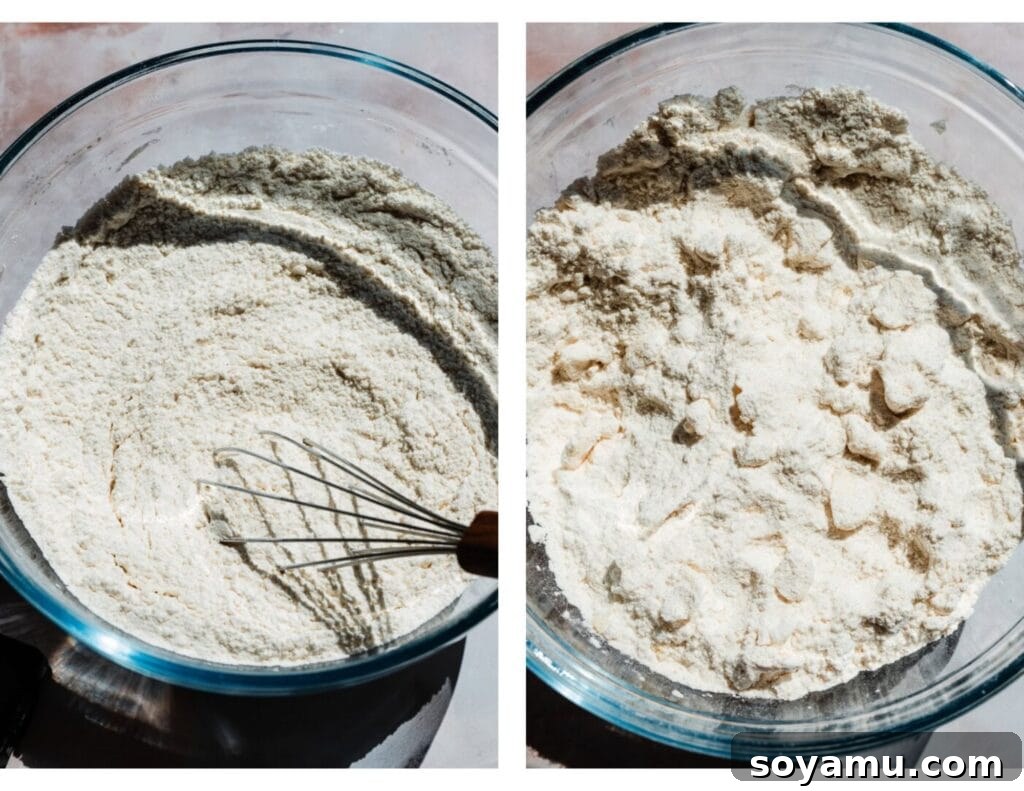
Step 1: Whisk Wet Ingredients and Combine Dry with Cold Butter. First, prepare your wet ingredients by whisking together the vanilla extract, one large cold egg, and 1/2 cup of cold heavy cream in a glass measuring cup or a small bowl. Once well combined, place this mixture in the refrigerator to keep it thoroughly chilled while you move to the dry components. In a separate, generously sized mixing bowl, combine the 2½ cups of accurately measured all-purpose flour, 1/2 cup of granulated sugar, 1 tablespoon of baking powder, 1/4 teaspoon of salt, and 1/4 teaspoon of cinnamon. Whisk these dry ingredients together very well to ensure they are evenly distributed, especially the leavening. Next, introduce the 1/2 cup of precisely cubed, very cold salted butter into the dry mixture. Using a pastry blender (or your fingertips, working with speed to prevent warming the butter), cut the butter into the flour until the mixture resembles coarse meal with distinctive pea-sized pieces of butter still visible throughout. These small butter pieces are absolutely critical for creating the signature flaky layers. Feel free to run your clean hands through the mixture a few times to break up any larger pieces. If at any point the mixture starts to feel warm, pop the bowl into the refrigerator for 5-10 minutes to re-chill before proceeding.
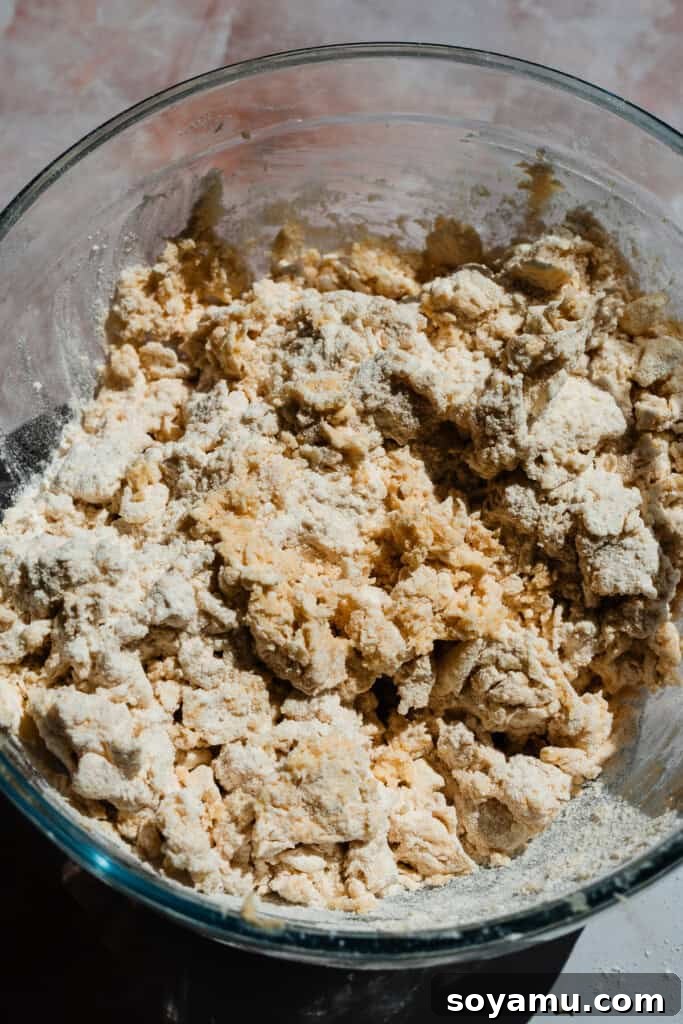
Step 2: Gently Add Wet Ingredients to Form a Shaggy Dough. Retrieve your chilled wet ingredient mixture from the refrigerator. Pour it all at once into the large bowl containing your butter-flour mixture. Using a sturdy wooden spoon or a spatula, gently stir the ingredients together until they are just combined and a “shaggy” dough begins to form. The dough will appear loose, somewhat crumbly, and far from smooth – this is exactly the desired consistency! The key here is to avoid overworking the dough at all costs. Overmixing develops the gluten in the flour, which will inevitably lead to tough, chewy scones instead of light and tender ones. If you notice any stubborn dry patches after initial mixing, add an extra teaspoon or two of heavy cream, stirring just enough to incorporate it into those dry spots. Remember, a slightly uneven, shaggy texture is your friend for flaky scones.
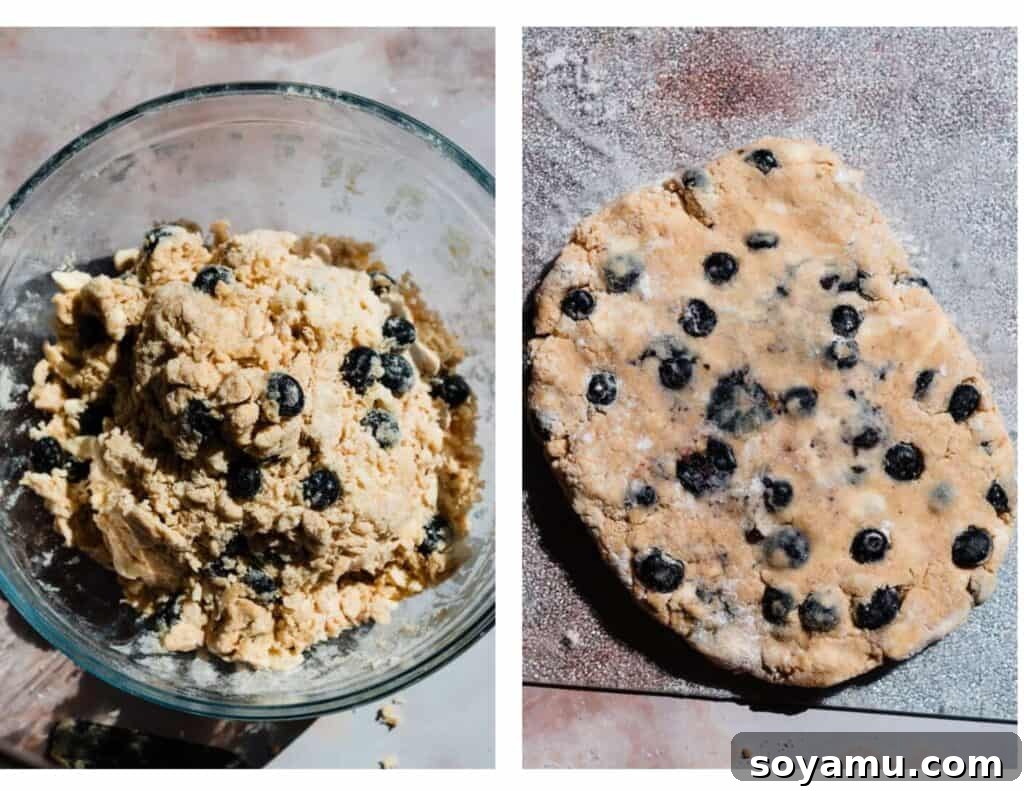
Step 3: Incorporate Blueberries and Perform Gentle Dough Folds. Now, it’s time to fold in the star ingredient: your fresh blueberries. Add the slightly heaping cup of rinsed and gently dried fresh blueberries to the shaggy dough. To minimize bursting the delicate berries and ensure a tender crumb, gently gather the dough into a loose ball within the bowl. Lightly flour a clean, spacious work surface, then carefully turn the dough out onto it. Don’t worry if it looks a bit messy at this stage – it’s part of the process! With lightly floured hands, gently pat the dough out into a rough rectangle, approximately 8×6 inches. Then, carefully perform a series of “folds”: fold one side of the dough over two-thirds of the way across, then fold the other side over to meet it, like folding a letter into thirds. Gently pat it out into a rectangle again. Repeat this folding and patting process two more times, for a total of three folds. This layering technique is crucial for developing those wonderful flaky pockets without overworking the dough. On your final fold and pat-out, aim for a rectangle measuring roughly 9×7 inches. If a few blueberries burst, it’s completely normal and will just add pretty purple streaks to your scones. The key is to handle the dough as little and as gently as possible throughout this step.
Step 4: Slice into Triangles and Chill Thoroughly for Optimal Rise and Flakiness. Using a sharp chef’s knife or a bench scraper, neatly slice your rectangular dough. First, cut the dough in half lengthwise. Then, take each of those two longer sections and cut them crosswise, diagonally, to yield a total of eight triangular scones. Arrange these individual scones on a baking sheet that has been lined with parchment paper. This next stage is absolutely paramount for achieving the best possible scone texture: a thorough chill. Transfer the baking sheet with the freshly cut scones into the freezer for a minimum of 30-45 minutes. For even superior results and incredible make-ahead convenience, you can extend this chilling time to up to 2 hours, or even freeze them for up to 2 months (refer to our “Expert Baking Tips” below for detailed freezing instructions). The colder the scones are when they are introduced to the intense heat of the oven, the better they will rise, and the more distinct and flaky their layers will become. Just before baking, you’ll give them a light brush with extra heavy cream.
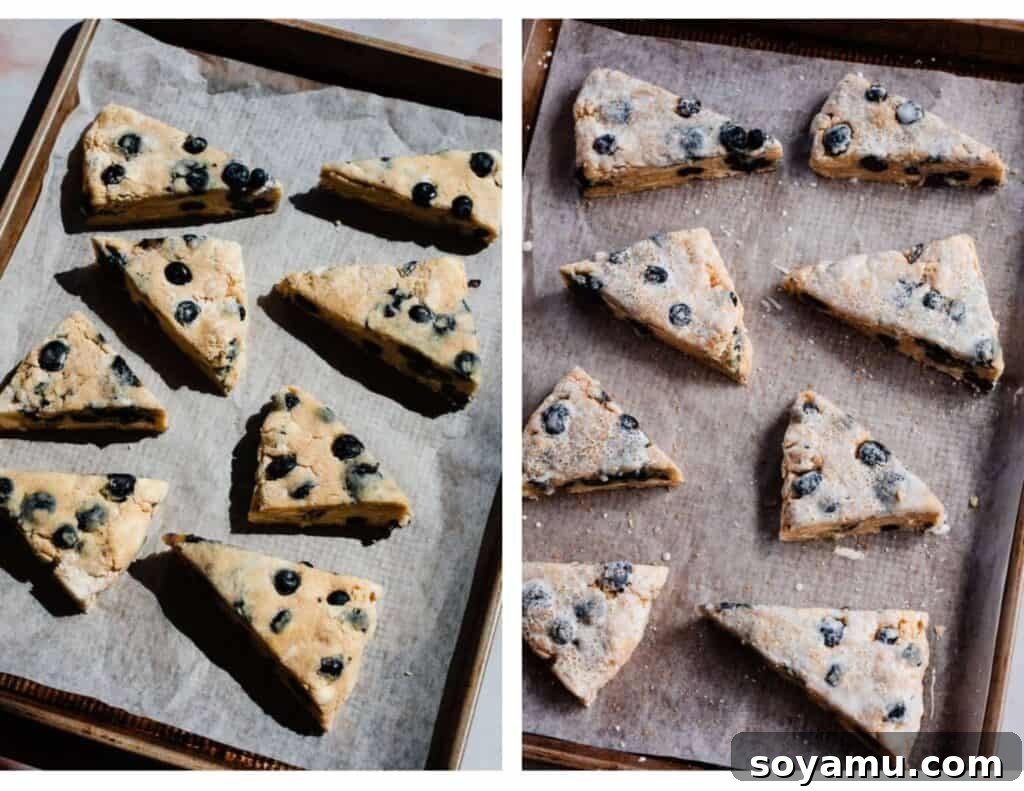
Step 5: Bake Your Scones to Golden-Brown Perfection. Preheat your oven to a robust 425°F (220°C). This high initial temperature is critical because it encourages the cold butter within the dough to create a powerful burst of steam, resulting in a phenomenal rise and beautifully flaky layers. Once your oven is fully preheated, retrieve your thoroughly chilled or frozen scones from the freezer. Lightly brush the tops of each scone with approximately 2 tablespoons of heavy cream; this will help them achieve a gorgeous, inviting golden-brown crust. For an added touch of texture and sparkle, sprinkle a little raw sugar over the tops, if you desire. Carefully transfer the baking sheet to the preheated oven and bake for approximately 19-24 minutes. Keep a close eye on them; they should develop a lovely lightly golden-brown hue around the edges and on top. To confirm they are fully baked through, you can gently lift one open from the side; the interior should appear fluffy and dry, with no signs of wet or doughy spots. As soon as the scones emerge from the oven, hot and fragrant, it’s time to immediately proceed to the next step and top them with the luscious glaze!
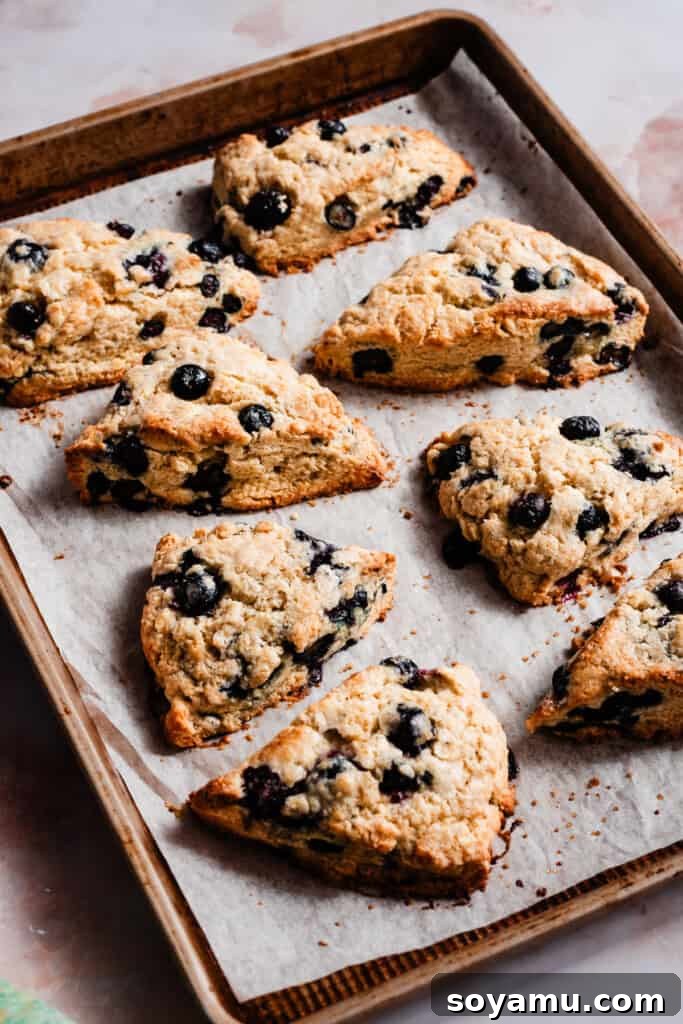
Step 6: Drizzle with the Luscious Blueberry Glaze. With your perfectly baked scones now out of the oven, still wonderfully warm, it’s time for their crowning glory – the vibrant blueberry glaze! This step should ideally be prepared while the scones are baking. In a small bowl, combine the 1/2 cup of powdered sugar, the 1/2 cup of freeze-dried blueberries (which you’ve pulsed in a food processor until they form a fine, concentrated powder), and 1/4 teaspoon of vanilla extract. Gradually add the heavy cream, starting with 3 tablespoons and adding more, one teaspoon at a time, until the glaze reaches a smooth, slightly thick but still easily pourable consistency. It should be thick enough to cling to the back of a spoon but thin enough to drizzle beautifully over the warm scones. As soon as the scones are removed from the oven, generously spoon or drizzle this fragrant, purple glaze over their tops. The residual heat from the scones will cause the glaze to melt slightly and settle into a gorgeously shiny, fruity coating. Allow the glaze to set for just a few minutes before diving in – if you can possibly wait!
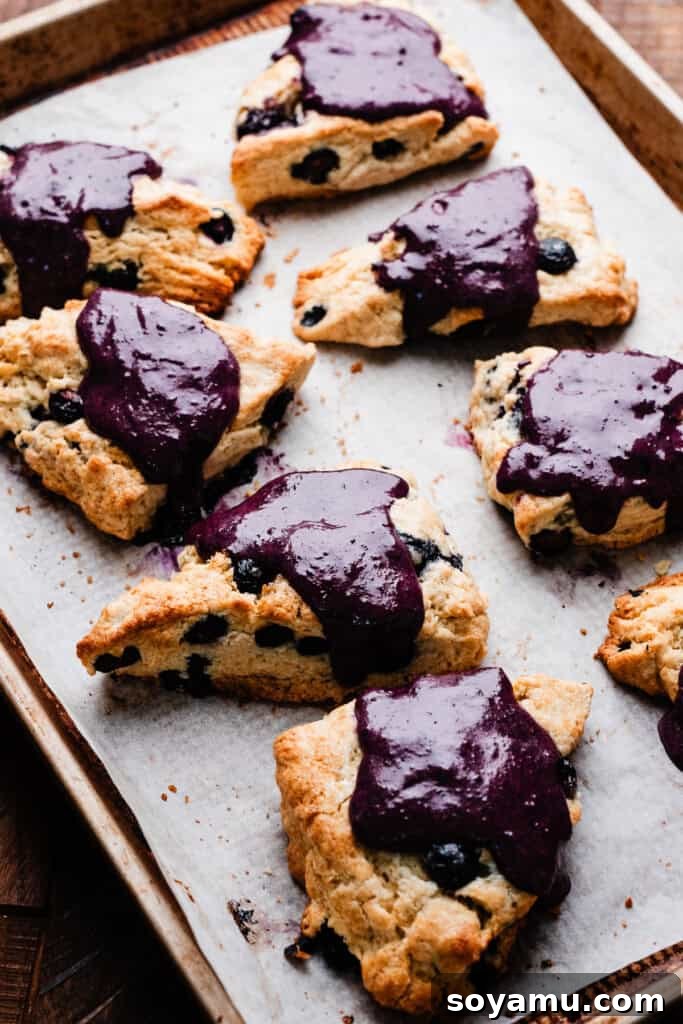
Serving & Storing Your Delicious Blueberry Scones for Lasting Enjoyment
There are few culinary delights that compare to a warm, freshly baked scone, straight from the oven. These blueberry scones, with their tender crumb and luscious glaze, are best enjoyed immediately after baking. Serve them as an elegant breakfast pastry, a delightful addition to a weekend brunch spread, or a comforting afternoon snack alongside a freshly brewed cup of coffee or your favorite tea. The warmth amplifies their tender texture and the bursting flavor of the blueberries.
While their peak freshness is right out of the oven, any glorious leftovers can still be savored! Once the scones have cooled completely to room temperature, transfer them into an airtight container. They will keep beautifully in the refrigerator for 2-3 days. Storing them in the fridge not only helps maintain their delicate texture, preventing them from becoming overly soft at room temperature, but also keeps the dairy-based glaze fresh. To enjoy chilled leftover scones, you can gently warm them in a toaster oven for a few minutes to revive some of their tender flakiness, or a quick zap in the microwave will warm them through.
Expert Baking Tips for Achieving Perfectly Flaky Blueberry Scones Every Time
Baking can be an art, but with a few professional insights, you can consistently achieve magnificent results. These expert tips are specifically tailored to help you bake the most tender, flaky, and flavorful blueberry scones imaginable:
- Invest in an Accurate Oven Thermometer – This seemingly small investment is perhaps one of the most impactful tools for any baker. An oven thermometer will tell you the true temperature inside your oven, which can often differ significantly (by as much as 25-50°F!) from what your oven’s dial indicates. Accurate oven temperature is absolutely crucial for the proper rise and even baking of scones. Keep one in your oven at all times to monitor its calibration and adjust accordingly.
- Utilize a Digital Kitchen Scale for Precision – For truly consistent and professional-quality baked goods, a digital food scale is indispensable. Measuring dry ingredients, especially flour, by weight (e.g., 325 grams as specified) is far more accurate than using volume measurements. The amount of flour in a cup can vary significantly based on how it’s scooped and packed, which can lead to an inconsistent dough texture (too dry or too wet) and ultimately, compromise the tender flakiness of your scones. Precision ensures perfect results every time.
- The Golden Rule: Keep Your Ingredients COLD! – This tip cannot be stressed enough for scones. Ensure your butter is straight from the fridge and cubed, and your heavy cream and egg are chilled. When cold butter hits the hot oven, it creates pockets of steam that are essential for developing those irresistible flaky layers. If the ingredients are warm, the butter will melt into the dough prematurely, resulting in a denser, more cake-like scone. If your kitchen is warm or your dough feels like it’s heating up during mixing, don’t hesitate to pop the bowl into the freezer for 10-15 minutes to re-chill before proceeding.
- Avoid Overworking the Dough at All Costs – Scones, much like biscuits, thrive on minimal handling. Overmixing or excessive kneading will quickly develop the gluten in the flour, transforming your potentially light and tender scones into tough, rubbery pastries. Mix just until the ingredients are barely combined and a “shaggy” dough forms, and handle it as gently as possible during the folding and shaping process.
- Prioritize the Final Chill Before Baking – The last chilling step before your scones enter the oven is non-negotiable for success. This chill serves multiple purposes: it firms up the butter (reinforcing the flakiness), allows the gluten to relax (ensuring tenderness), and helps the scones hold their beautiful shape during baking. Skipping this step can lead to scones that spread too much and lack a proper rise.
- Cut Your Dough With Confidence (and No Twisting!) – When cutting your scone dough into triangles or rounds, use a sharp knife or pastry cutter and press straight down firmly. Lift the cutter straight up without twisting. Twisting can seal the edges of the dough, which prevents the individual layers from separating and rising beautifully in the oven.
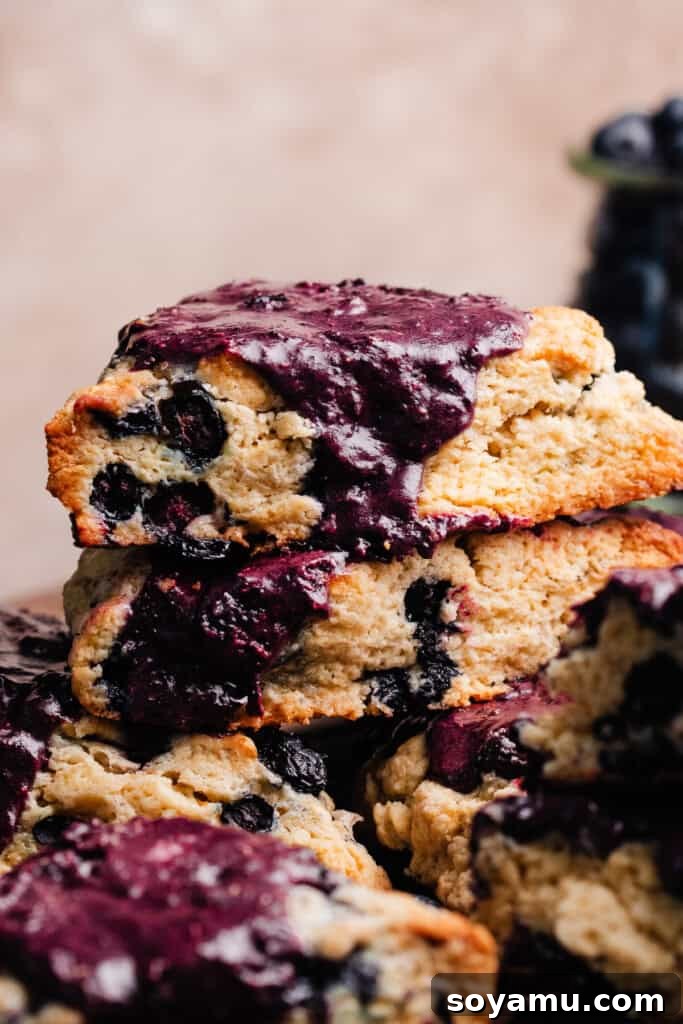
Frequently Asked Questions About Baking Blueberry Scones:
Can I use different types of fruit in this scone recipe?
While the idea of experimenting with different fruits is tempting, it’s important to note that various berries and fruits have distinct moisture levels and acidic profiles. These differences can significantly impact the dough’s consistency and the final texture of your scones. This specific recipe has been meticulously developed and tested using fresh blueberries to ensure consistently optimal results. Therefore, for the best outcome with this particular recipe, we strongly recommend sticking to fresh blueberries. However, if you’re keen to explore other fruit-filled scone options, we also offer a fantastic and tested Strawberry Scones recipe that you’ll surely love!
Can I double or halve this recipe for blueberry scones?
Yes, you absolutely can halve this recipe if you only need a smaller batch, perhaps for a cozy morning or fewer servings. Simply divide all ingredient quantities by two, and follow the instructions as written. However, when it comes to doubling the recipe, we generally advise against trying to mix a very large batch of dough all at once. Working with an excessively large volume of dough can make it challenging to properly incorporate the ingredients without inadvertently overworking it. As detailed in our expert tips, overworking the dough is the enemy of tender scones. For best results when you need more than one batch, we recommend preparing two separate batches instead of one doubled batch. This ensures each batch receives the delicate handling required to achieve that perfect tender, flaky texture.
Why is keeping the butter and cream cold so important for scones?
Keeping your butter and heavy cream as cold as possible is arguably the most critical factor for baking successful, flaky scones. Here’s why: when tiny pieces of cold butter hit a hot oven, the moisture within the butter rapidly turns into steam. This steam then pushes apart the layers of dough, creating those distinctive, airy pockets that give scones their characteristic flaky texture. If the butter is too warm, it will simply melt and blend into the dough rather than creating these separate steam pockets. The result is a denser, more cake-like scone instead of a light and airy one. Cold cream also helps maintain the overall low temperature of the dough, further supporting the butter’s texture-creating magic.
What’s the best way to cut scones into uniform triangles?
After you’ve gently patted out your scone dough into a neat rectangle (approximately 9×7 inches for this recipe), using a sharp tool is key for clean, precise cuts. A sharp chef’s knife or a sturdy bench scraper works best. First, cut the rectangle straight down the middle lengthwise, creating two narrower rectangles. Then, take each of those narrower rectangles and cut them diagonally into four triangles each. When cutting, remember to press straight down firmly and lift straight up. Avoid any sawing motion or twisting the knife or cutter. Twisting can inadvertently seal the edges of the dough, which can prevent the scone layers from rising properly and expanding in the oven, leading to a less flaky result.
Can I use frozen blueberries in this recipe?
For this specific recipe, we strongly recommend using fresh blueberries. Frozen blueberries often contain more moisture, which can leach into the dough during mixing and baking, potentially leading to a soggy texture or a dough that’s difficult to handle. If you only have frozen blueberries available, you would need to adjust the recipe significantly, perhaps by tossing them with a tablespoon of flour before adding them, and you might still get a different result. For guaranteed tender and flaky scones with perfectly bursting fruit, fresh blueberries are truly the way to go.
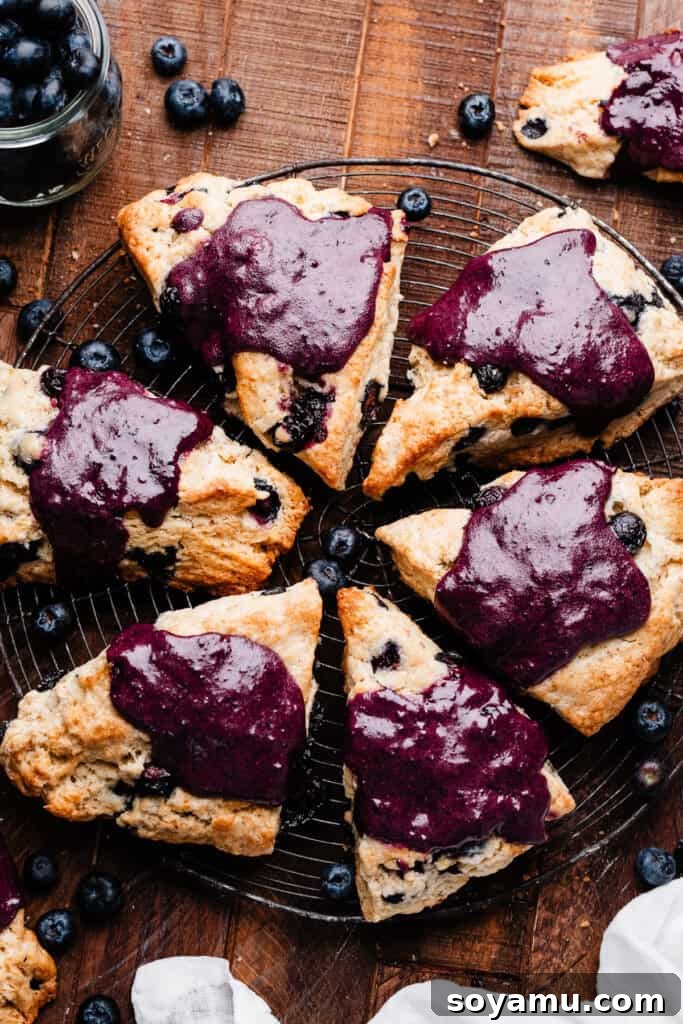
Special Tools for Effortless Scone Baking Success:
While you don’t need a professional baker’s arsenal to create superb blueberry scones, a few specific kitchen tools can significantly enhance your baking experience, making the process smoother and ensuring more consistently excellent results:
- Pastry Cutter (or Pastry Blender) – This is an invaluable tool for anyone who bakes pastries that require cutting cold butter into flour. A pastry cutter, with its sturdy wire blades, makes quick and efficient work of incorporating cold butter into your dry ingredients without warming it with your hands. This is crucial for creating those distinct, pea-sized butter pieces that melt into steam pockets, resulting in the coveted flaky texture of scones, biscuits, and pie crusts.
- Digital Kitchen Scale – As highlighted in our expert tips, a digital food scale provides unparalleled accuracy, especially when measuring dry ingredients like flour. Using a scale eliminates the inconsistencies that come with volume measurements, ensuring your dough has the precise hydration level needed for perfect texture, preventing dry or dense scones.
- Large Baking Sheet & Parchment Paper – Essential for baking your scones evenly. A sturdy baking sheet provides consistent heat distribution, while parchment paper prevents sticking, promotes easy cleanup, and allows for effortless transfer of your chilled scones to and from the oven.
- Sharp Chef’s Knife or Bench Scraper – For clean, precise cuts when dividing your scone dough. A sharp edge ensures neat triangles without dragging or tearing the dough, which is important for a good rise.
- Food Processor (for Glaze) – While not strictly for the scones themselves, a food processor or a powerful blender is highly recommended for pulverizing the freeze-dried blueberries into a fine powder for the glaze. This creates a smooth, intensely flavored, and vibrantly colored glaze.
More Irresistible Blueberry Recipes to Discover:
If you’ve fallen in love with these blueberry scones, you’re undoubtedly a blueberry enthusiast! We have a plethora of other delightful recipes that showcase the incredible versatility and deliciousness of fresh blueberries. Explore these fan favorites:
- Jumbo Bakery-Style Blueberry Muffins – Experience the joy of enormous, moist muffins, generously studded with blueberries and topped with a sweet, crunchy streusel, just like your favorite bakery.
- Homemade Blueberry Pop Tarts – Rekindle childhood nostalgia with these flaky pastries filled with a vibrant homemade blueberry jam and finished with a sweet glaze.
- Double Blueberry Cheesecake Bars – Indulge in rich, creamy cheesecake bars crowned with a decadent, bursting-with-flavor homemade blueberry topping.
- Blueberry Lemon Coffee Cake – A beautifully tender coffee cake, swirled with juicy blueberries and bright lemon zest, making it perfect for breakfast, brunch, or dessert.
- One-Bowl Blueberry Crisp – The ultimate easy and comforting dessert, featuring a bubbling blueberry filling beneath a buttery, crumbly oat topping, all made in just one bowl!
Did you make this recipe? We’d love to hear from you! Please leave a comment & star rating below!
Your feedback is incredibly valuable to us and our baking community! To share your experience and let us know how much you loved these homemade blueberry scones, simply click on the little stars in the header of the recipe card below to leave a comment and a star rating. Your reviews not only help fellow aspiring bakers but also provide immense support to our small business! Thank you for baking with us.
Blueberry Scones with Blueberry Glaze
Pin Recipe
Ingredients
For the Scones:
- 1 tsp vanilla extract
- 1 large egg, cold
- 1/2 cup cold heavy cream, 120 mL
- 2 and 1/2 cups all-purpose flour, spooned & leveled or weighed out , 325 grams
- 1/2 cup granulated sugar , 105 grams
- 1 tbsp baking powder, 13 grams
- 1/4 tsp salt
- 1/4 tsp cinnamon
- 1/2 cup cold salted butter, cubed, 113 grams
- 1 slightly heaping cup fresh blueberries, rinsed & gently dried (don’t burst them!), 6 ounces or 170 grams
For Baking:
- 2 tbsp heavy cream
- 2 tbsp raw sugar , optional, for sprinkling on top
For the Glaze:
- 1/2 cup powdered sugar
- 1/2 cup freeze dried blueberries, 28 grams
- 3-5 tbsp heavy cream
- 1/4 tsp vanilla extract
Instructions
-
Mix Wet Ingredients: Whisk together the vanilla, egg, and heavy cream in a glass measuring cup, and pop this into the fridge.1 tsp vanilla extract, 1 large egg, cold, 1/2 cup cold heavy cream
-
Make Scone Dough: In a large mixing bowl, whisk together the flour, sugar, baking powder, salt, and cinnamon. Add the cold butter and cut it into the dry mixture using a pastry blender, until you have a crumbly mixture with small pieces of butter (pea size) coated in flour. Run your (clean!) hands through the mixture a few times to check for any straggler large pieces of butter, and break them up/flatten them out. (If you feel like your mixture got warm at any point up to here, pop the bowl of flour/butter in the fridge to chill for 5-10 minutes before proceeding.)
Pour the wet ingredient mixture into the flour mixture & gently stir with a wooden spoon. Don’t overwork the dough. If it seems a bit dry, add 1-2 extra tsp of heavy cream into the dry bits. Add the blueberries, and dump the dough onto your counter. It’s okay if this is a bit of a mess. Gently gather the dough into a rough ball and fold it over on itself as best you can. With lightly floured hands, gently pat the dough out a bit (about a 8×6 rectangle or so), then repeat this fold & pat out process two more times. Aim for a 9×7 rectangle on the final time. If a few blueberries burst, that’s okay – but try to be gentle.
2 and 1/2 cups all-purpose flour, spooned & leveled or weighed out, 1/2 cup granulated sugar, 1 tbsp baking powder, 1/4 tsp salt, 1/4 tsp cinnamon, 1/2 cup cold salted butter, cubed, 1 slightly heaping cup fresh blueberries, rinsed & gently dried (don’t burst them!) -
Slice & Chill Scones: With a sharp knife, slice the rectangle into four sections, then cut each of those crosswise to make 8 triangles. Place these onto your prepared baking sheet and pop into the freezer for at least 30 minutes or up to 2 hours or up to 2 months – see note below.
-
Bake: Preheat your oven to 425℉. Brush the now very cold/frozen scones lightly with heavy cream and add a sprinkle of raw sugar (if using). Bake for 18-22 minutes. (Make the glaze in the next step while the scones bake!) The scones will be lightly golden brown around the edges. To double check they’re done, gently lift one open from the side and make sure the insides look fluffy and baked – you shouldn’t see any wet spots. As soon as the scones are out of the oven, top with the glaze so it gets nice and melty on top.2 tbsp heavy cream, 2 tbsp raw sugar
-
Make the Glaze: Pulse the freeze dried berries in a food processor until you have a fine powder. In a small bowl, stir together the powdered berries and remaining glaze ingredients, adding heavy cream as needed until it’s slightly thick but thin enough to spread.1/2 cup powdered sugar, 1/2 cup freeze dried blueberries, 3-5 tbsp heavy cream, 1/4 tsp vanilla extract
-
Serve & Store: Dig in to these while they’re warm from the oven – they’re heavenly! These are best fresh, but leftover scones (once cooled to room temperature) can be stored in the fridge in an airtight container for 2-3 days. Refrigerating keeps them from becoming soft at room temperature and keeps the heavy cream in the glaze fresh.
Notes
Blueberries: I don’t think frozen blueberries would work well in this recipe and I haven’t tested it. Stick to fresh unless I otherwise specify!
Nutrition
Calories: 483kcal,
Carbohydrates: 67g,
Protein: 6g,
Fat: 21g,
Saturated Fat: 13g,
Polyunsaturated Fat: 1g,
Monounsaturated Fat: 5g,
Trans Fat: 0.5g,
Cholesterol: 81mg,
Sodium: 339mg,
Potassium: 276mg,
Fiber: 3g,
Sugar: 34g,
Vitamin A: 745IU,
Vitamin C: 181mg,
Calcium: 121mg,
Iron: 5mg
Nutrition information is automatically calculated, so should only be used as an approximation.