

The Ultimate Biscoff Cupcakes: A Cookie Butter Dream
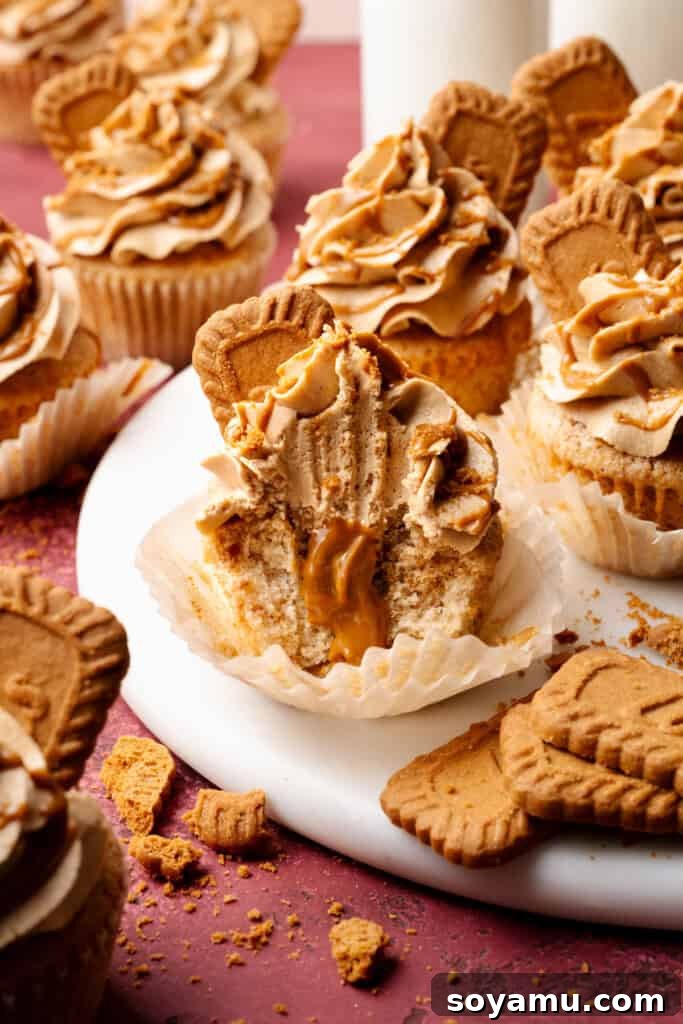
Prepare to fall in love with these incredible Biscoff Cupcakes – a true cookie butter enthusiast’s fantasy brought to life! Each bite offers an exquisite balance of tender, moist cake, infused with the warm, spiced notes of Biscoff cookie crumbs and a hint of cinnamon. But the indulgence doesn’t stop there; these cupcakes are generously filled with creamy cookie butter and crowned with a luxurious, smooth cookie butter frosting. For an undeniable grand finale, we recommend a generous drizzle of more melted cookie butter and a classic Biscoff cookie perched on top, making every cupcake a miniature masterpiece.
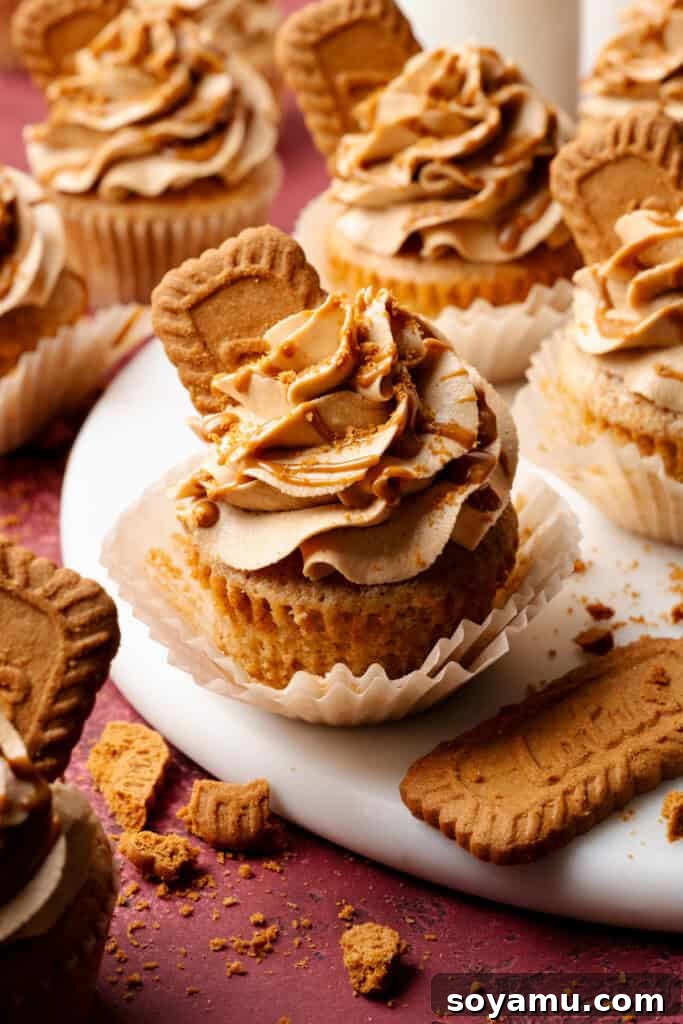
Why These Biscoff Cupcakes Will Become Your New Favorite
These aren’t just any cupcakes; they are designed to deliver an exceptional baking and eating experience. Here’s why you’ll adore this recipe:
- Unbelievably Moist Cupcakes: Say goodbye to dry, crumbly cakes! Our recipe guarantees tender, fluffy cupcakes that boast an incredible moisture level, ensuring they remain deliciously fresh for several days. The secret lies in a carefully balanced blend of ingredients that lock in moisture.
- A Quintuple Cookie Butter Flavor Experience: We’ve taken the Biscoff obsession to a whole new level! These cupcakes feature Biscoff cookie crumbs mixed directly into the batter, a luscious cookie butter filling hidden inside, and rich cookie butter incorporated into the frosting. To complete this symphony of flavor, each cupcake is garnished with a drizzle of melted cookie butter and a delightful Biscoff cookie piece. That’s five layers of irresistible Biscoff goodness!
- Perfect for Freezing: Planning ahead or simply want to save some for later? These Biscoff cupcakes freeze beautifully, both with or without the delectable filling and frosting. They’re ideal for make-ahead desserts, allowing you to enjoy a homemade treat whenever the craving strikes with minimal effort.
- Crowd-Pleasing and Unique: While vanilla and chocolate cupcakes are always popular, these Biscoff beauties offer a sophisticated and uniquely spiced flavor that stands out. They are perfect for parties, gatherings, or simply treating yourself to something truly special.
- Simplified Baking Process: Despite their impressive flavor profile, the steps to create these cupcakes are straightforward and manageable for bakers of all skill levels. With clear instructions and helpful tips, you’ll achieve bakery-quality results in your own kitchen.
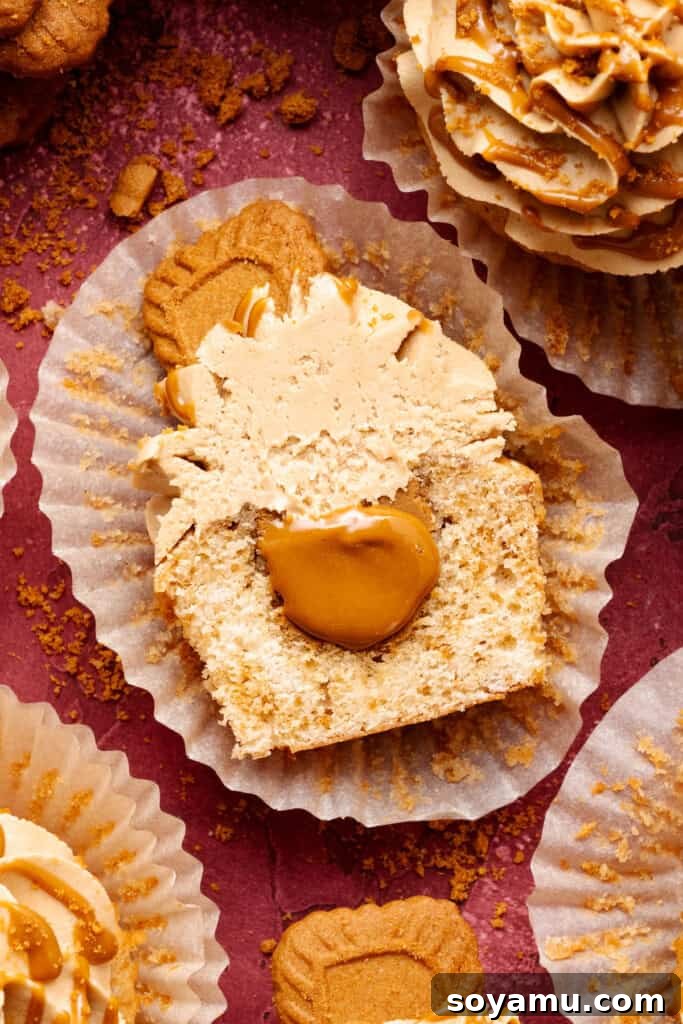
Essential Ingredient Overview for Perfect Biscoff Cupcakes
Creating exceptional cupcakes begins with understanding the role of each ingredient. Below is a detailed look at what you’ll need and why it matters. For precise measurements and step-by-step instructions, please refer to the complete recipe card at the bottom of this page.
- Cake Flour: This is a non-negotiable for achieving that signature light, airy, and tender crumb. Cake flour has a lower protein content than all-purpose flour, resulting in a softer texture. For the best accuracy, always spoon and level your flour, or better yet, use a kitchen scale to weigh it. Scooping directly can compact the flour, leading to too much in your recipe. (1 cup of cake flour typically weighs around 115 grams, while 1 cup of all-purpose flour is about 130 grams).
- Granulated Sugar & Light Brown Sugar: The combination of these two sugars provides both sweetness and a subtle depth of flavor. Granulated sugar offers clean sweetness, while brown sugar adds moisture and a hint of caramel, complementing the Biscoff notes.
- Baking Powder & Salt: These leavening agents ensure your cupcakes rise beautifully and have a soft texture. Salt enhances all the flavors, balancing the sweetness.
- Cinnamon: A touch of cinnamon boosts the warm, spiced notes inherent in Biscoff cookies, adding an extra layer of cozy flavor to the cake base.
- Sour Cream (Full-Fat): This is a key ingredient for ultimate moisture and a tender crumb. The acidity in sour cream also reacts with the baking powder, aiding in leavening. Ensure it’s at room temperature for smooth incorporation into the batter.
- Butter (Salted, Room Temperature): We recommend salted butter for its superior flavor profile that beautifully enhances baked goods. If using unsalted, consider adding a tiny pinch more salt to the recipe. Room temperature butter creams better with sugar, creating air pockets for a light cake.
- Vegetable Oil: A small amount of oil contributes to a softer, more moist cupcake and helps keep them fresh for longer, as oil stays liquid at room temperature unlike butter.
- Eggs (Large, Room Temperature): Eggs bind the ingredients, add structure, richness, and moisture. Using room temperature eggs helps them emulsify better with other ingredients, leading to a smoother, more uniform batter.
- Milk (2%, Room Temperature): Like sour cream and eggs, room temperature milk integrates seamlessly into the batter, preventing curdling and promoting a consistent texture. We use 2% milk, but whole milk also works well.
- Vanilla Extract or Vanilla Bean Paste: Use a high-quality pure vanilla extract or, for an even richer flavor and visual appeal, vanilla bean paste. This classic flavor enhancer adds warmth and depth.
- Vinegar (White or Apple Cider): A secret weapon for extra lift and fluffiness! The acidity in vinegar reacts with the baking powder to create more carbon dioxide, resulting in a lighter crumb. Don’t worry, you won’t taste it.
- Biscoff Cookies: The star of the show! These iconic spiced speculoos cookies are crushed into fine crumbs to flavor the cupcake batter. You can find Biscoff (also known as Lotus Biscoff) cookies in most major grocery stores in the cookie aisle.
- Cookie Butter: The creamy, spreadable version of Biscoff cookies is used for the luscious filling and frosting. Any brand of cookie butter will work perfectly.
Recipe Substitutions & Creative Variations
While this recipe is optimized for the best Biscoff experience, feel free to get creative with these delicious adaptations:
- Nut Butter Alternative: If Biscoff cookies aren’t available or if you have a nut allergy concern (Biscoff is nut-free but if you’re avoiding the cookie flavor), you could omit the Biscoff crumbs from the cupcake base. For the frosting, you could swap cookie butter for a smooth, creamy nut butter like peanut butter or almond butter. You might need to adjust the amount of powdered sugar in the frosting to achieve your desired sweetness and consistency.
- Different Spices: Enhance the warm spice profile by adding a tiny pinch of nutmeg, cardamom, or even a mixed spice blend to the cupcake batter along with the cinnamon.
- Chocolate Swirl: For a chocolate-Biscoff fusion, drizzle melted dark or milk chocolate over the frosted cupcakes before serving. A few chocolate chips folded into the batter could also be a delightful addition.
- Cream Cheese Frosting: While the Biscoff frosting is heavenly, a tangy cream cheese frosting (perhaps with a swirl of cookie butter) would also pair wonderfully with the spiced cupcakes.
- Coffee Flavor Boost: Biscoff cookies famously pair well with coffee. Consider adding 1-2 teaspoons of instant espresso powder to your cupcake batter for a subtle coffee undertone that enhances the spice.
- Alternative Cookie Crumbs: If Biscoff isn’t your preference, this versatile cupcake base could accommodate other cookie crumbs like graham crackers, gingersnaps, or even chocolate wafer cookies for a different flavor profile.
- Nutella Chocolate Cupcakes: If you’re a fan of rich chocolate and hazelnut, consider trying our popular Nutella Chocolate Cupcakes with Nutella Buttercream for another decadent treat!
Crafting Your Biscoff Cupcakes: A Step-by-Step Guide
This cupcake base is adapted from our renowned Better-Than-Bakery Vanilla Cupcakes, ensuring a reliably delicious foundation. Follow these detailed steps to create your perfect Biscoff treats:
Step 1: Prepare Your Workspace and Dry Ingredients
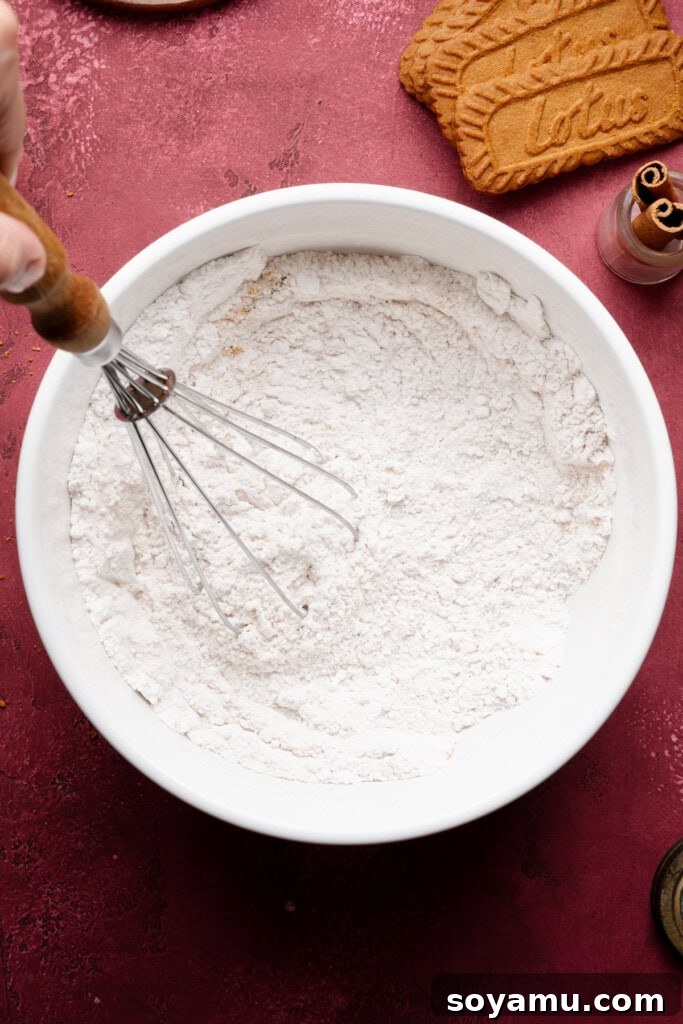
Begin by preheating your oven to 350°F (175°C). Line two standard 12-cup muffin tins with paper liners, preparing for approximately 16-17 cupcakes. In a medium-sized mixing bowl, thoroughly whisk together your dry ingredients: cake flour, granulated sugar, light brown sugar, baking powder, cinnamon, and salt. Ensure there are no lumps and the ingredients are evenly distributed.
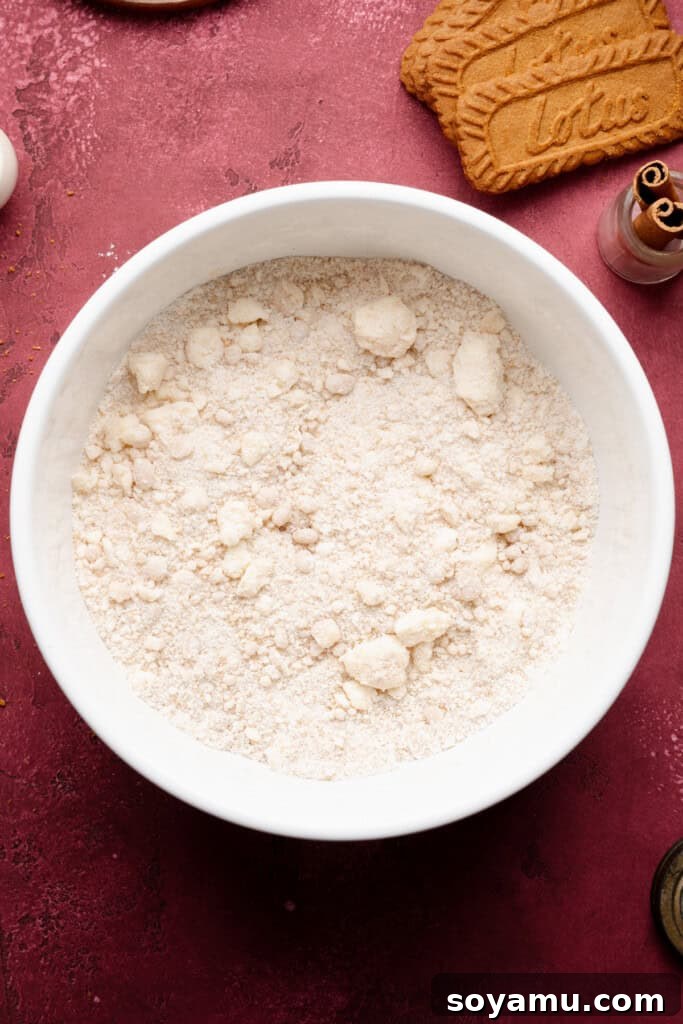
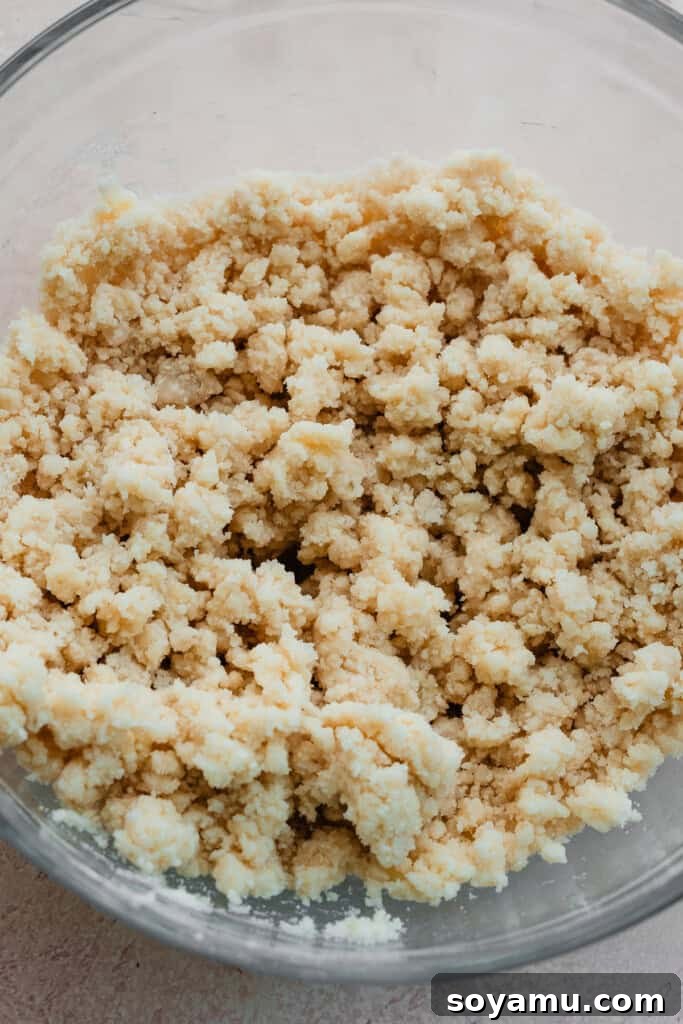
Next, add the softened salted butter and vegetable oil to the dry mixture. Using a stand mixer with a paddle attachment or a hand mixer on low speed, mix for about 30-60 seconds. You want the butter to just begin incorporating into the dry ingredients, resulting in a coarse, sandy mixture with some larger, flour-coated butter lumps remaining. This technique helps create a tender crumb.
Step 2: Incorporate the Wet Ingredients for a Silky Batter
In a separate 2-cup glass measuring cup, whisk together the room temperature sour cream, milk, warm water, and vinegar until fully combined. This mixture provides essential moisture and structure to your cupcakes.
Add just 2 tablespoons of this wet mixture to your dry ingredient and butter mixture. Mix on low speed until the batter starts to come together, losing its dry, sandy appearance but still appearing somewhat lumpy. This initial moistening step is crucial for developing the cake’s texture.
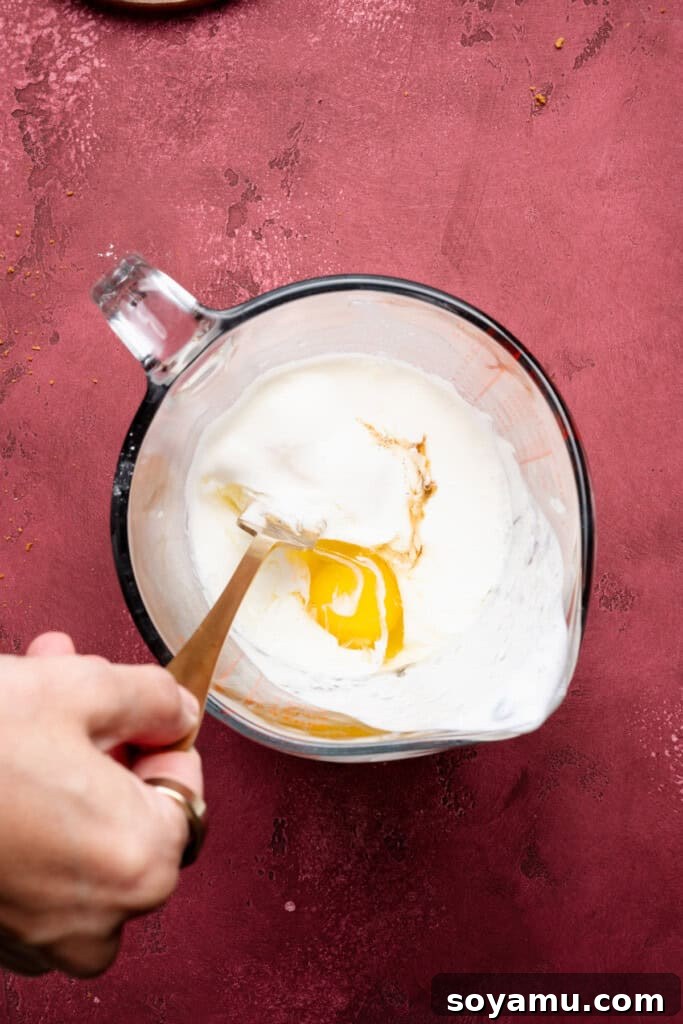
Now, to the remaining liquid mixture, add the vanilla extract (or paste) and crack in the two large eggs. Lightly whisk with a fork to break up the egg yolks and combine everything evenly. With your mixer running on low, gradually pour half of this wet mixture into the main batter bowl. Mix until almost fully incorporated, then add the remaining liquid. Continue mixing on low speed only until the ingredients are just combined. Avoid overmixing, as this can lead to tough cupcakes. Use a rubber spatula to scrape down the sides and bottom of the bowl, ensuring everything is thoroughly mixed. A few small lumps are perfectly fine.
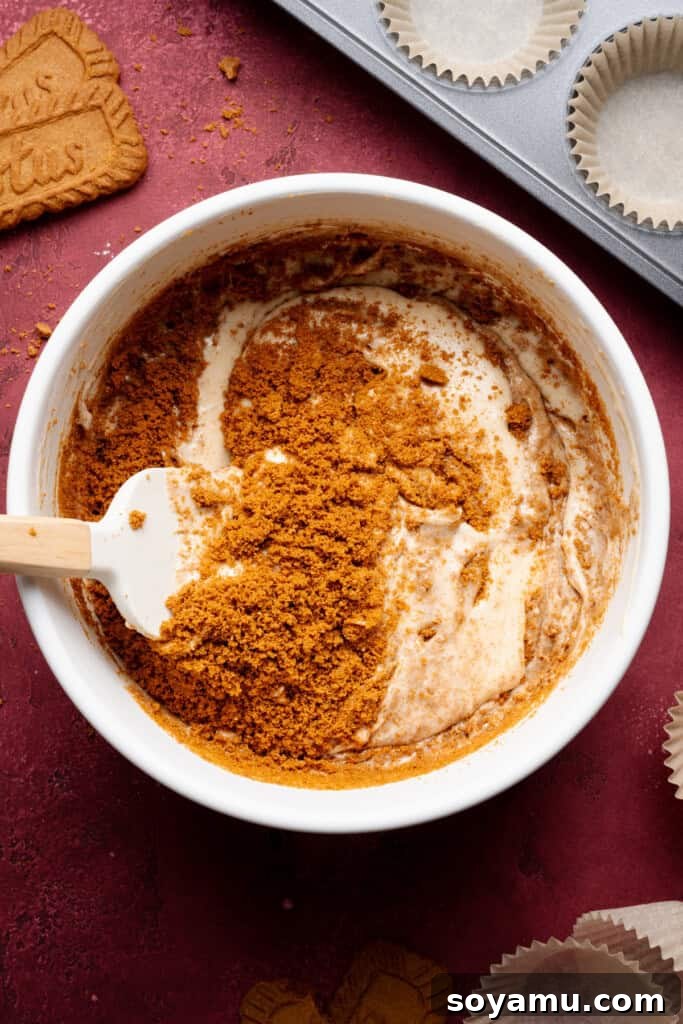
Finally, gently fold in the finely crushed Biscoff cookie crumbs. Stir just enough to evenly distribute them throughout the batter without overworking it.
Step 3: Bake to Golden Perfection
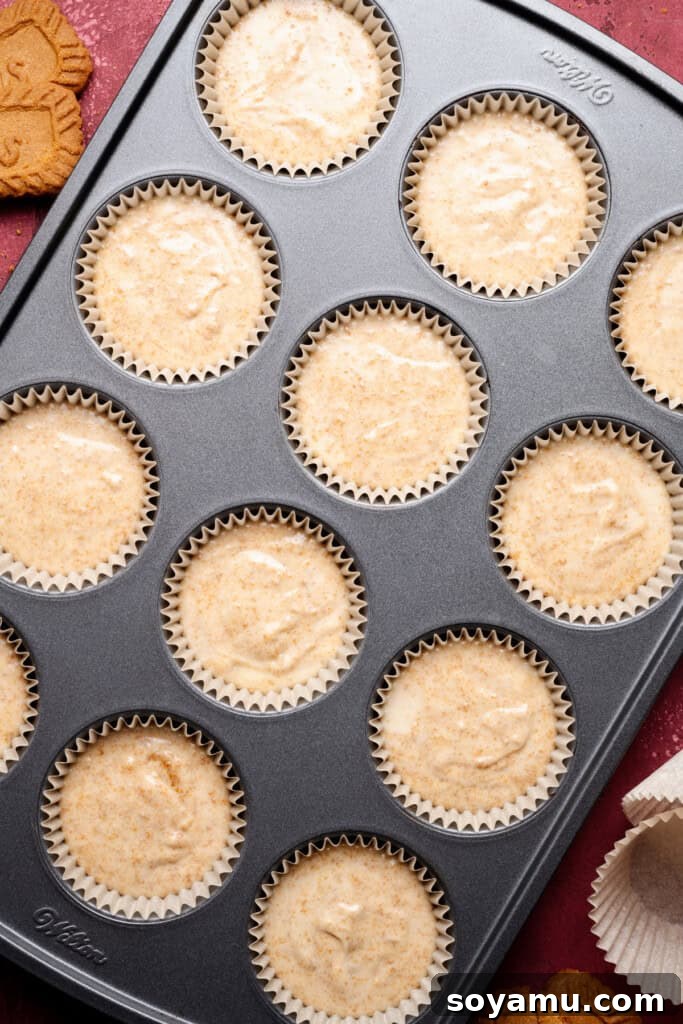
Divide the prepared cupcake batter evenly among your 16-17 lined cupcake papers. For consistent results, fill each liner about two-thirds full, or if you prefer precision, aim for approximately 52 grams of batter per cupcake.
Bake for 14 to 17 minutes, or until a toothpick inserted into the center of a cupcake comes out with moist crumbs attached, but no wet batter. Immediately after removing from the oven, use a butter knife or small offset spatula to gently lift the cupcakes out of the hot pan and transfer them to a wire rack to cool completely. Cooling on a rack prevents the bottoms from becoming soggy.
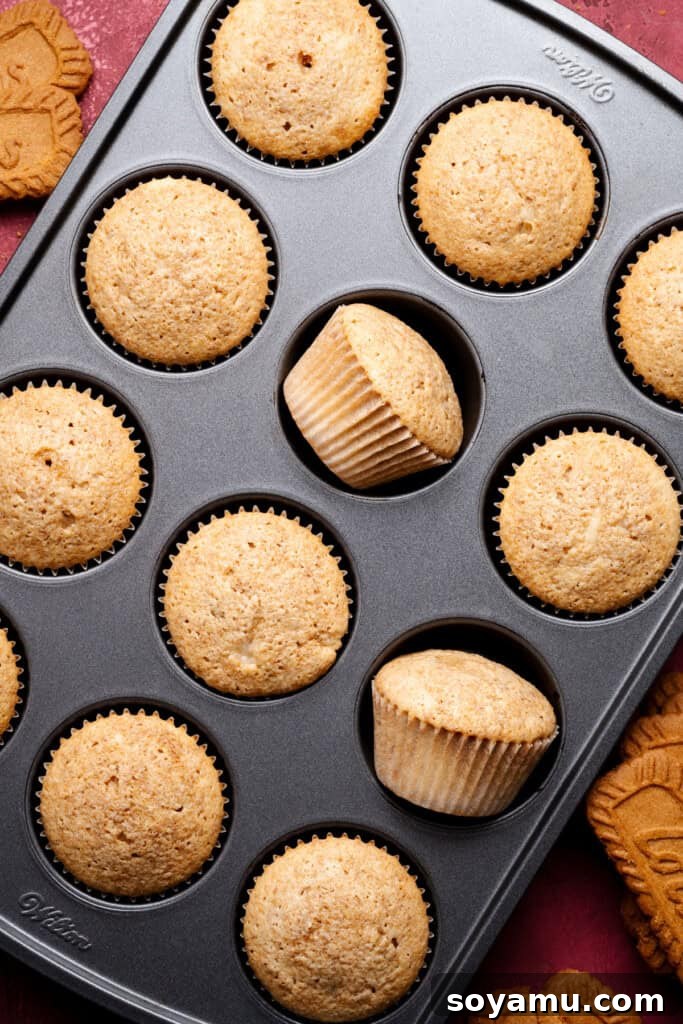
Step 4: Fill with Irresistible Cookie Butter
Once your cupcakes have completely cooled to room temperature, it’s time for the delicious filling! Using a cupcake corer (we recommend the smaller size for this recipe) or a small end of a melon baller, carefully remove the center of each cupcake. Aim to go about halfway to two-thirds down into the cupcake, creating a small well.
Gently melt your cookie butter until it’s pourable but not too hot. Transfer the melted cookie butter into a piping bag (or a sturdy zip-top bag with the corner snipped off). Pipe 1-2 teaspoons of melted cookie butter into the core of each cupcake. This hidden surprise is what makes these Biscoff Cupcakes truly special.
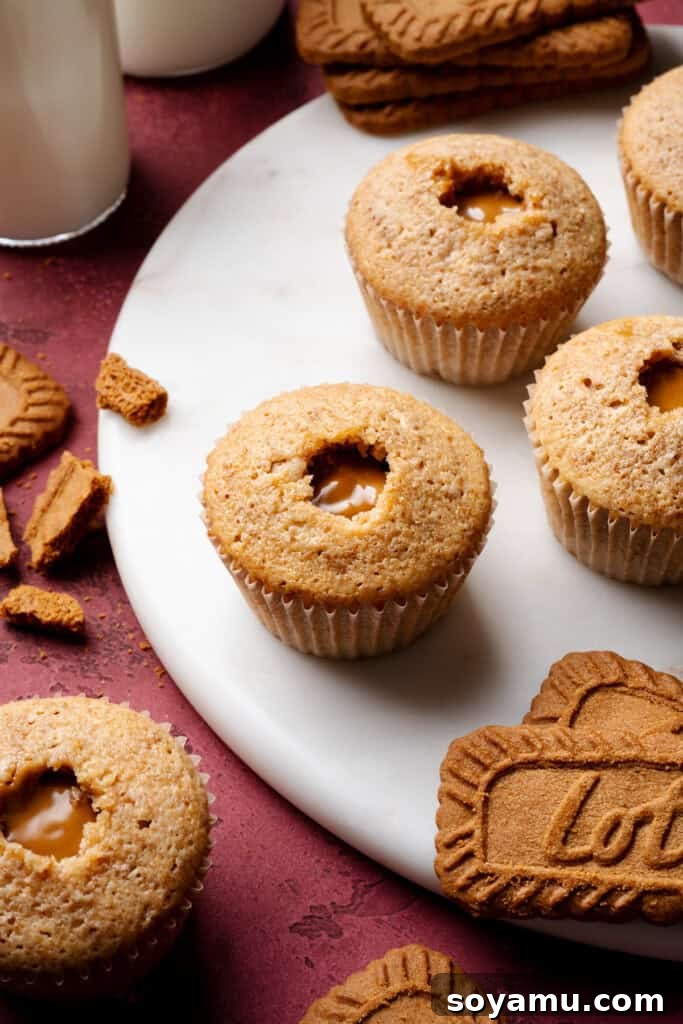
Step 5: Prepare the Luscious Biscoff Frosting and Decorate
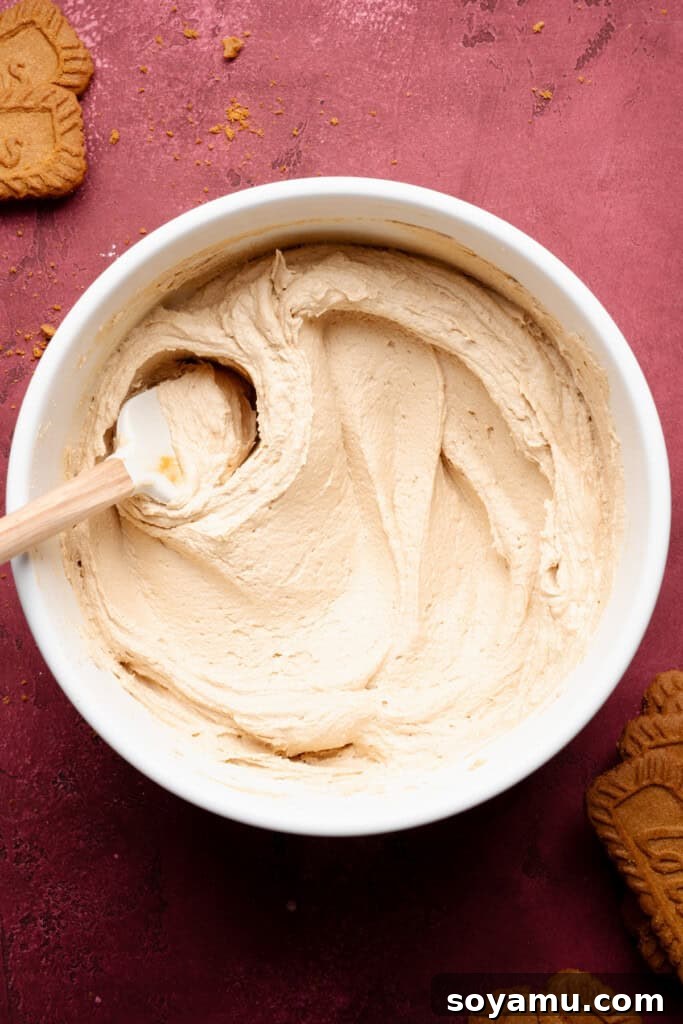
While the cupcakes are cooling (it’s crucial they are completely cool before frosting), prepare your sensational Biscoff frosting. In a medium bowl, beat the softened salted butter until it’s light and creamy, which should take about 30-60 seconds. Add the cookie butter and beat until well combined.
Gradually add the powdered sugar, mixing on low speed until combined. If the frosting seems too stiff, add milk, water, or heavy cream one tablespoon at a time until it reaches a smooth, pipeable consistency. Now, mix in the vanilla extract (or paste), a pinch of salt to balance the sweetness, and a touch of cinnamon. Adjust these to your taste preferences.
If your frosting becomes too soft or ‘weepy’ at any point, simply pop the bowl into the fridge or freezer for a few minutes to firm it up. Once ready, transfer the frosting to a piping bag fitted with your favorite tip (a Wilton 1M tip works wonders for beautiful swirls). Pipe generous swirls of frosting onto each cooled cupcake. For an extra touch, use the tip of an offset spatula or a spoon to create a small well in the center of the frosting with a swirling motion.
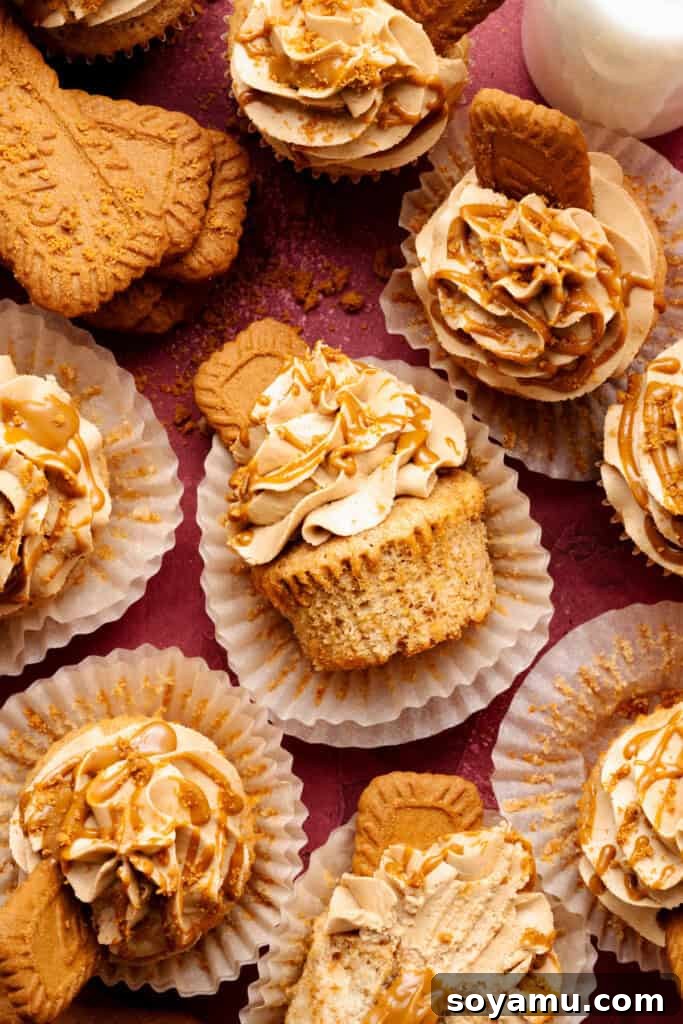
Complete your Biscoff masterpiece by drizzling more melted cookie butter over the frosting, and placing half a Biscoff cookie on top of each cupcake. A sprinkle of extra Biscoff crumbs can add texture and visual appeal.
Serving & Storing Your Biscoff Cupcakes
These Biscoff Cupcakes are best enjoyed immediately after frosting, allowing the flavors to truly shine. For any delicious leftovers, store them in an airtight container in the refrigerator for 2-3 days to maintain their freshness. Before serving again, let them come to room temperature for about 20-40 minutes; this allows the frosting to soften slightly and the cake to regain its tender texture. If you prefer a denser, chilled treat, feel free to enjoy them straight from the fridge!
Expert Baking Tips for Flawless Cupcakes
Achieve consistent, bakery-quality results every time with these essential baking tips:
- Invest in an Oven Thermometer: Many home ovens are not calibrated accurately, meaning the temperature you set might not be the actual temperature inside. An oven thermometer is an inexpensive tool that provides the true temperature, which is crucial for perfect baking. Keep one in your oven at all times.
- Use a Kitchen Scale for Accuracy: Measuring ingredients by weight, especially flour, is far more accurate than using volume (cups). The amount of flour in a “cup” can vary significantly based on how it’s scooped. A digital food scale ensures precise measurements, leading to consistent results every single time.
- Room Temperature Ingredients are Key: For a smooth, emulsified batter and tender cupcakes, ensure your butter, eggs, milk, and sour cream are all at room temperature. This allows them to blend together properly, creating a consistent texture.
- Do Not Overmix the Batter: Once the wet and dry ingredients are combined, mix only until just incorporated. Overmixing develops gluten in the flour, leading to tough, dense cupcakes. A few small lumps are better than an overmixed batter.
- Cool Cupcakes Completely Before Frosting: Frosting warm cupcakes is a recipe for disaster – it will melt and slide right off. Always allow your cupcakes to cool completely on a wire rack before you even think about piping on that delicious Biscoff frosting.
- Prepare Ahead for Success: Read through the entire recipe before you start. Gather and measure all your ingredients (this is called “mise en place”) to ensure a smooth, stress-free baking process.
Frequently Asked Questions (FAQs) About Biscoff Cupcakes
Can I double or halve this recipe?
Absolutely! This recipe is quite flexible and can be easily doubled if you’re baking for a larger crowd, or halved if you only need a smaller batch of cupcakes. Just be sure to scale all ingredients proportionally.
Can I freeze these cupcakes?
Yes, these Biscoff Cupcakes freeze beautifully! You can freeze them plain (unfrosted and unfilled), or with both the filling and frosting. For best results, place them in a single layer in a freezer-safe airtight container, or wrap individually in plastic wrap and then place in a container. They will keep well for 1-2 months. To enjoy, simply thaw them on the counter for a few hours before serving.
What if I don’t have cake flour?
While cake flour is highly recommended for the best texture, you can create a substitute. For every cup of cake flour needed, measure out 1 cup of all-purpose flour, remove 2 tablespoons, and then replace those 2 tablespoons with cornstarch. Sift this mixture together twice to ensure it’s well combined. This will yield a slightly less tender crumb but still produce a good cupcake.
How do I make fine Biscoff cookie crumbs?
The easiest way to achieve fine Biscoff cookie crumbs is to use a food processor. Simply pulse the cookies until they resemble a fine meal. If you don’t have a food processor, you can place the cookies in a sturdy zip-top bag, seal it, and crush them with a rolling pin until very fine.
My frosting is too thin/thick – what should I do?
Frosting consistency can be tricky, but it’s easy to adjust! If your frosting is too thin, gradually add more powdered sugar, a tablespoon at a time, until it thickens to your desired consistency. If it’s too thick, add a teaspoon of milk, water, or heavy cream at a time, mixing well after each addition, until it’s smooth and spreadable. Remember, it’s easier to add more than to take away!
Special Tools to Elevate Your Baking
While not strictly necessary for every step, these tools can make your cupcake baking and decorating experience much smoother and more enjoyable:
- Cupcake Corer: This handy gadget makes creating the perfect well for your cookie butter filling a breeze. We used the smaller size from this cupcake corer set. If you don’t have one, the small end of a melon baller or even a standard teaspoon can work wonders.
- Piping Tip (Wilton 1M): For those beautiful, professional-looking frosting swirls, a Wilton 1M piping tip is a classic choice and highly recommended.
- Piping Bag: Opt for a reusable piping bag to reduce waste and ensure a steady flow of frosting. They are durable and easy to clean.
- Offset Spatula: An offset spatula isn’t just for decorating cupcakes! It’s incredibly useful for spreading cake batters evenly, smoothing frostings, and general baking tasks, making it a versatile kitchen tool.
- Electric Mixer: Whether a stand mixer or a hand mixer, an electric mixer will make the creaming of butter and sugar, and the preparation of frosting, much faster and more efficient.
More Delicious Cupcake Recipes to Love:
- Orange Creamsicle Cupcakes
- Maple Bacon Cupcakes
- Pumpkin Cupcakes with Brown Butter Cream Cheese Frosting
- The Only Chocolate Cupcakes You’ll Ever Need
- Mini Vanilla Cupcakes
- Apple Pie Cupcakes
- Classic Birthday Cupcakes
Did you make this recipe? We’d love to hear from you!
Share your thoughts and leave a star rating below to let us know how you enjoyed these Biscoff Cupcakes. Your feedback is invaluable and helps our small business grow!
Triple Biscoff Cupcakes Recipe
By Stephanie Simmons
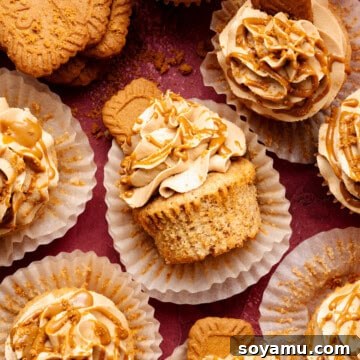
These Biscoff Cupcakes are a cookie butter lover’s dream! Tender & moist cupcakes are flavored with biscoff cookie crumbs and cinnamon, filled with cookie butter, and topped with a luscious cookie butter frosting. Drizzle on more cookie butter and add a biscoff cookie for the ultimate finishing touch!
Recipe At a Glance:
- Prep Time: 30 mins
- Cook Time: 16 mins
- Total Time: 46 mins
- Yields: 17 cupcakes
Ingredients
For the Cupcakes:
- 1 ½ cups + 1 tbsp cake flour (spooned & leveled or weighed out, 180 grams)
- 1 cup granulated sugar (210 grams)
- 3 tbsp light brown sugar, packed (36 grams)
- 1 ½ tsp baking powder
- ½ tsp cinnamon
- ⅛ tsp salt
- 7 tbsp salted butter, softened at room temperature (100 grams)
- 2 tbsp vegetable oil (27 grams)
- ⅓ cup + 1 tbsp milk, at room temperature (90 grams)
- ½ cup full-fat sour cream, at room temperature (120 grams)
- 1 tbsp warm water (15 grams)
- ½ tsp vinegar
- 1 tbsp vanilla bean paste (See Note below)
- 2 large eggs, at room temperature
- 7 Biscoff cookies, in fine crumbs (Use a food processor to make fine crumbs!)
For the Filling:
- ¾ cup cookie butter, melted (200 grams, technically a bit over ¾ cup)
For the Biscoff Frosting:
- ½ cup + 2 tbsp salted butter, softened at room temperature (141 grams)
- 1 cup cookie butter (250 grams)
- 3 cups to 3 ⅔ cups powdered sugar (340 to 420 grams – adjust to taste!)
- 2-3 tbsp milk/water/heavy cream (To help things combine, 30-45 grams)
- 1 tbsp vanilla bean paste, or vanilla extract
- Pinch of salt, to taste
- ⅛ tsp cinnamon
For Garnish:
- Biscoff cookie halves
- Melted cookie butter, for drizzling
Instructions
- Prep: Preheat your oven to 350° F (175°C). Line two cupcake pans with paper liners, in preparation for 16-17 cupcakes.
- Start the Batter: In a medium mixing bowl, whisk together the flour, sugars, baking powder, cinnamon, and salt. Add the softened butter and oil, and mix on low speed for about 30-60 seconds, just until the butter starts incorporating and you have a sandy mixture with some drier sandy bits, and some unevenly incorporated chunks of butter coated in flour.
- Finish the Batter: In a 2-cup glass measuring cup, whisk together the sour cream, milk, water, and vinegar until combined. Add 2 tbsp of this mixture to the bowl of butter and flour. Mix on low speed just until the mixture starts to come together (no more dry bits!), but is still lumpy. Then, add the vanilla and eggs to the remaining liquid mixture, lightly beating the eggs with a fork to break them up. Pour half this mixture into the bowl of batter with your mixer running on low. When it’s almost incorporated, pour in the remaining liquid, mixing on low until just combined. Scrape the bowl to make sure everything is mixed in – a few small lumps is fine! Gently fold in the Biscoff cookie crumbs. Do not over mix.
- Bake: Divide the batter evenly among your 16-17 cupcake papers. Fill them about 2/3 full, or use 52 grams of batter per cupcake. Bake for 14 to 17 minutes. A toothpick inserted into the center should pull out moist crumbs, not wet batter. Immediately use a butter knife to pop the cupcakes out of the hot pan, and place them on a wire rack to cool completely.
- Fill the Cupcakes: Once cool, use a cupcake corer or a teaspoon to remove the center of the cupcakes, going about halfway down the cupcake. Fill each cupcake with 1-2 tsp of melted cookie butter (add it to a piping bag and snip the tip to make this part easy!).
- Make the Frosting & Frost Cupcakes: While the cupcakes cool completely, make the frosting. In a medium bowl, beat the butter until creamy, 30-60 seconds. Beat in the cookie butter. Add the powdered sugar and mix until combined, using a bit of water/milk as needed to help things along. Mix in the remaining frosting ingredients, adjusting to taste. If for some reason your frosting is too soft or weepy, pop the bowl in the fridge or freezer to stiffen it back up. Fill a piping bag fitted with a Wilton 1M tip, then pipe swirls of frosting onto the cooled cupcakes. Drizzle with melted cookie butter and add half a Biscoff cookie to each cupcake. Sprinkle with cookie crumbs.
- Serve + Store: Dig in immediately once the cupcakes are frosted! Store in an airtight container in the fridge for 2-3 days. Let cupcakes come back to room temperature on the counter before enjoying (or eat them cold, if you like a denser texture!)
- Freezing Instructions: These cupcakes freeze well with or without frosting! Freeze in a freezer-safe container for 1-2 months. Let thaw on your counter for 1-2 hours before enjoying.
Notes
Nutrition Info: Nutrition does not include the garnishes on top of the cupcakes.
A note about “odd” measurements: You might notice some seemingly unconventional measurements in this recipe, such as 17 cupcakes or 1/3 cup + 1 tbsp of milk, or 7 tbsp of butter. These precise amounts are the result of extensive recipe testing to achieve the absolute best possible outcome. While traditional American baking often sticks to neat fractions, baking by weight (as many professional bakers and other countries do) often results in these more exact numbers. We encourage you to embrace a kitchen scale for baking, as it provides far greater accuracy than volume measurements, leading to more consistent and superior results!
Nutrition Information (Approximate)
- Serving: 1 cupcake
- Calories: 469 kcal
- Carbohydrates: 60g
- Protein: 4g
- Fat: 24g
- Saturated Fat: 10g
- Polyunsaturated Fat: 2g
- Monounsaturated Fat: 4g
- Trans Fat: 0.4g
- Cholesterol: 53mg
- Sodium: 164mg
- Potassium: 52mg
- Fiber: 0.4g
- Sugar: 45g
- Vitamin A: 393IU
- Vitamin C: 0.1mg
- Calcium: 47mg
- Iron: 0.5mg
Nutrition information is automatically calculated and should only be used as an approximation.