
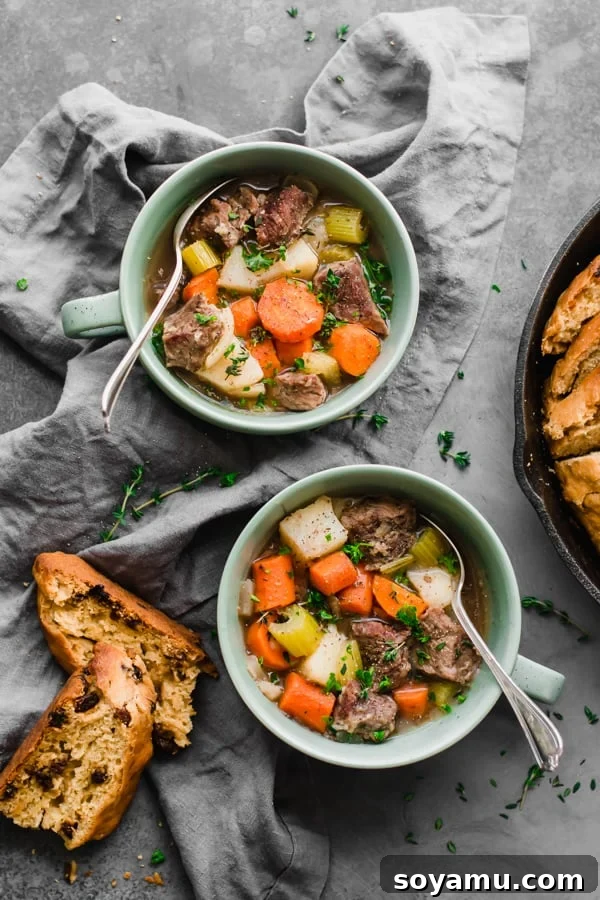
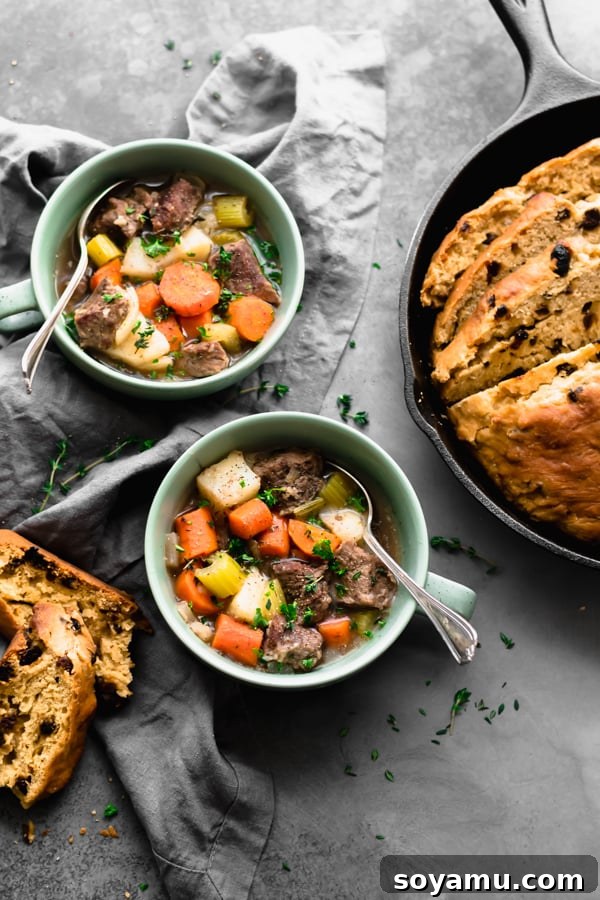
There’s nothing quite like a steaming bowl of **Classic Irish Stew** to warm the soul and bring a taste of tradition to your table. This incredibly delicious dish is surprisingly easy to prepare, relying on a handful of wholesome, basic ingredients like tender potatoes, sweet carrots, rich beef or lamb broth, and your choice of succulent stew meat. What truly elevates this recipe is the method of cooking: baking it in the oven. This slow, steady heat transforms the ingredients, rendering the meat melt-in-your-mouth tender, the vegetables perfectly saucy, and infusing every spoonful with a depth of flavor that is simply unmatched.
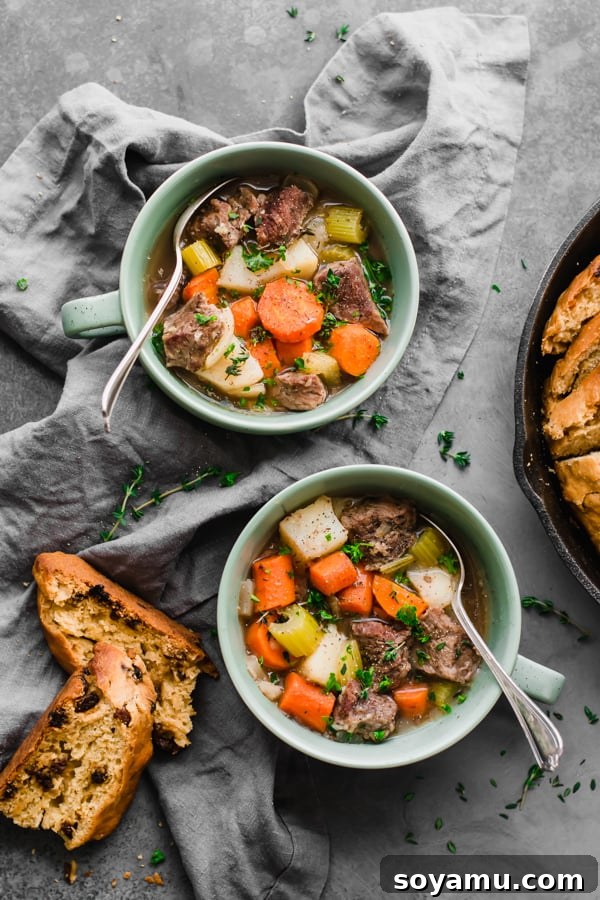
Mom’s Timeless Irish Stew Recipe
This particular Irish Stew recipe holds a special place in my heart – it’s “Mom’s Irish Stew” for a reason! My mom has lovingly prepared this dish every St. Patrick’s Day for as long as I can remember, and it’s a tradition I’ve proudly carried on. Its charm lies not just in its delectable taste, but also in its incredible simplicity and minimal effort requirement. As a fan of “low-effort, high-payoff” recipes, this one definitely takes the prize. It’s the kind of hearty comfort food that satisfies deeply without keeping you tied to the kitchen for hours.
What Makes a Classic Irish Stew So Special?
Traditional Irish Stew is a quintessential dish of Irish cuisine, renowned for its humble origins and comforting, robust flavors. Historically, it was a peasant dish, making the most of readily available ingredients. While some purists argue that an authentic Irish stew should only contain lamb, potatoes, onions, and water, modern interpretations, like this one, often include carrots and sometimes celery for added flavor and nutrition. The beauty of this stew lies in its ability to transform simple ingredients into something extraordinary through slow cooking, allowing the flavors to meld beautifully and the meat to become incredibly tender.
Key Ingredients for the Perfect Irish Stew:
The success of a great Irish stew starts with quality ingredients. Here’s what you’ll need and some tips for choosing them:
- Stew Meat: You have a choice between lamb and beef.
- **Lamb:** Traditionally, Irish stew is made with lamb, often from older sheep or mutton, which provides a richer, more gamey flavor. Opt for boneless lamb shoulder or leg, cut into 1-2 inch pieces.
- **Beef:** For a more budget-friendly or widely available option, beef stew meat (such as chuck roast, trimmed and cubed) works wonderfully. It still achieves incredible tenderness and absorbs the stew’s flavors beautifully.
- Root Vegetables: The backbone of any good stew.
- **Potatoes:** Essential for Irish stew. Waxy potatoes (like Yukon Gold or red potatoes) hold their shape better, while starchy potatoes (like Russets) will break down more, contributing to a thicker, creamier broth. Choose what you prefer! Peeling is optional for a more rustic feel.
- **Carrots:** Adds natural sweetness and vibrant color.
- **Onion:** Provides a foundational aromatic flavor.
- **Celery:** While not strictly traditional, I always add it! It’s a fantastic way to use up those extra stalks lingering in the fridge and adds an extra layer of savory depth to the stew.
- Broth: High-quality beef broth is key for a rich base. You can also use lamb broth if available.
- Seasonings: Simple yet impactful. Salt, pepper, thyme, and a bay leaf are all you need to bring out the natural flavors.
- Flour: A small amount of all-purpose flour (or a gluten-free blend) helps to lightly coat the meat and slightly thicken the stew as it cooks.
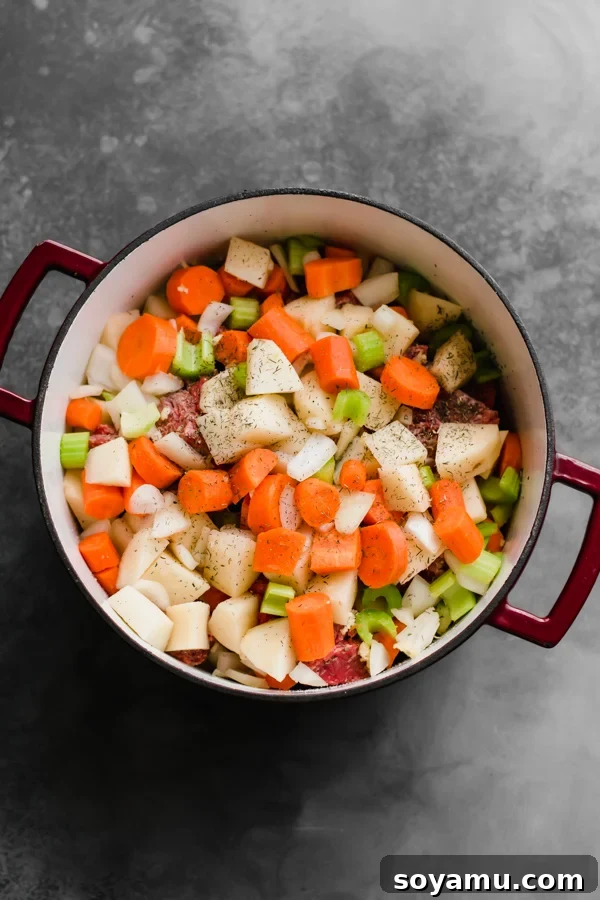
Step-by-Step Guide to Making Easy Oven-Baked Irish Stew
1. Prepare Your Ingredients
Begin by chopping all your vegetables: carrots, onion, celery, and potatoes. Aim for roughly similar-sized pieces to ensure even cooking. Mince your garlic. Remember, for a truly rustic stew, you can leave the potato skins on if desired! In a separate bowl, toss your chosen stew meat with flour, a generous pinch of salt and pepper, and half a teaspoon of dried thyme. This coating not only adds flavor but also helps to create a slightly thicker, more luxurious broth.
2. Assemble the Stew in a Dutch Oven
For the best results, a sturdy **Dutch oven** is highly recommended for this recipe. Lightly spray your Dutch oven with non-stick spray, even if it’s non-stick, just to be safe. There’s no need to preheat your oven yet! Start layering your ingredients: place about a third of the floured meat at the bottom of the Dutch oven, followed by a third of the chopped vegetable mixture. Repeat these layers with the remaining meat and vegetables. Don’t worry about making the layers perfectly neat; the flavors will meld regardless. Finally, add the remaining spices, including the bay leaf, and pour in the beef broth.
3. Oven Roasting for Perfection
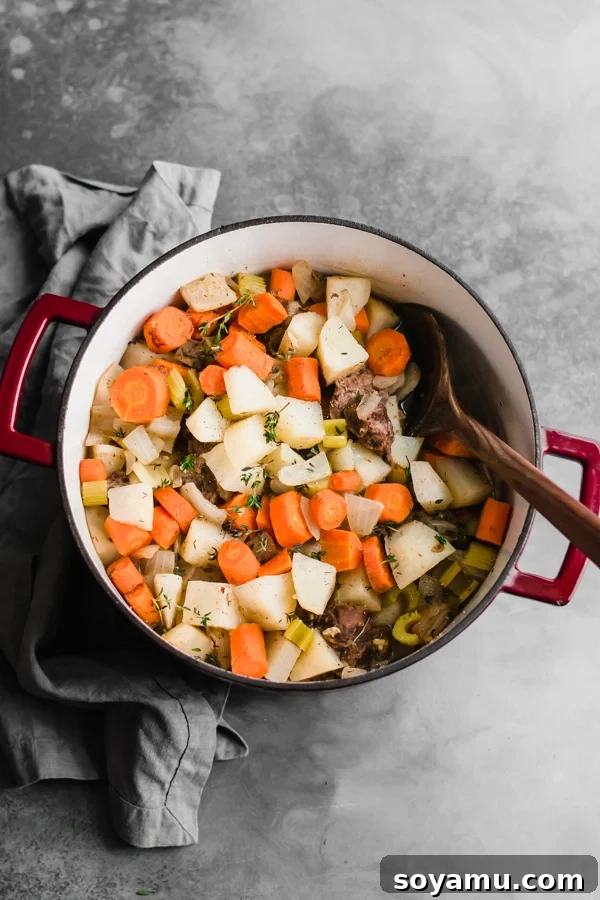
Place your covered Dutch oven into a *cold* oven. This is an important step as it allows the ingredients to heat up gradually, contributing to the even cooking and tenderness of the meat and vegetables. Set your oven temperature to 425 degrees F (220 degrees C). The stew will bake for approximately 1.5 to 2 hours. Be sure to give it a good stir at the one-hour mark to ensure everything is cooking evenly and to check on the consistency of the broth.
Achieving Perfect Tenderness and Flavor
At the 1-hour mark, when you stir the stew, it will likely resemble the photo above. The vegetables will be softening, and the meat will be cooking, but it won’t be quite ready. At this stage, give it a good stir, ensuring everything is submerged in the broth, and continue baking for another 20-30 minutes. The key indicators of a perfectly cooked Irish stew are **fall-apart tender meat** and **soft, easily pierced vegetables**. The broth, which initially seemed thin, will have naturally thickened to a rich, savory consistency, coating the ingredients beautifully.
A simple trick to check for doneness is to carefully remove a piece of carrot, potato, and meat, place them on a small plate to cool slightly, and then taste. If they are tender to your liking and the broth has achieved its desired thickness, your stew is ready to be enjoyed!
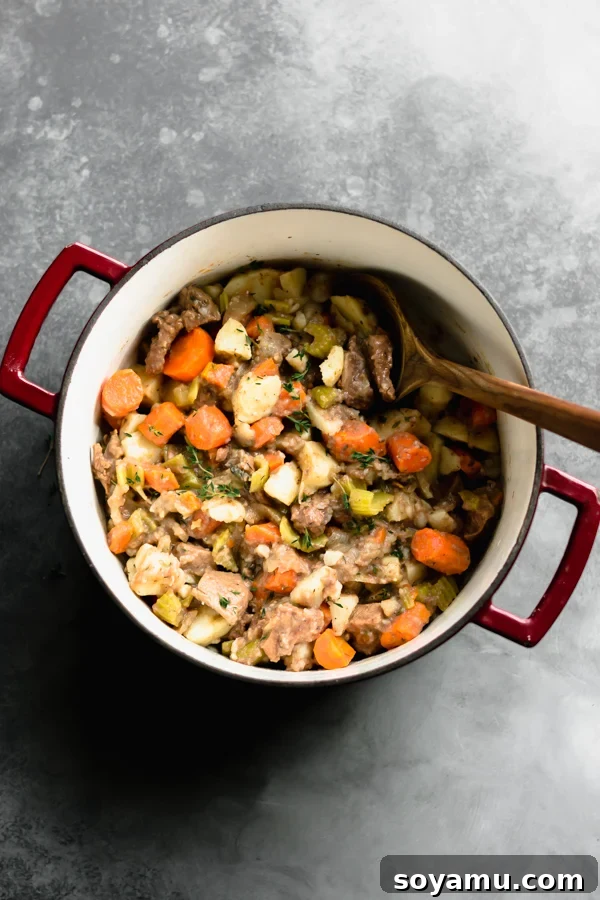
Full disclosure: sometimes, photographing food can be tricky! The stew in the initial stages might look “prettier” for a photo shoot, but the truly delicious, fully cooked version, where the veggies are perfectly soft and the broth is deeply saucy, might not always be the most “picture-perfect.” The image above shows you what to aim for – a rich, thick, and utterly tender stew that might not win beauty contests but will definitely win over taste buds. Trust the process, and your stew will be perfectly delicious!
Dutch Oven vs. Slow Cooker: Why Oven Baking is Superior
Many assume that a stew recipe, especially one as comforting as Irish stew, would be ideal for a slow cooker or Crock-Pot. While slow cookers certainly have their place, for this particular Irish Stew, I strongly advocate for cooking it in a **Dutch oven in the oven**. The oven’s consistent, radiant heat provides several advantages that enhance the stew’s flavor and texture:
- Deeper Flavor Development: The gentle, all-around heat of the oven allows for a more even and thorough browning of the ingredients (even if subtle, it happens during the long cook), leading to superior flavor development compared to the more direct heat of a slow cooker. The Maillard reaction, which creates those complex, savory notes, is better facilitated in an oven.
- Superior Texture: Oven baking results in meat that is incredibly fall-apart tender, almost melting in your mouth, without becoming mushy. The vegetables also achieve a pleasant softness while retaining some structure, rather than turning overly soft as can sometimes happen in a slow cooker.
- Natural Thickening: The oven method naturally encourages the broth to thicken to a perfect, saucy consistency due to gentle evaporation and the flour coating on the meat. In a slow cooker, which retains more moisture, the broth might remain thinner, requiring additional steps to thicken it at the end.
- Consistent Cooking: Ovens provide a more stable and consistent cooking temperature throughout the entire pot, ensuring that all ingredients cook at a similar rate and achieve optimal tenderness.
I’ve relied on my Dutch oven for years for countless recipes, and it’s truly an indispensable kitchen tool. If you’re in the market for one, I highly recommend a quality cast-iron Dutch oven like this one or a Lodge brand. They last forever and make a world of difference in dishes like this stew.
Make-Ahead and Storage Tips
One of the best things about Irish Stew is how wonderfully it reheats! This makes it an excellent candidate for meal prepping or enjoying as leftovers throughout the week. Store any leftover stew in an airtight container in the refrigerator for up to 5-7 days. The flavors often deepen and improve overnight, making for an even more delicious meal the next day. It’s perfect for a satisfying desk lunch or a quick, cozy dinner.
Serving Suggestions & Perfect Pairings
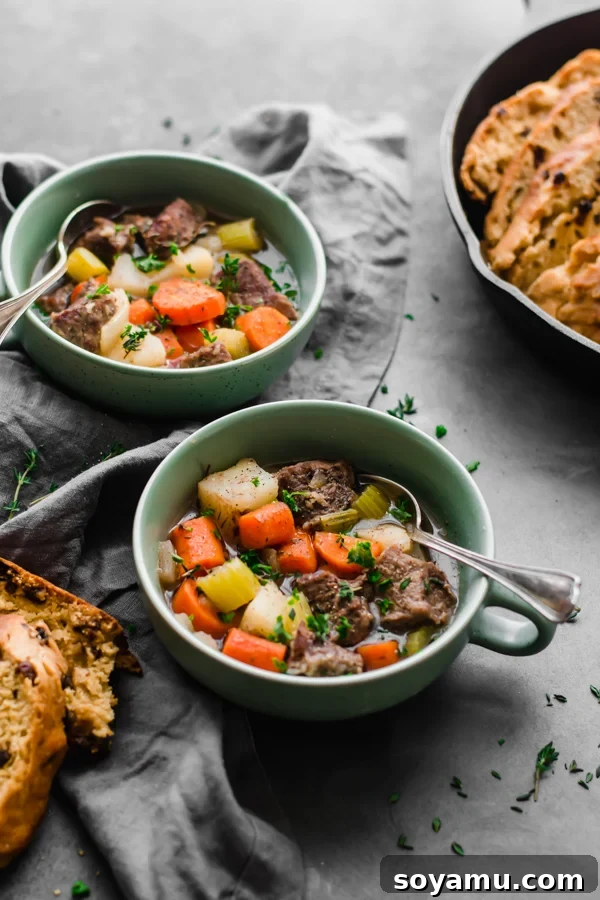
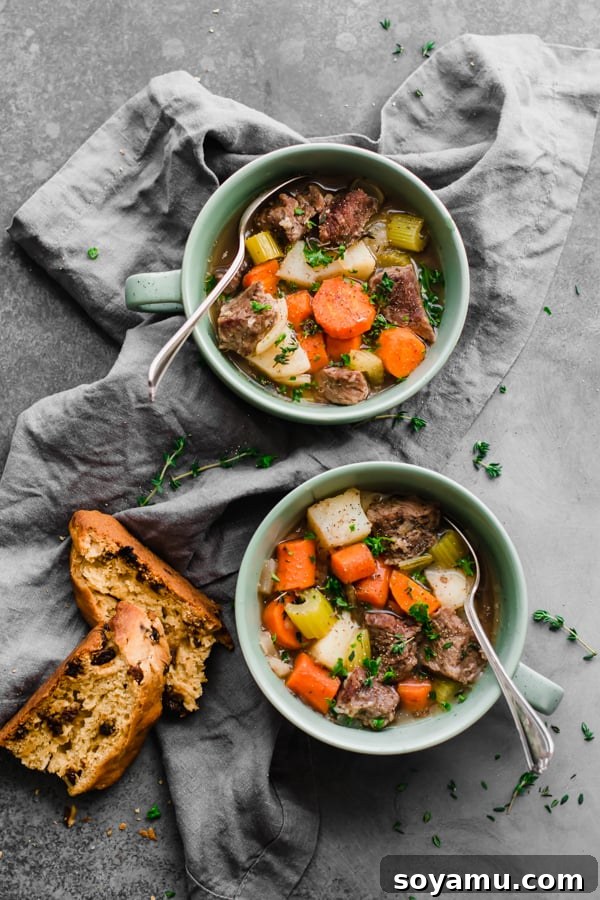
To truly complete the Irish Stew experience, serving it with a crusty bread to soak up all that incredible broth is an absolute must. And what better companion than **Irish Soda Bread**? I recently discovered how incredibly simple it is to bake homemade soda bread, and I’ve got a scrumptious recipe for it that I highly recommend. The slightly tangy, dense texture of soda bread is the perfect contrast to the rich stew, making every bite a delight.
Beyond soda bread, a pint of Guinness or a dry stout complements the stew’s robust flavors beautifully. A simple green salad or some steamed cabbage can also offer a fresh counterpoint to the hearty dish.
Frequently Asked Questions About Irish Stew
Q: Can I use Guinness or another stout in my Irish Stew?
A: Absolutely! While not always in the most traditional recipes, adding Guinness or another dry stout can impart a wonderful depth and malty complexity to the stew. If you choose to add beer, replace about 1/2 to 1 cup of the beef broth with stout. It pairs beautifully with the savory meat and vegetables.
Q: What kind of potatoes are best for Irish Stew?
A: For a stew where potatoes hold their shape well, use waxy varieties like Yukon Golds, red potatoes, or new potatoes. If you prefer potatoes that break down slightly to thicken the stew, russet potatoes will work, but be mindful not to overcook them into mush. Peeling is optional; leaving the skins on adds a rustic touch and extra fiber.
Q: How can I thicken my Irish Stew if it’s too thin?
A: The flour coating on the meat and the natural starches from the potatoes should help thicken the stew. If it’s still too thin at the end of cooking, you have a couple of options:
- Remove the lid for the last 15-20 minutes of baking to allow some liquid to evaporate.
- Create a slurry: Mix 1 tablespoon of flour or cornstarch with 2 tablespoons of cold water until smooth. Stir this into the simmering stew and cook for another 5-10 minutes until thickened.
Q: Can I add other vegetables to Irish Stew?
A: While the core ingredients are potatoes, carrots, and onions (and celery in this recipe), you can certainly customize! Turnips or parsnips are great additions that complement the root vegetable profile. Peas or green beans can be added during the last 20 minutes of cooking for a fresh touch and added color.
Q: Is Irish Stew gluten-free?
A: As written, this recipe uses all-purpose flour. However, it can easily be made gluten-free by substituting a gluten-free flour blend (ensure it’s a blend suitable for baking/thickening, avoiding almond or coconut flour for this purpose) for the regular flour. All other ingredients are naturally gluten-free.
Other Delicious St. Patrick’s Day Recipes to Try:
If you’re celebrating St. Patrick’s Day or simply looking for more comforting, Irish-inspired dishes, explore these fantastic recipes:
- Easy Skillet Irish Soda Bread – The perfect accompaniment to your stew!
- Guinness Chocolate Cake – A rich chocolate cake made with Guinness and brown butter, topped with the creamiest cream cheese + brown butter Guinness frosting.
- Layered Mint Chocolate Brownies – Indulgent brownies with a fudgy base, creamy mint buttercream, and luscious chocolate ganache.
- Bacon Cheddar Chive Scones – Savory scones loaded with cheddar cheese, smoky bacon, and fresh chives.
- Beer Braised Short Ribs with Cheddar Mashed Potatoes – A restaurant-quality meal, surprisingly easy to make and perfectly paired with fluffy cheddar mashed potatoes.
- Cheesy Potatoes from Our Balanced Bowl – A comforting side dish.
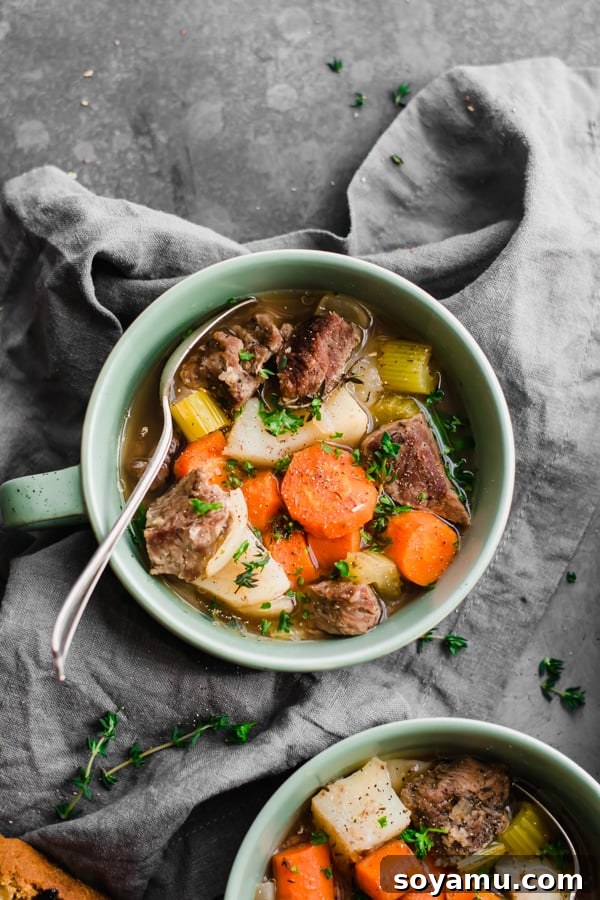
So, what are your plans for St. Patrick’s Day this year? Whether you’re celebrating with family or enjoying a cozy night in, I hope they involve a delicious bowl of this hearty Irish stew, some warm soda bread, perhaps a pint of Guinness, and some cheerful Irish music! Enjoy every comforting bite!
Did you make this recipe? Share your culinary creations!
Be sure to follow bluebowlrecipes on Instagram and tag @bluebowlrecipes with your photo – I’d love to see what you make! And, if you enjoyed this recipe, please consider leaving a comment and rating below. Your feedback helps other home cooks discover delicious meals!
Mom’s Irish Stew
Rate
Ingredients
- 1 1/2 to 2 lbs lamb or beef stew meat, fat trimmed
- 2 TBS flour, can sub a gluten-free flour blend
- 1 medium onion, thinly sliced, or diced
- 4 stalks celery, chopped
- 4 large carrots, peeled and sliced
- 2 cloves garlic, minced
- 3-4 medium potatoes, peeled and cubed, Sometimes I don’t peel them!
- 1 bay leaf
- 1 tsp salt
- 1/4 tsp pepper
- 1 tsp thyme, divided
- 1 and 1/4 – 2 cups beef broth
Instructions
-
Prep: Spray your Dutch oven with non-stick spray (mine is non-stick but I just wanted to be safe). Do not preheat the oven.
-
Make the stew: Cut all your veggies, as noted above in the ingredients. Mix together in a bowl and add the garlic.
Toss the meat with the flour, some salt and pepper to taste, and 1/2 tsp of thyme in a bowl. Add 1/3 of the meat to the bottom of the Dutch oven, then 1/3 of the veggie mixture. Alternate this with the remaining meat and veggies. (The layers don’t need to be perfect here!) Add the spices and beef broth.
-
Bake: Place the covered Dutch oven in a cold oven. Set the temperature to 425 degrees. Bake for about 1.5 – 2 hours, stirring at the hour mark (see note, below, and photos above for reference!). Taste, and add extra seasoning if desired.
Enjoy warm with soda bread!
-
Serve + Store: Store leftovers in an airtight container in the fridge for about a week.
Notes
NOTE: I’ve gone all the way up to 2.5 lbs of meat here without increasing the other ingredients (well, I did add an extra tbsp flour) – so feel free to increase the meat or any of the veggie quantities if desired!
NOTE: I think that the baking dish you use and your oven (they’re all a little different) can affect cooking time. Make sure to set your timer for only one hour to begin – and when you stir the stew at the hour mark you can see how much longer it really needs to cook. Pierce the veggies + potatoes with a fork – if they’re tender, it’s likely done! The meat will be fork tender, too, when done, and the broth will have thickened up a bit. Again, reference photos above.
Nutrition
Nutrition information is automatically calculated, so should only be used as an approximation.
Like this? Leave a comment below!