
How to Cook Perfect Spaghetti Squash: Your Easy Fall Favorite
Fall ushers in the delightful season of squashes, offering a bounty of flavors and textures. Among them, spaghetti squash stands out as a truly versatile and healthy star. If the thought of preparing this unique vegetable has seemed daunting, fear no more! This comprehensive guide will empower you to cook perfect spaghetti squash every single time, requiring only about 5 minutes of active preparation. Once cooked, its tender, pasta-like strands are ready to transform into countless delicious meals, from comforting pasta alternatives to hearty casseroles and creative side dishes.
Why Spaghetti Squash is a Kitchen Essential
Spaghetti squash isn’t just a seasonal delight; it’s a nutritional powerhouse and an incredibly versatile ingredient that can benefit many dietary preferences. Here’s why it deserves a permanent spot in your culinary repertoire:
- Healthy Pasta Alternative: For those seeking lower-carb, gluten-free, or keto-friendly options, spaghetti squash is a game-changer. Its mild flavor and noodle-like texture make it an excellent stand-in for traditional pasta in your favorite Italian dishes.
- Nutrient-Rich: Packed with vitamins A and C, fiber, and manganese, spaghetti squash contributes to a healthy diet. It’s low in calories yet surprisingly filling, making it ideal for weight management.
- Remarkably Versatile: From savory mains to light sides, spaghetti squash adapts beautifully. It absorbs flavors wonderfully, allowing you to pair it with everything from rich marinara sauces and creamy pestos to vibrant stir-fries and fresh salads.
- Incredibly Easy to Cook: Despite its tough exterior, cooking spaghetti squash is surprisingly simple. Our roasting method is largely hands-off, letting your oven do most of the work while you focus on other tasks.
Choosing and Storing Your Spaghetti Squash
Selecting the right squash is the first step to a delicious meal. Look for spaghetti squash that is:
- Firm and Heavy: It should feel solid and heavy for its size, indicating good moisture content.
- Bright and Evenly Colored: A vibrant yellow or pale orange color usually means it’s ripe. Avoid any green spots, as these suggest it’s underripe.
- Free of Blemishes: Check for soft spots, mold, or cuts, which can indicate spoilage.
Uncooked spaghetti squash can be stored in a cool, dry place (like a pantry) for up to 1-2 months. Once cooked, store the strands in an airtight container in the refrigerator for 3-5 days.
Essential Equipment for Roasting Spaghetti Squash
You won’t need any fancy gadgets for this recipe. Just a few basic kitchen tools will get you started:
- A sharp, sturdy chef’s knife
- A cutting board
- A large baking sheet
- Non-stick cooking spray or parchment paper
- A spoon for scooping seeds
- A fork for shredding the cooked squash
Step-by-Step Guide to Perfect Roasted Spaghetti Squash
This method focuses on roasting, which brings out the squash’s natural sweetness and creates those perfectly tender, separate strands. Follow these simple steps for a foolproof result.
1. Prepare Your Squash
Start by carefully slicing off both ends of your spaghetti squash. This creates a flat, stable surface, making the next cut much safer. Then, carefully slice the squash in half lengthwise. Spaghetti squash can be quite tough, so use a sharp knife and caution. If you find it too hard to cut, you can microwave the whole squash for 2-3 minutes to soften the skin slightly before cutting.
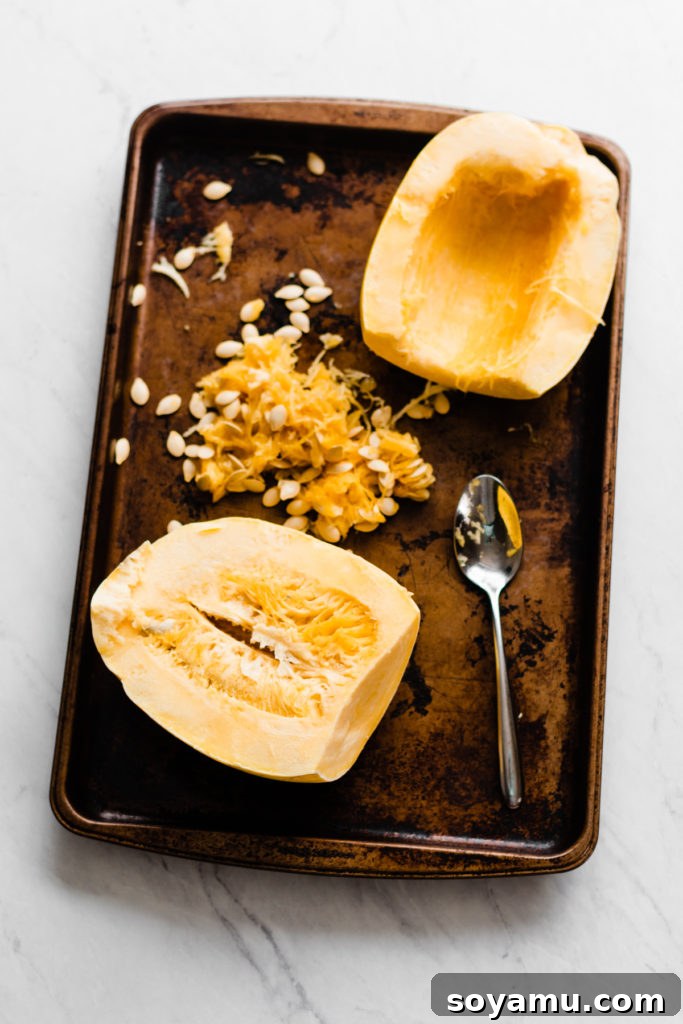
Once halved, use a spoon to scoop out all the seeds and fibrous pulp from the center. Discard the seeds or save them to roast separately for a delicious snack!
2. Season and Prepare for Roasting
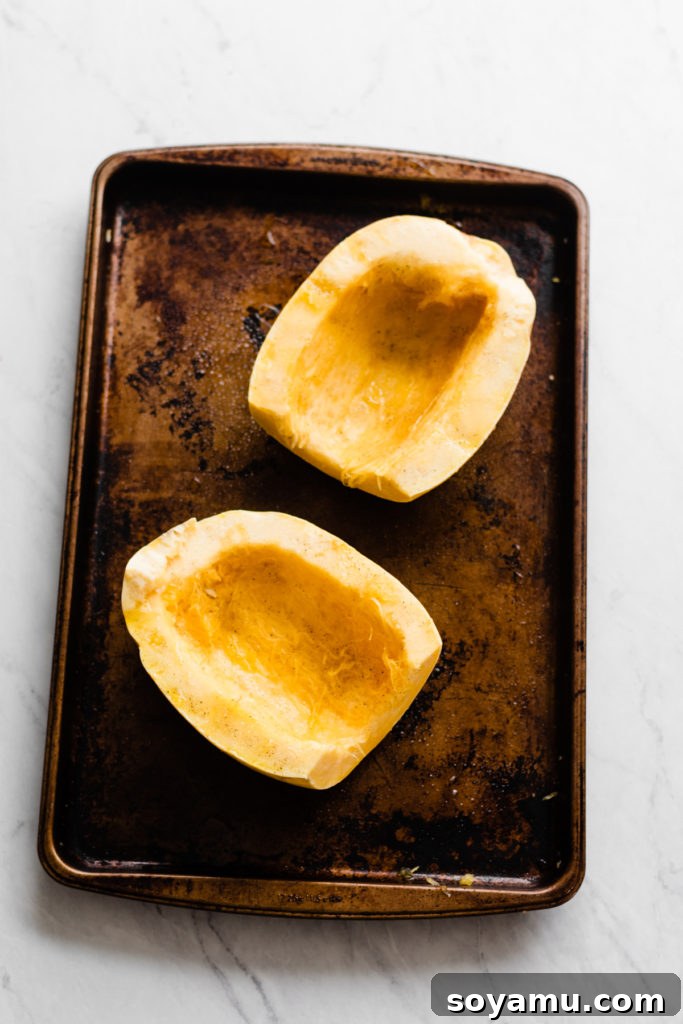
Lightly rub the cut sides of each spaghetti squash half with a little olive oil. This not only helps with caramelization but also prevents it from drying out during cooking. Season generously with salt and freshly ground black pepper. Feel free to add other seasonings at this stage, such as garlic powder, onion powder, or a sprinkle of dried herbs like oregano or thyme, to infuse more flavor.
3. Roast to Perfection
Preheat your oven to 400°F (200°C). Lightly spray a baking sheet with nonstick cooking spray or line it with parchment paper for easier cleanup. Place the seasoned spaghetti squash halves cut-side down on the prepared baking sheet. Roasting them cut-side down helps steam the interior while the edges caramelize beautifully, yielding tender, distinct strands.
Roast for approximately 40-60 minutes. The cooking time will vary depending on the size of your squash; larger squashes will typically require closer to 50-60 minutes. To check for doneness, carefully flip one half over. You should be able to easily pull away the spaghetti-like strands with a fork. The flesh should be tender but still hold its shape slightly – not mushy. Another indicator is that the outer skin should be easy to pierce with a fork.
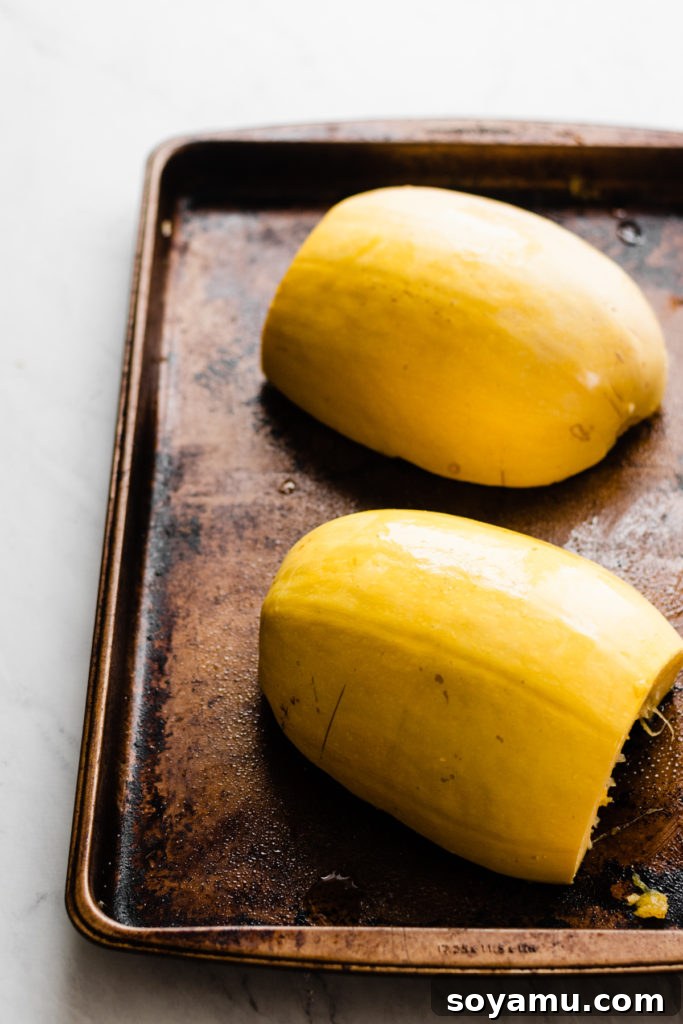
The edges where the squash touched the pan will turn a lovely golden brown and become slightly caramelized, adding a depth of flavor that can only be achieved through roasting.
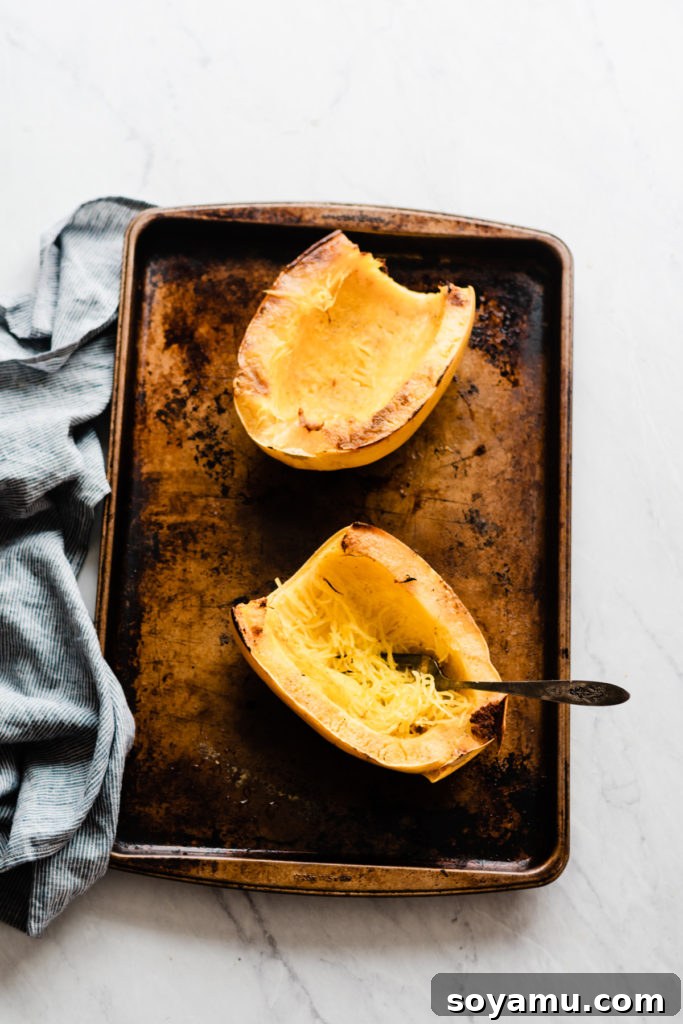
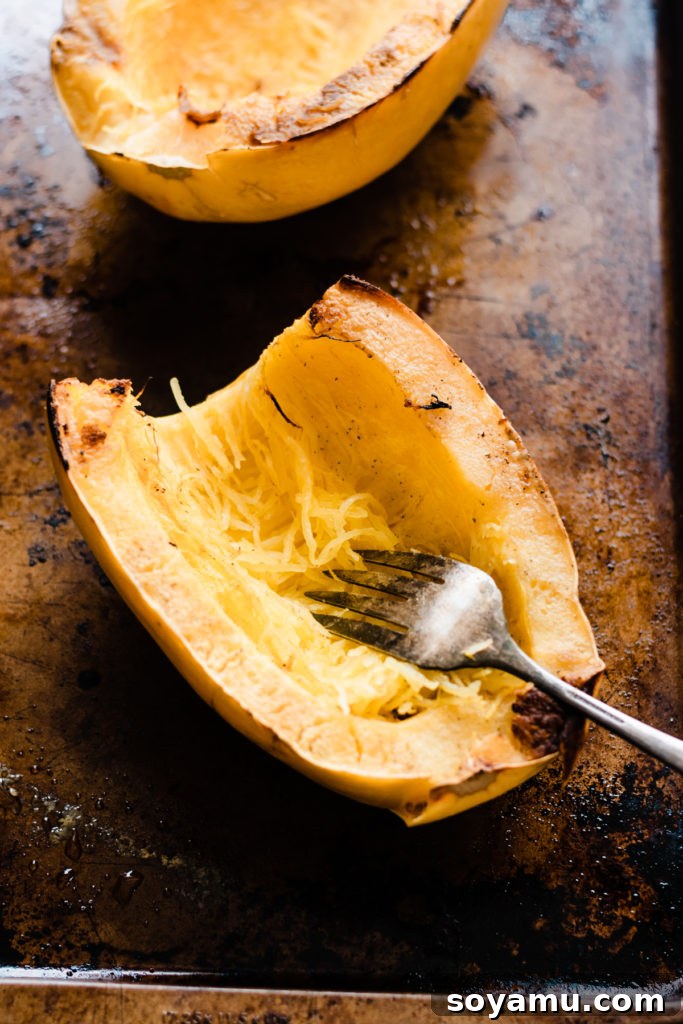
4. Shred and Serve
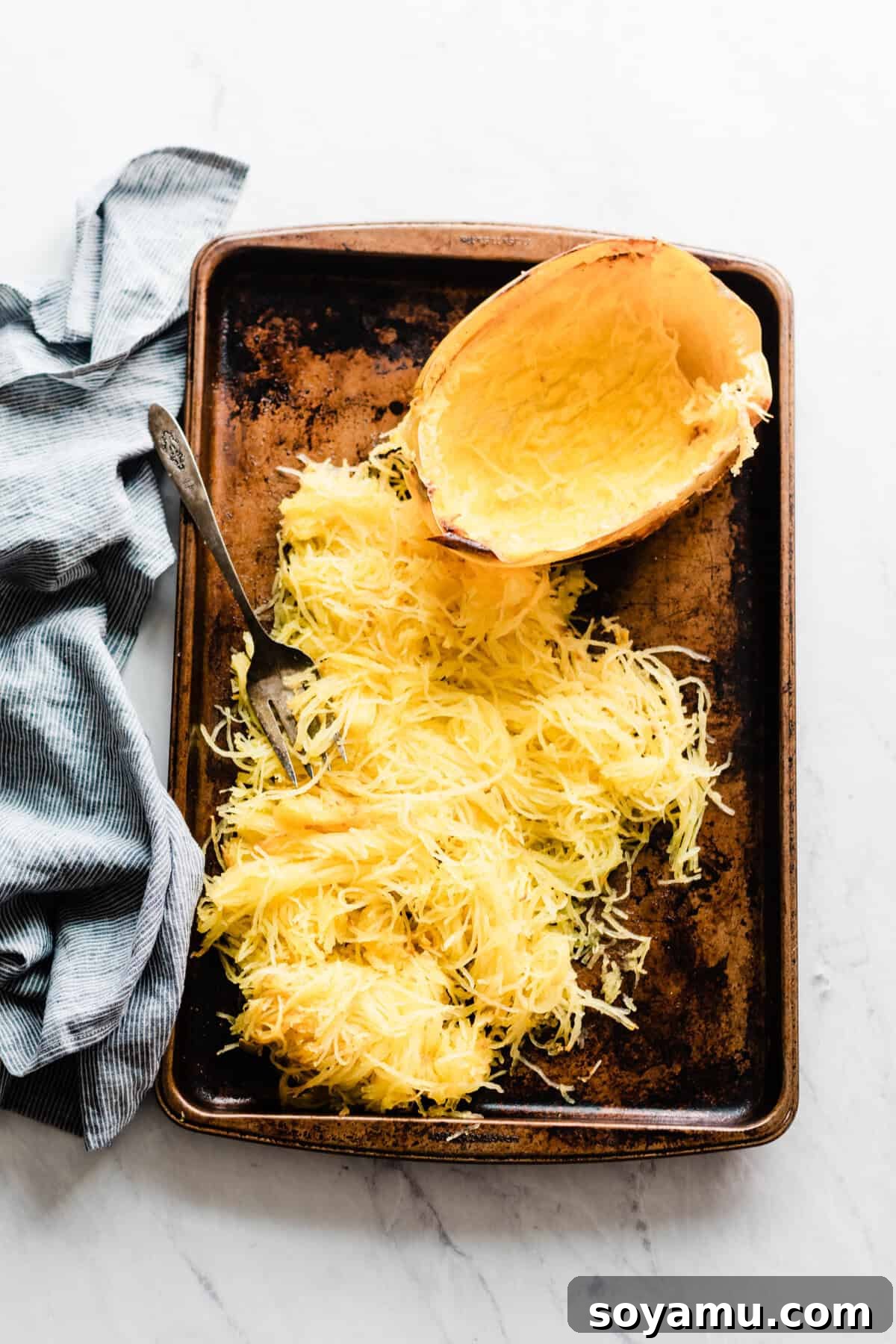
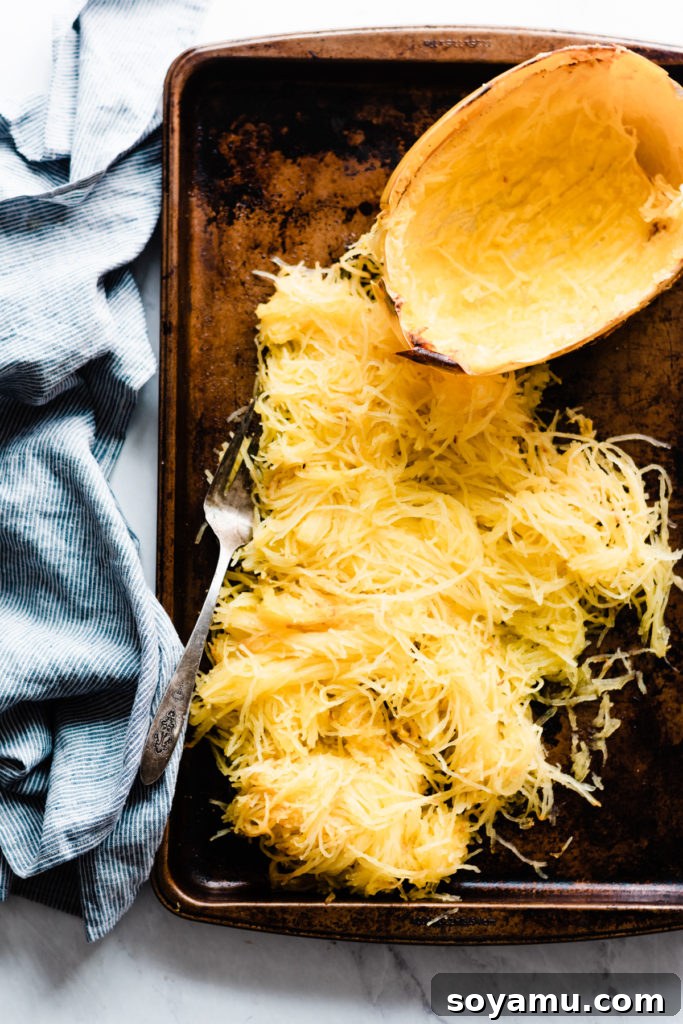
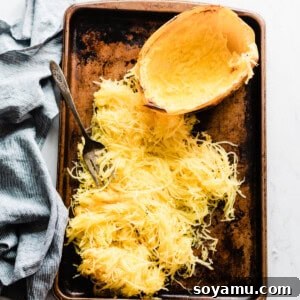
Once the squash is cooked and slightly cooled (enough to handle), use a fork to gently scrape out the “spaghetti” strands from each half. They should separate easily and gracefully. Collect all the strands in a bowl and they are now ready to be used in your favorite recipes! It’s truly one of the simplest yet most rewarding meal prep wins you can achieve in the kitchen.
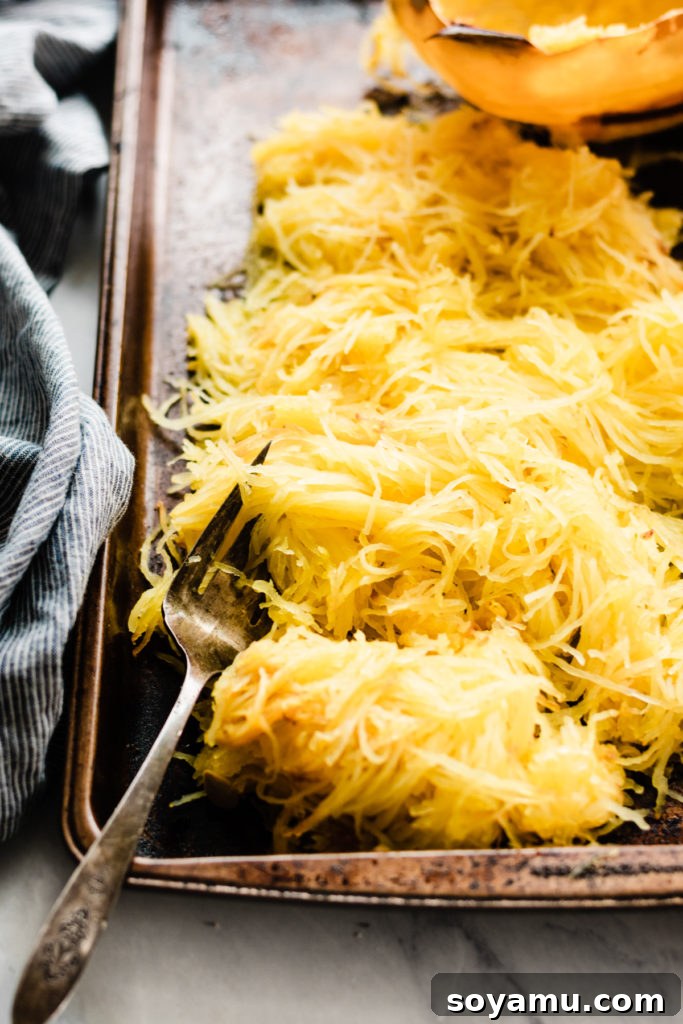
Tips for Spaghetti Squash Success
- Don’t Overcook: Overcooking can lead to mushy strands that lose their pasta-like texture. It’s better to undercook slightly and return to the oven if needed.
- Different Cooking Methods: While roasting is our favorite for flavor and texture, spaghetti squash can also be cooked in a microwave (quickest), Instant Pot (convenient), or slow cooker. Each method yields slightly different results.
- Enhance Flavor: A drizzle of butter, a sprinkle of Parmesan cheese, or a dash of fresh herbs can elevate your cooked squash.
- Meal Prep Gold: Cook a large batch on the weekend, and you’ll have a healthy base for meals throughout the week.
Creative Ways to Enjoy Your Spaghetti Squash
Now that you’ve mastered cooking it, the possibilities are endless! Here are some inspiring ideas to use your perfectly cooked spaghetti squash:
- Pasta Substitute: Top with your favorite marinara sauce, pesto, or Alfredo sauce. Add meatballs, grilled chicken, or sautéed vegetables for a complete meal.
- Stuffed Squash Boats: Fill the hollowed-out squash halves with a mixture of protein (ground beef, chicken, black beans), cheese, and vegetables, then bake until bubbly.
- Cozy Casseroles: Integrate spaghetti squash into lasagna, gratins, or other baked dishes for a lighter, fiber-rich alternative.
- Salads and Bowls: Use cooled spaghetti squash strands as a base for vibrant salads with fresh greens, cherry tomatoes, feta, and a light vinaigrette.
- Breakfast Hash: Sauté with eggs, bacon, or sausage for a hearty, low-carb breakfast.
- Side Dish: Simply toss with a little butter or olive oil, garlic, and fresh parsley for an effortless and healthy side.
Need some specific inspiration for what to make with your Spaghetti Squash?
Chicken and Broccoli Stuffed Spaghetti Squash
Spaghetti Squash Lasagna
“Spaghetti” and Meatballs
Burrito Spaghetti Squash Boats
Roasted Garlic and Kale Spaghetti Squash with Sun-Dried Tomatoes
Frequently Asked Questions About Spaghetti Squash
Q: Can I cook spaghetti squash whole?
A: Yes, you can poke holes in it and bake or microwave it whole. However, cutting it in half before roasting (as described in this guide) allows for better caramelization and ensures the strands are perfectly tender and distinct. Cooking it whole often results in a more steamed, less flavorful squash.
Q: How long does cooked spaghetti squash last?
A: Cooked spaghetti squash strands can be stored in an airtight container in the refrigerator for 3-5 days. It reheats well in the microwave or on the stovetop.
Q: Can I freeze spaghetti squash?
A: Absolutely! Once cooked and shredded, allow the spaghetti squash to cool completely. Portion it into freezer-safe bags or containers and freeze for up to 3-6 months. Thaw in the refrigerator overnight before reheating and using in recipes.
Q: Is spaghetti squash truly a good pasta substitute?
A: While it won’t have the exact same bite as traditional durum wheat pasta, spaghetti squash offers a remarkably similar texture and a mild flavor that pairs wonderfully with most pasta sauces. It’s an excellent option for reducing carbs and increasing vegetable intake without sacrificing the enjoyment of your favorite pasta dishes.
Q: What are the health benefits of spaghetti squash?
A: Spaghetti squash is rich in dietary fiber, which aids digestion and promotes satiety. It’s also a good source of Vitamin C (an antioxidant), Vitamin B6, manganese, and potassium. Being low in calories and carbohydrates, it’s beneficial for blood sugar management and weight control.
Did you make this recipe? We’d love to see it!
Be sure to follow bluebowlrecipes on Instagram and tag #bluebowlrecipes with your photo! You can also post a photo of your recipe to the bluebowlrecipes Facebook page. We’d love to see what you create!
How to Cook Perfect Spaghetti Squash
Print Recipe
Ingredients
- 1 large spaghetti squash
- 2 tsp olive oil
- Salt, to taste
- Pepper, to taste
Instructions
-
Prep: Preheat oven to 400 degrees F (200°C). Prepare a baking sheet by lightly spraying with nonstick spray or lining with parchment paper.
-
Prep the Squash: Carefully slice off both ends of the spaghetti squash, then cut the entire squash in half lengthwise. Use a spoon to scoop out all the seeds and fibrous strands from the center of each half and discard them. Rub the cut surfaces of the squash halves with the olive oil, then generously season with salt and pepper.
-
Roast: Place the seasoned squash halves, cut-side down, onto the prepared baking sheet. Roast in the preheated oven for 40-60 minutes. The cooking time will depend on the size of your squash; larger squashes will typically require closer to 50 or 60 minutes. To check for doneness, carefully flip one of the halves over and try scraping the inside flesh with a fork. If the spaghetti-like strands come off easily and are tender but still have a slight crunch (not mushy), it’s done! The outer skin should also be easily pierced with a fork.
-
Finish: Once cooked, allow the squash to cool slightly for easier handling. Use a fork to scrape all the spaghetti-like strands from each squash half into a serving bowl. Use these delicious strands as a healthy alternative to pasta in your favorite comfort food dishes, casseroles, salads, or any other creation you can imagine!
Enjoyed this recipe? Leave a comment below!