
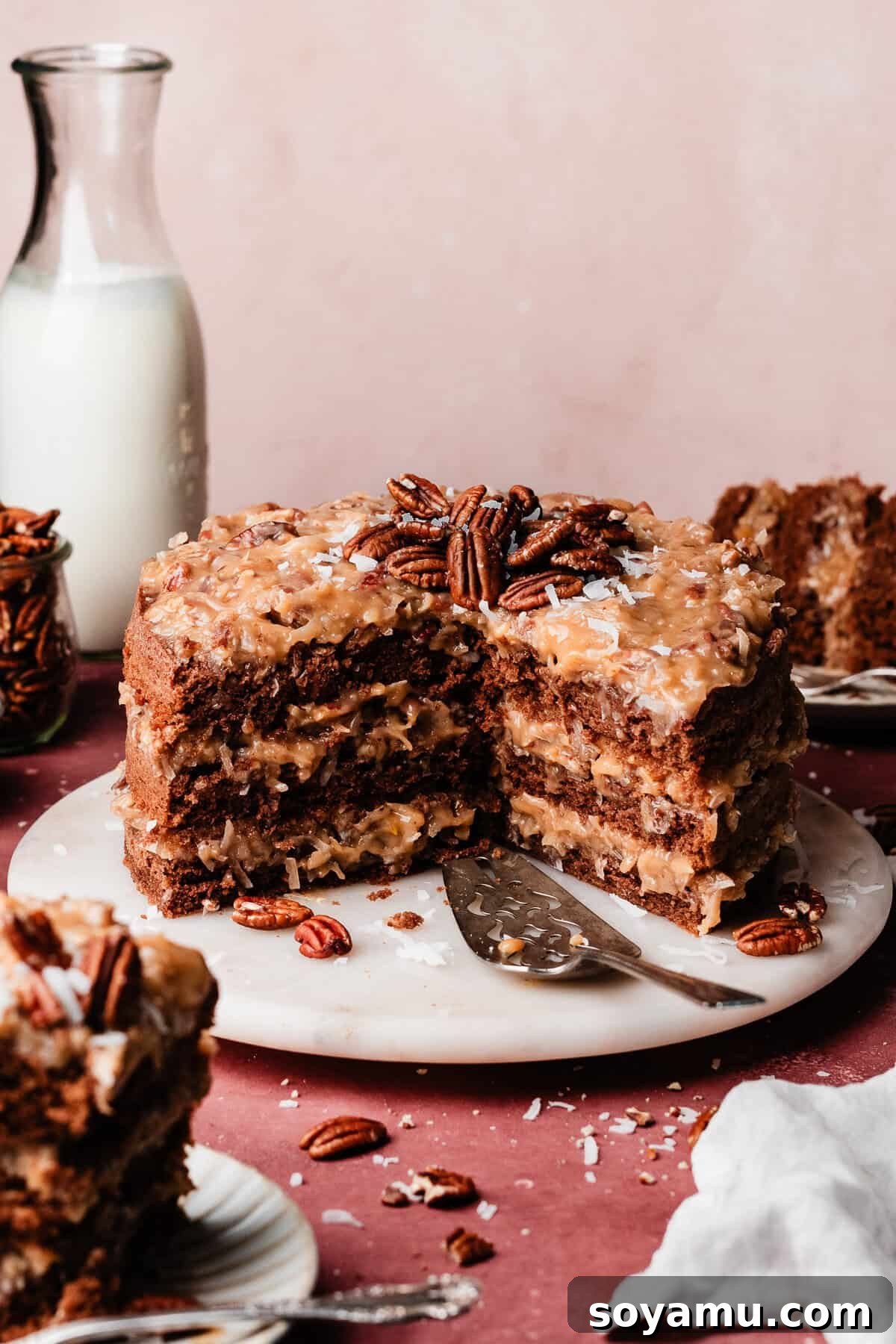
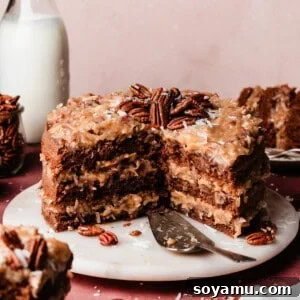
Indulge in the timeless charm of a **German Chocolate Cake**, a beloved classic dessert that promises to delight with every forkful! This recipe features light-as-air layers of wonderfully moist chocolate cake, expertly complemented by a rich and traditional coconut pecan frosting. While its name might suggest a European origin, this iconic cake actually hails from the United States, named after Samuel German, who developed the sweet baking chocolate for Baker’s. Our simplified approach to preparation and decoration makes this cake surprisingly accessible for home bakers, especially since we embrace the traditional “naked” sides, focusing all the decadent frosting on the layers and top. It’s a perfect centerpiece for any celebration, from birthdays to holiday gatherings, leaving a lasting impression on all who taste it.
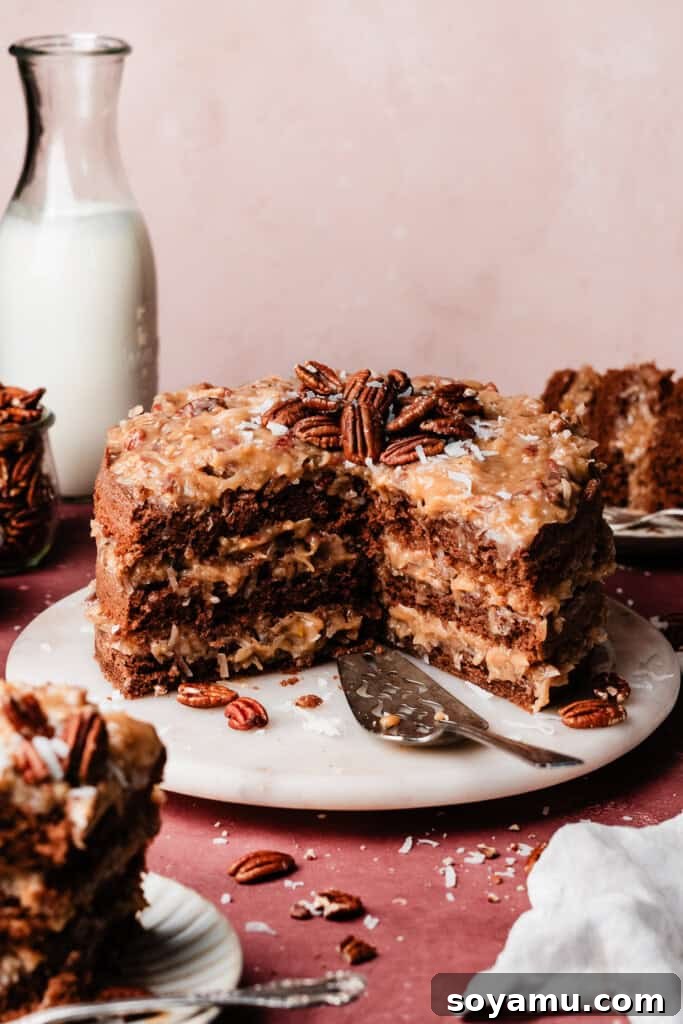
Why This German Chocolate Cake Will Become Your New Favorite
There’s a reason German Chocolate Cake has remained a dessert icon for generations. This particular recipe captures all the classic elements you adore while making the baking process an enjoyable journey. Here’s what makes this cake truly special:
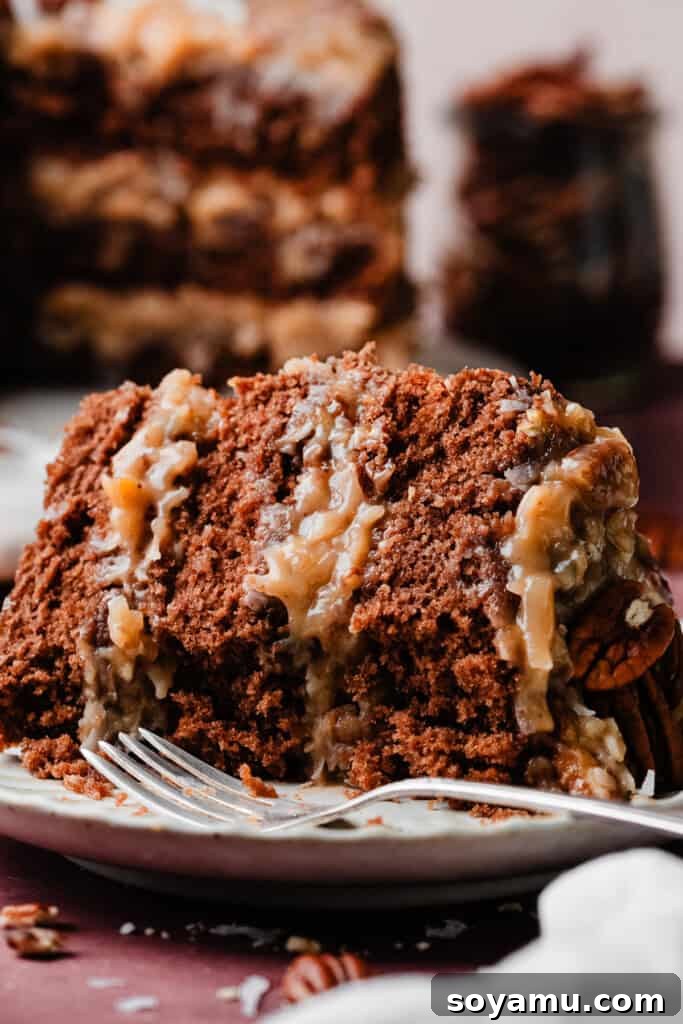
- Exceptionally Light Chocolate Cake: Unlike many dense chocolate cakes, our recipe yields layers that are remarkably light and fluffy, yet undeniably moist. Crafted with authentic German sweet chocolate, the cake offers a distinct, delicate cocoa flavor that’s subtly sweet without being overly rich. If you’re seeking an intensely deep, dark chocolate experience, you might explore our Chocolate Truffle Cake, but for a balanced, airy chocolate base, this German Chocolate Cake is perfection. Its unique texture is achieved through a specific technique involving whipped egg whites, which infuse the batter with unmatched lightness.
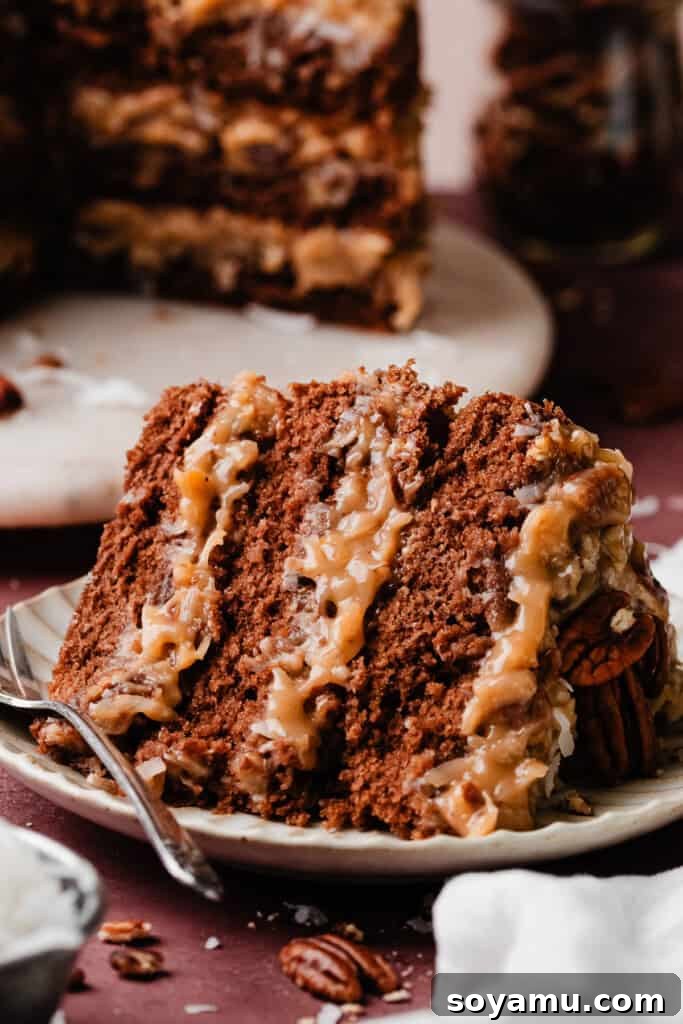
- Irresistible Coconut Pecan Frosting: The heart and soul of any German Chocolate Cake lies in its signature frosting, and ours is no exception. This lusciously creamy filling is prepared on the stovetop, blending sweetened condensed milk, fresh egg yolks, granulated sugar, butter, crunchy pecans, and tender coconut flakes. Cooked to a perfect consistency, it transforms into a rich, caramel-like topping that is truly addictive. This frosting isn’t just a covering; it’s an integral part of the cake’s flavor profile, providing a delightful contrast of textures and tastes that defines this classic dessert. Its robust flavor perfectly complements the subtle chocolate cake.
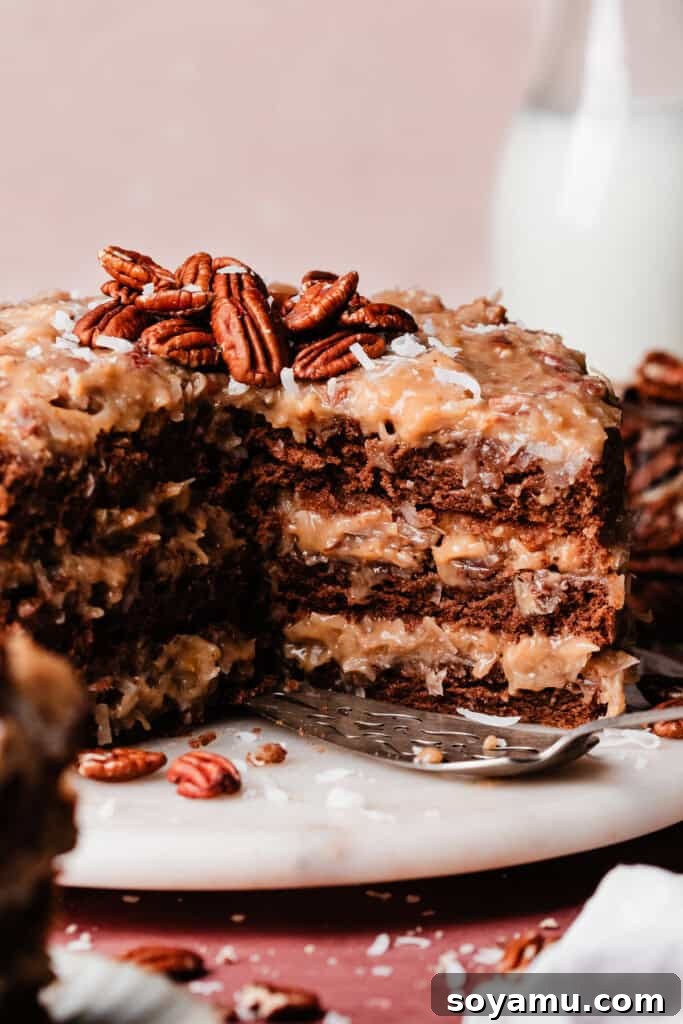
- Effortless Elegance: Don’t let the multi-layered appearance intimidate you! This recipe is designed to be relatively straightforward, even for intermediate bakers. One of the key aspects that simplifies the decorating process is the traditional approach of not frosting the sides of the cake. This “naked” or “semi-naked” style not only looks rustic and charming but also eliminates the pressure of achieving perfectly smooth side frosting. The focus remains on generous layers of moist cake and abundant coconut pecan frosting, making it an achievable yet impressive dessert for any occasion.
Essential Ingredient Overview:
Crafting the perfect German Chocolate Cake starts with understanding the role of each ingredient. Below is a detailed look at the key components, ensuring you gather everything you need for baking success. As always, the full recipe with precise measurements and detailed directions can be found in the recipe card at the bottom of this post. For easy navigation, use the table of contents at the top of the page.
- German Chocolate: This is the cornerstone of our chocolate cake layers. Specifically, we use Baker’s German Sweet Chocolate. It typically comes in a 4-ounce bar, often in a distinctive green and brown box, and can be found in the baking aisle of most major grocery stores. It’s crucial to note that “German” refers to its creator, Samuel German, not the country of Germany. This specific type of chocolate is sweeter than semi-sweet and contributes to the cake’s mild, characteristic chocolate flavor, making it distinct from richer, darker chocolate cakes.
- Butter: For superior flavor and added richness in the cake layers, we consistently opt for salted butter. The hint of salt beautifully balances the sweetness of the cake. However, if your preference leans towards unsalted butter, feel free to use it; just consider adding an extra pinch of salt to the dry ingredients to enhance the overall taste. Ensure your butter is softened to room temperature for optimal creaming with sugar, which is vital for a light and airy cake batter.
- Eggs: You’ll need a generous quantity of large eggs for this recipe, separated into yolks and whites. It is paramount that both the yolks and whites are at room temperature. Room temperature eggs emulsify better with other ingredients, creating a smoother, more uniform batter. Furthermore, egg whites whip up to a much greater volume when at room temperature, which is critical for achieving the cake’s signature light and fluffy texture. (If you’re seeking an egg-free option, check out my Eggless Chocolate Cake!)
- Vanilla Extract: Always reach for pure vanilla extract over imitation. The subtle yet complex notes of real vanilla significantly elevate the overall flavor profile of both the chocolate cake and the coconut pecan frosting, adding depth and warmth to each component.
- All-Purpose Flour: Proper flour measurement is key to a tender cake. The best method is to spoon your flour lightly into the measuring cup, then level it off with a flat utensil (like a knife). Scooping directly from the bag can compact the flour, leading to an excessive amount and a dry, dense cake. For the most accurate results, using a kitchen scale to weigh your flour is highly recommended.
- Buttermilk: This ingredient is non-negotiable for this recipe. Buttermilk’s acidity reacts with the baking soda to create lift, resulting in a tender crumb and adding a distinct moistness and subtle tang that enhances the chocolate flavor. Do not substitute with a homemade buttermilk alternative (milk + vinegar/lemon juice) unless specifically noted in the recipe’s tips section, as the exact acidity can vary and impact the cake’s structure.
Recipe Substitutions & Variations: Important Considerations
Baking is a science, and this German Chocolate Cake recipe, while yielding incredible results, can be a bit delicate when it comes to modifications. To ensure the best outcome, it’s generally recommended to stick to the recipe as written. However, here are some points regarding common substitutions and potential variations:
- Gluten-Free Adaptations: I have not personally tested a gluten-free version of this cake. The unique combination of flours and leavening agents in gluten-free baking often requires specific adjustments to liquid ratios and binder amounts. Substituting all-purpose flour with a 1:1 gluten-free baking blend might work, but I cannot guarantee the texture or structure will be the same as the original. Experimentation would be required.
- Dairy-Free Alternatives: Similarly, a dairy-free version of this cake has not been tested. The recipe relies heavily on dairy components like butter and buttermilk for moisture, richness, and chemical reactions essential for its structure and flavor. Dairy-free substitutes for butter (vegan butter sticks) and buttermilk (dairy-free milk + acid) can sometimes alter the cake’s tenderness and overall consistency. I am uncertain if a complete dairy-free conversion would yield a comparable result.
- German Chocolate Alternatives: The specific Baker’s German Sweet Chocolate is crucial for the cake’s characteristic flavor. If you absolutely cannot find this specific brand or type, finding a precise substitute can be challenging. I’ve never personally tested this recipe with an alternative. Some online discussions, like this article from Food52, explore potential substitutes involving combinations of semi-sweet chocolate and sugar. You might consider trying these suggestions, but please be aware that I have not verified their efficacy or outcome in this specific recipe, and cannot guarantee a good result.
- General Substitutions: This cake’s success hinges on a precise balance of ingredients that contribute to its light, moist texture and distinct flavor. Because of its somewhat delicate nature, I strongly advise against making any other significant substitutions to the recipe. Every ingredient plays a vital role in the cake’s chemistry and structure. My testing has consistently followed this exact formulation, and I fear that even minor changes could compromise the cake’s delicate crumb, moisture, or ability to rise properly.
Crafting Your Perfect German Chocolate Cake: A Step-by-Step Guide
Creating this stunning German Chocolate Cake is a rewarding process. Follow these detailed steps for a flawless bake and a truly memorable dessert.
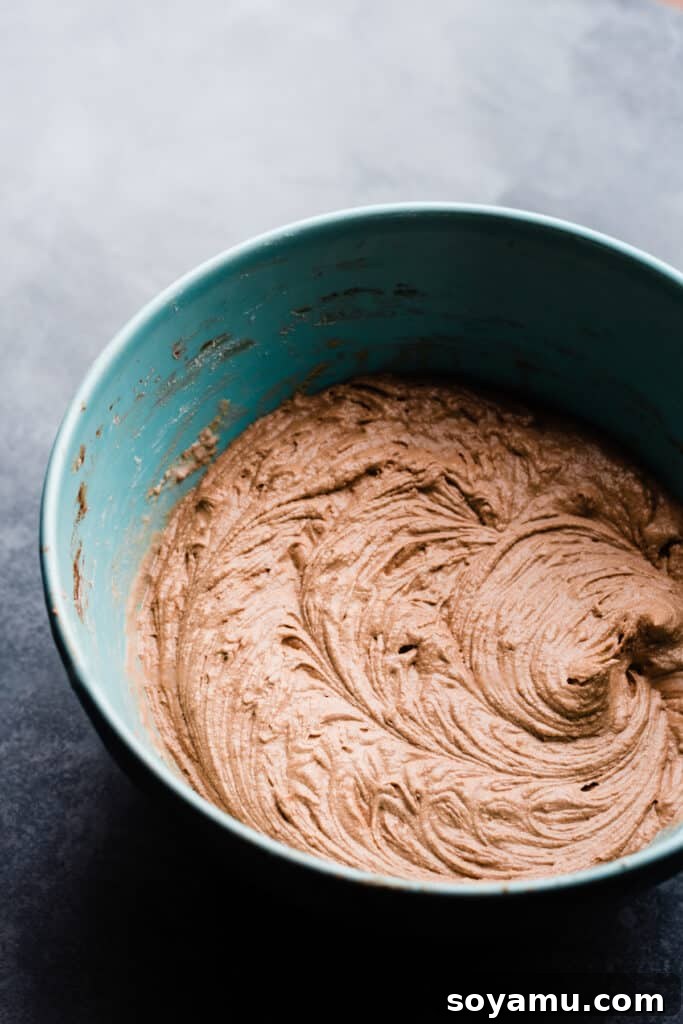
Step 1: Preparing the Chocolate Mixture and Dry Ingredients, and Starting the Batter Base. Begin by gently melting your chopped German chocolate with water in a microwave-safe bowl. Heat in short 30-second bursts, stirring diligently after each interval, until the mixture is entirely smooth and glossy. Set this aside to cool slightly. In a separate medium bowl, whisk together your all-purpose flour, baking soda, and a pinch of salt until thoroughly combined; this ensures even distribution of the leavening agents. Next, in a large mixing bowl, cream together the softened salted butter and granulated sugar using an electric mixer until the mixture is light, fluffy, and pale, a process that typically takes 1-2 minutes on medium-high speed. Then, incorporate the egg yolks one at a time, mixing only until each is just combined into the butter-sugar mixture. Finally, stir in the cooled chocolate mixture and vanilla extract, mixing until everything is fully incorporated and smooth. This foundational batter is now ready for the alternating addition of dry and wet ingredients.
Step 2: Whipping the Egg Whites to Perfection. In a separate, impeccably clean medium bowl, beat the room-temperature egg whites with your electric mixer on high speed. Continue beating until stiff, glossy peaks form. A good test for stiff peaks is to carefully invert the bowl; if the egg whites do not budge, they are ready. This crucial step incorporates air into the batter, which is essential for achieving the cake’s signature light and airy texture. Ensure no trace of egg yolk is in the whites, as fat can prevent them from whipping properly.
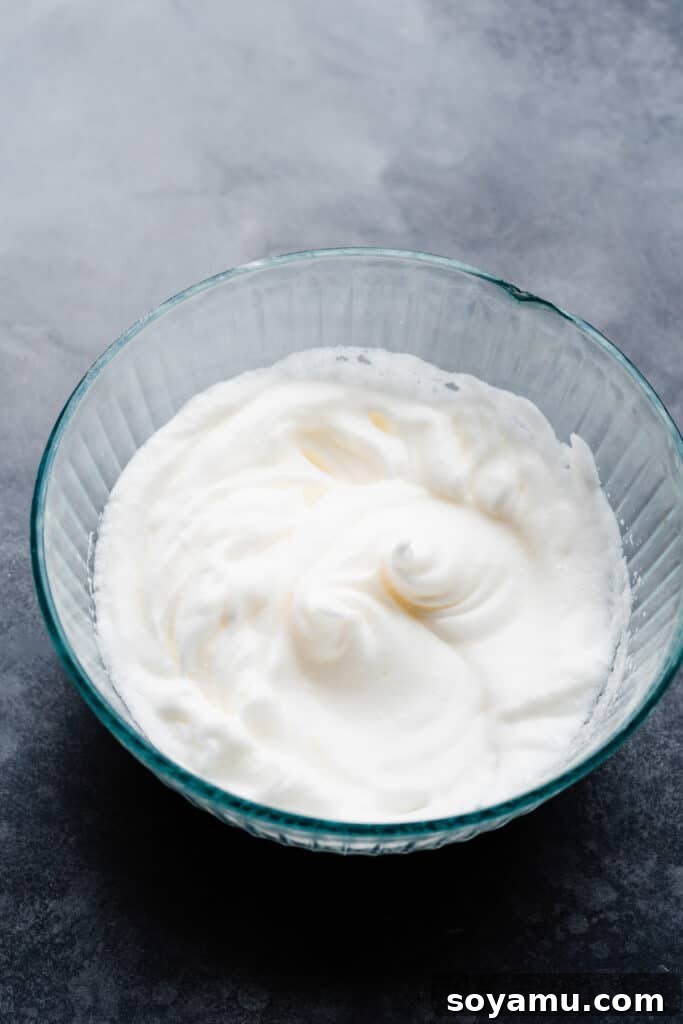
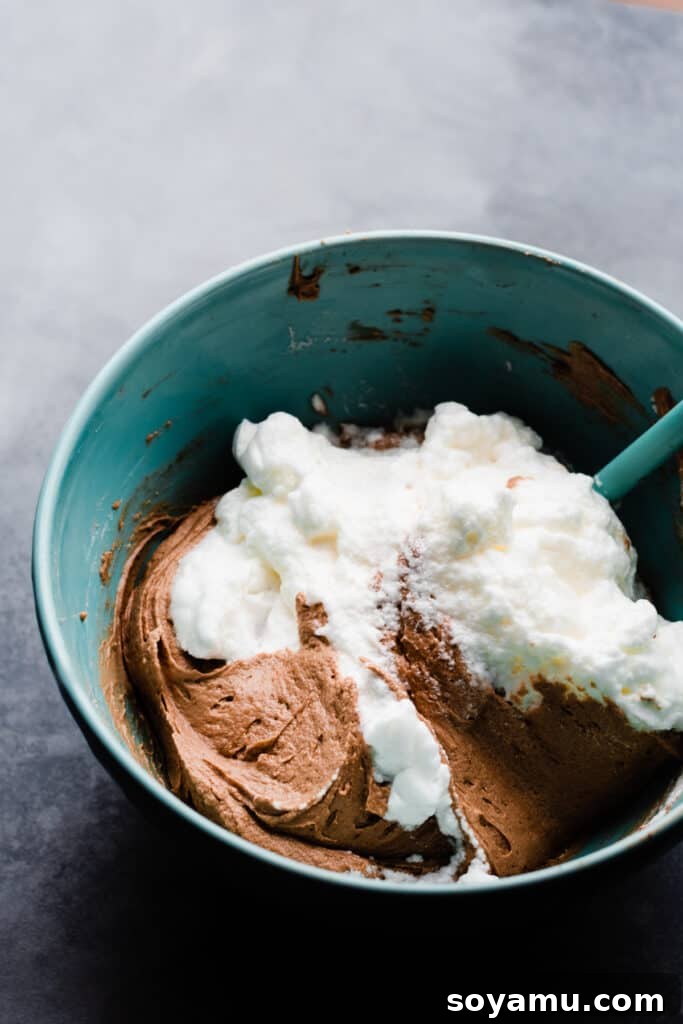
Step 3: Gently Folding In the Whipped Egg Whites. This is perhaps the most critical step for a light cake. With a spatula, gently fold the whipped egg whites into the chocolate cake batter. To fold, cut your spatula down the middle of the batter, scoop underneath, and gently bring the batter up and over the egg whites, rotating the bowl as you go. The goal is to incorporate the egg whites without deflating their precious air, which is the secret to the cake’s delicate, tender crumb. Avoid vigorous stirring! This technique, also used in preparing delicate desserts like Chocolate Mousse, requires patience but is vital for the final texture.
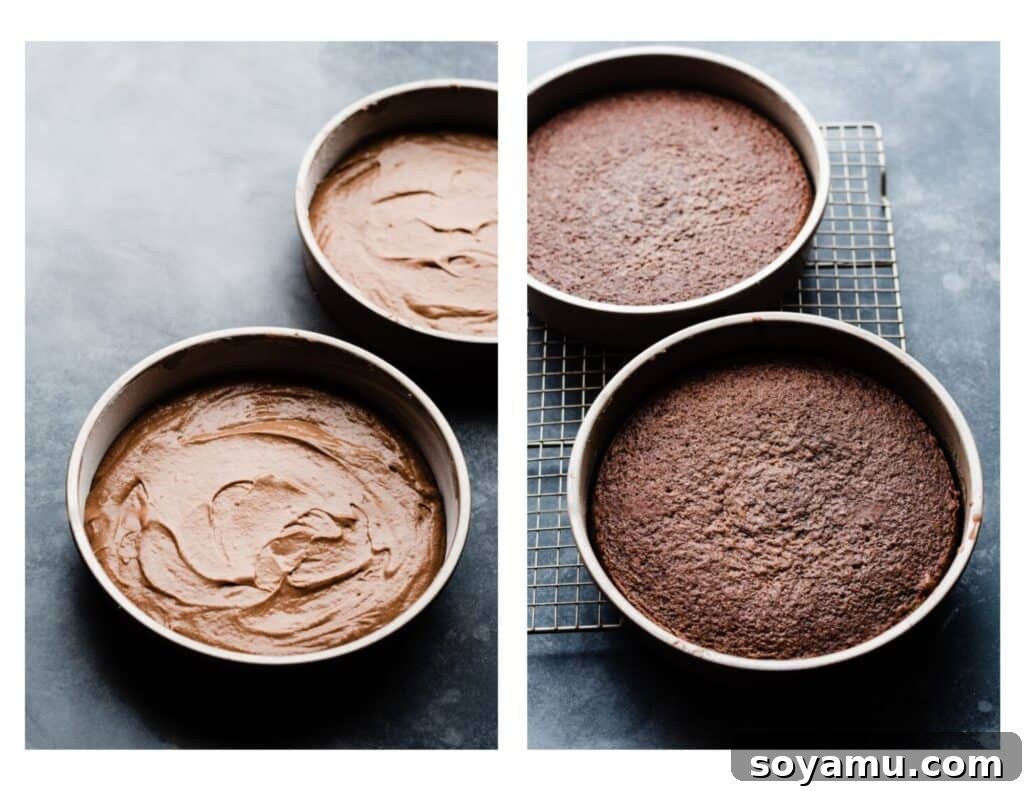
Step 4: Baking the Cake Layers to Golden Perfection. Evenly divide the delicate batter among your three meticulously prepared 8-inch or 9-inch round cake pans. For perfectly even layers, consider using a kitchen scale to measure the batter into each pan. Bake the cakes as directed in the recipe card below, typically for 22-30 minutes. To test for doneness, insert a toothpick into the center of a cake; it should come out clean or with a few moist crumbs attached, indicating a perfectly baked, tender cake. Overbaking will lead to dry cake, so keep a close eye on them!
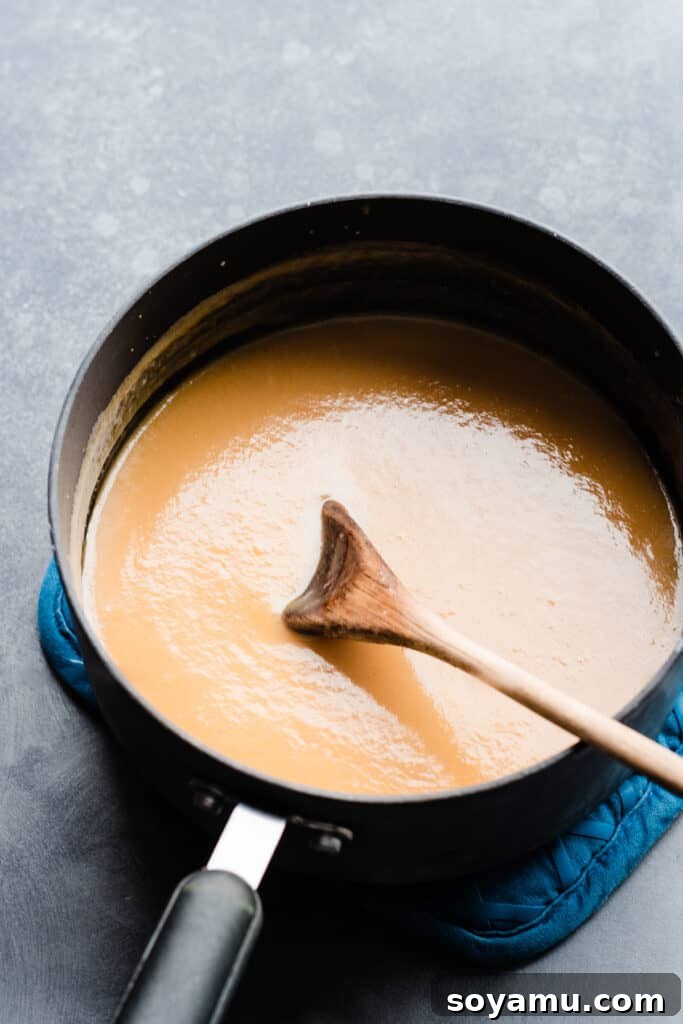
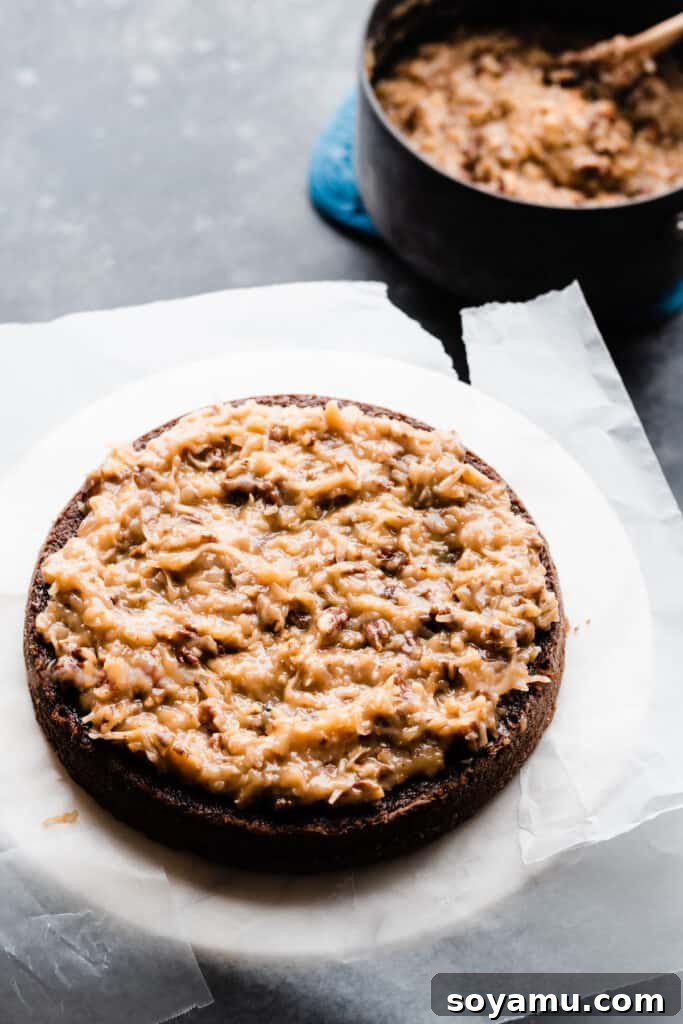
Step 5: Crafting the Decadent Coconut Pecan Frosting. While your cakes are cooling, begin preparing the iconic frosting. In a medium saucepan, whisk together the egg yolks, evaporated milk, and vanilla extract until well combined. Add the granulated sugar and softened butter. Cook this mixture over medium heat, stirring continuously, for approximately 10-12 minutes. The frosting will gradually thicken and transform into a beautiful golden-brown color. A good indicator of readiness is when the mixture coats the back of a wooden spoon and leaves a clear trail when you drag your finger through it. Remove from heat immediately, then stir in the sweetened shredded coconut and chopped pecans until evenly distributed. This stovetop cooking process ensures a rich, custard-like consistency that is the hallmark of traditional German Chocolate Cake frosting.
Step 6: Assembling and Frosting Your Masterpiece. Allow the prepared coconut pecan frosting to cool slightly, about 15-20 minutes, to thicken to a spreadable consistency. It should be warm but not hot, firm enough to hold its shape but still pliable. This is key for easy application. Once cooled to the right consistency, generously spread the frosting between each cooled cake layer, creating thick, delicious fillings. Then, apply a final, abundant layer of frosting on top of the cake. Remember, in keeping with tradition, the sides of the cake remain unfrosted, highlighting the beautiful layers and the decadent topping. Once frosted, cover the cake with plastic wrap (using toothpicks to prevent it from sticking to the top) or a cake dome, and chill in the refrigerator for at least 1-2 hours. This chilling period allows the frosting to set firm, making for cleaner slices and an overall more stable and delightful cake.
Serving and Storing Your German Chocolate Cake
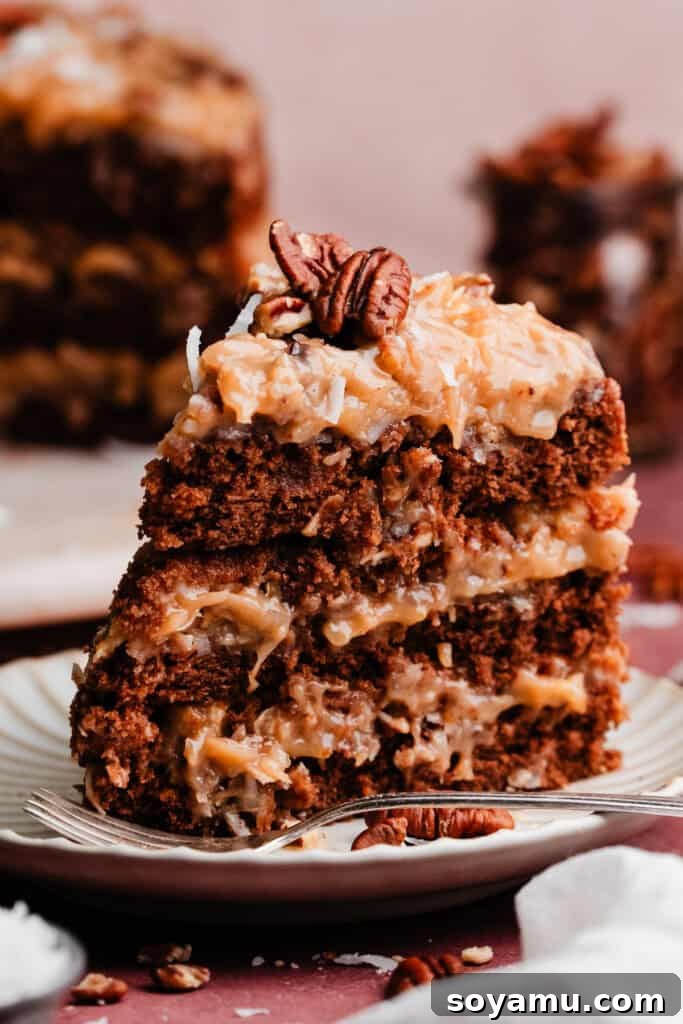
Once your German Chocolate Cake has chilled sufficiently in the refrigerator (at least 60 minutes for the frosting to firm up), it’s ready to be sliced and served. For the ultimate indulgence, serve each slice with a cold glass of milk, a steaming cup of coffee, or even a scoop of vanilla bean ice cream to complement its rich flavors. The contrast of the cool cake and a warm beverage is simply divine. Leftover cake should be stored in an airtight container in the refrigerator for 3-4 days. This keeps the cake moist and the frosting fresh. If you plan to serve it slightly warmer, you can let it sit at room temperature for about 15-20 minutes before enjoying.
Elevate Your Baking: Expert Tips for Success
Achieving consistently excellent results in baking often comes down to a few key practices and tools. These expert tips will help you master this German Chocolate Cake and many other baking endeavors:
- Invest in an Oven Thermometer: Your oven’s internal thermometer can often be inaccurate, sometimes by as much as 25-50 degrees Fahrenheit. An oven thermometer is an inexpensive tool that provides a true reading of your oven’s temperature. Accurate oven temperature is absolutely crucial for proper leavening, consistent baking times, and preventing dry or undercooked cakes. Keeping one in your oven at all times allows you to monitor its calibration and adjust accordingly.
- Utilize a Kitchen Scale for Precision: While measuring cups are common, they are not standardized, and the amount of flour (or other dry ingredients) can vary dramatically depending on how you scoop and level. A food scale is the most reliable way to ensure your ingredients are at the proper weight. This precision eliminates guesswork and is the single best way to ensure consistent, perfect results in baking, leading to a consistently moist and tender cake every time.
- Ensure Room Temperature Ingredients: As noted in the ingredient section, room temperature eggs and butter are vital. They emulsify better, create smoother batters, and allow egg whites to reach maximum volume. Plan ahead and take these ingredients out of the refrigerator at least 30-60 minutes before you begin baking.
- Do Not Overmix the Batter: Once you add the flour to the wet ingredients, mix only until just combined, with a few streaks of flour remaining before adding the next liquid. Overmixing develops gluten, which can lead to a tough, dry cake.
Frequently Asked Questions (FAQs):
Here are answers to some common questions about making this German Chocolate Cake:
Yes, you certainly can adapt this recipe for cupcakes! However, be prepared that they may have flatter tops compared to traditional domed cupcakes, due to the light nature of the batter. While I haven’t made them into cupcakes in recent years, my best estimate is that this recipe will yield approximately 20 cupcakes. Adjust baking time accordingly; they will bake faster than full cake layers.
I strongly advise against doubling this recipe. The process of gently folding in the large volume of whipped egg whites into a doubled batter would be extremely difficult to do without deflating them, which would severely compromise the cake’s light structure and rise. However, you can absolutely halve the recipe successfully. If halving, bake the batter in two 8-inch round cake pans for a smaller, equally delicious cake.
Despite popular belief, German Chocolate Cake is not German in origin. It’s named after an American baker, Samuel German, who in 1852 developed a type of dark baking chocolate for Baker’s Chocolate Company. The original recipe, which called for “Baker’s German’s Sweet Chocolate,” was published in a Texas newspaper in 1957, and the name stuck.
Yes, this is a fantastic make-ahead tip! Once your cake layers are completely cooled, individually wrap each layer tightly in plastic wrap. You can store them at room temperature overnight, or even freeze them for up to a month (thaw in the refrigerator overnight before frosting). This helps break up the baking process and ensures your cake is fresh and moist when frosted.
Discover More Delightful Cake Recipes:
If you’ve enjoyed baking this classic German Chocolate Cake, you’ll love exploring these other irresistible cake recipes:
- White Forest Cake: A delightful twist on a classic, featuring white chocolate and cherries.
- Gingerbread Cake: Warm spices and a luscious mascarpone cream cheese frosting make this perfect for holidays.
- Perfect White Birthday Cake: The ultimate celebratory cake with tender white layers and classic buttercream.
- German Chocolate Cake: (You’re already here, but it’s worth another look!)
- Raspberry Chocolate Ganache Cake: A rich and elegant cake featuring the perfect pairing of raspberry and chocolate.
- Best Yellow Cake with Chocolate Frosting: A comforting and nostalgic favorite, simple yet utterly delicious.
Did you make this recipe? We’d love to hear from you!
Please leave a comment and a star rating below to share your experience and let us know how you liked the recipe. Your feedback is invaluable and helps our small business immensely!
German Chocolate Cake
Rate
Ingredients
For the Cake
- 4 ounces Baker’s German Sweet Chocolate, chopped
- 1/2 cup water, 118 mL
- 2 cups + 2 tbsp all-purpose flour, spooned & leveled or weighed out , 280 grams
- 1 tsp baking soda
- pinch of salt
- 1 cup salted butter, softened at room temperature, 226 grams
- 2 cups granulated sugar, 420 grams
- 4 large eggs, separate them then bring to room temperature on the counter ahead of time
- 1 and 1/2 tsp vanilla extract
- 1 cup buttermilk
For the Coconut Pecan Frosting
- 4 large egg yolks, at room temperature , yes, in addition to the 4 separated eggs above – for a total of 8 eggs
- 12 oz can evaporated milk
- 3/4 cup salted butter, 170 grams
- 1 and 1/2 cups granulated sugar, 315 grams
- 1/2 tsp vanilla extract
- 7 oz sweetened, shredded coconut, 198 grams
- 1 and 1/2 cups chopped pecans, 190 grams
Instructions
-
Prep: Preheat your oven to 350℉ (175°C). Thoroughly grease and flour three 8-inch or 9-inch round cake pans with shortening. Place a parchment paper round in the bottom of each pan, and coat it with shortening as well. Dust the insides of the pans with flour, ensuring all areas are covered, then tap out any excess flour.
-
Start the Cake Batter: In a microwave-safe bowl, microwave the chopped German chocolate and water in 30-second intervals, stirring after each, until the chocolate is completely melted and smooth. Set aside to cool slightly. In a medium bowl, whisk together the flour, baking soda, and salt.
-
Finish the Cake Batter: In a large mixing bowl, beat the softened butter with an electric mixer until creamy (about 30-60 seconds). Add the granulated sugar and beat on high until light and fluffy, about 1-2 minutes. Add the egg yolks one at a time, mixing on medium-high until just incorporated after each addition. Stir in the cooled chocolate mixture and vanilla extract, mixing until just combined. Add 1/3 of the flour mixture and mix until just a few streaks of flour remain, then add 1/3 of the buttermilk and mix until just a few streaks of liquid remain. Repeat this process two more times. Scrape the bowl well with a spatula and gently fold in any remaining flour or milk until the batter is smooth.
-
Beat the Egg Whites: In a clean medium bowl, beat the room-temperature egg whites with a mixer on high speed until stiff peaks form. The egg whites should be completely stiff and hold their shape when the bowl is inverted. Gently fold these whipped egg whites into the cake batter. Use a gentle motion, running your spatula down one side of the bowl, under the batter, and up the opposite side, then cutting through the middle. Continue until the egg whites are fully incorporated into a silky batter, being careful not to deflate them. This will take a few minutes.
-
Bake: Divide the batter evenly among your three prepared pans. Bake for 22-30 minutes, or until a toothpick inserted into the center comes out clean or with moist crumbs attached. Tip: For perfectly even layers, use a kitchen scale to divide the batter. The total batter weight for this recipe is approximately 1595 grams, so aim for 520-530 grams per pan.
-
Cool the Cake Layers: Once baked, immediately run a butter knife around the edges of the cake layers to loosen them from the pans. Let the cake layers cool in the pans for 15 minutes, then invert them onto cooling racks to cool completely. If a cake layer seems stuck, gently but firmly tap the bottom of the pan while it’s flipped upside down. Ensure cakes are completely cool before frosting. Make Ahead Tip: Once cooled, wrap each cake layer tightly in plastic wrap and store at room temperature overnight, or freeze for later.
-
Make the Coconut Pecan Frosting + Frost the Cake: In a large saucepan, whisk together the egg yolks, evaporated milk, and vanilla extract. Add the granulated sugar and butter. Cook over medium heat for about 10-12 minutes, stirring constantly, until the mixture has thickened and turned golden brown. It should coat the back of a wooden spoon and hold a distinct trail when a finger is drawn through it. Remove from heat and stir in the coconut and pecans. Let the frosting cool for about 15-20 minutes, or until it’s thick enough to spread without running but still pliable. (You can place it in the fridge briefly to speed cooling, but watch it closely.) Frost generously between each cake layer and on the top. Cover the cake with plastic wrap (using toothpicks to prevent sticking) or a cake plate with a lid, and chill in the fridge for at least 1-2 hours to allow the frosting to set before slicing.
-
Serve + Store: Slice and enjoy your homemade German Chocolate Cake, perhaps with a glass of cold milk! Store any leftovers in an airtight container in the fridge for 3-4 days.
Notes
Nutrition
Nutrition information is automatically calculated, so should only be used as an approximation.
Love this recipe? Leave a comment below!