
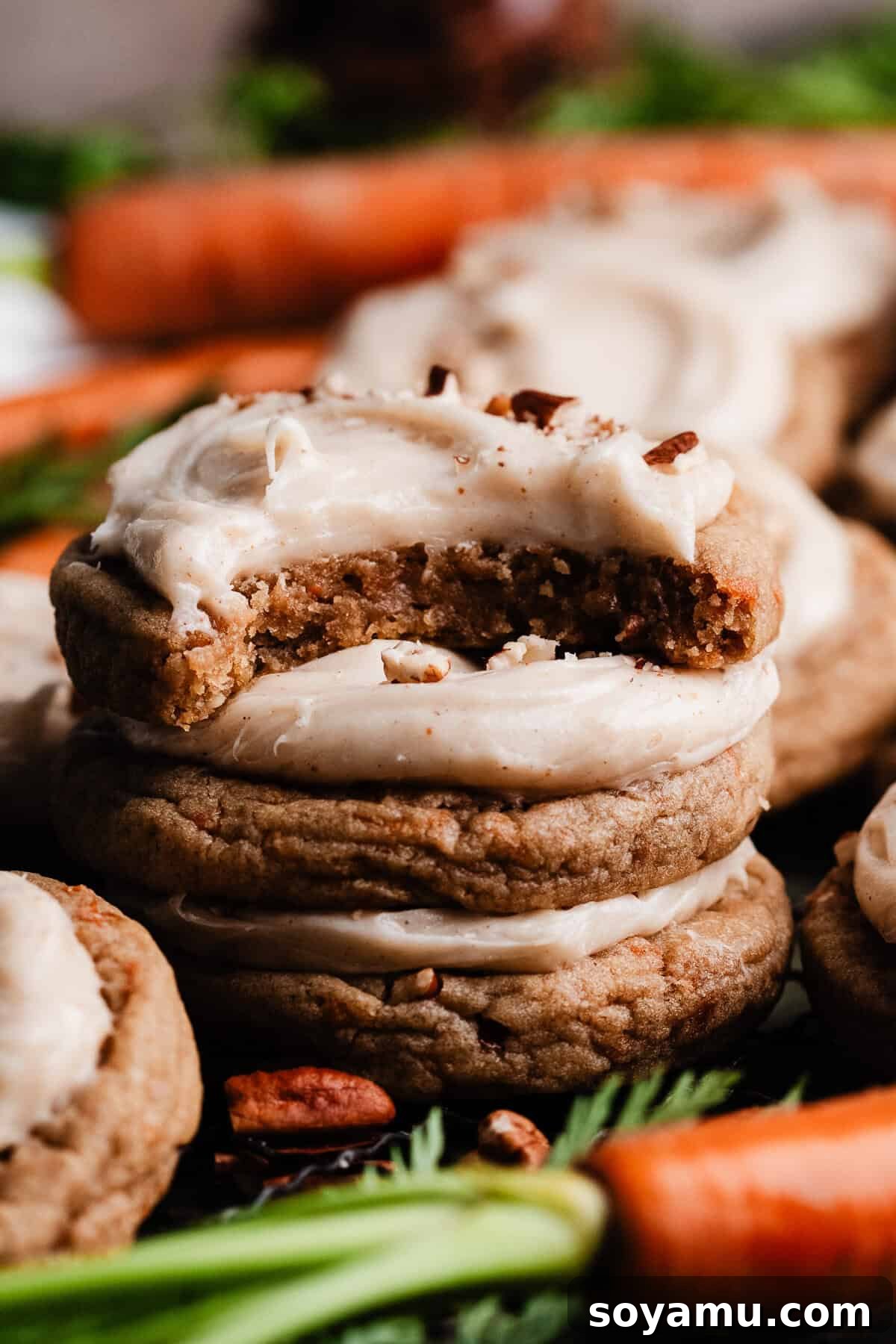
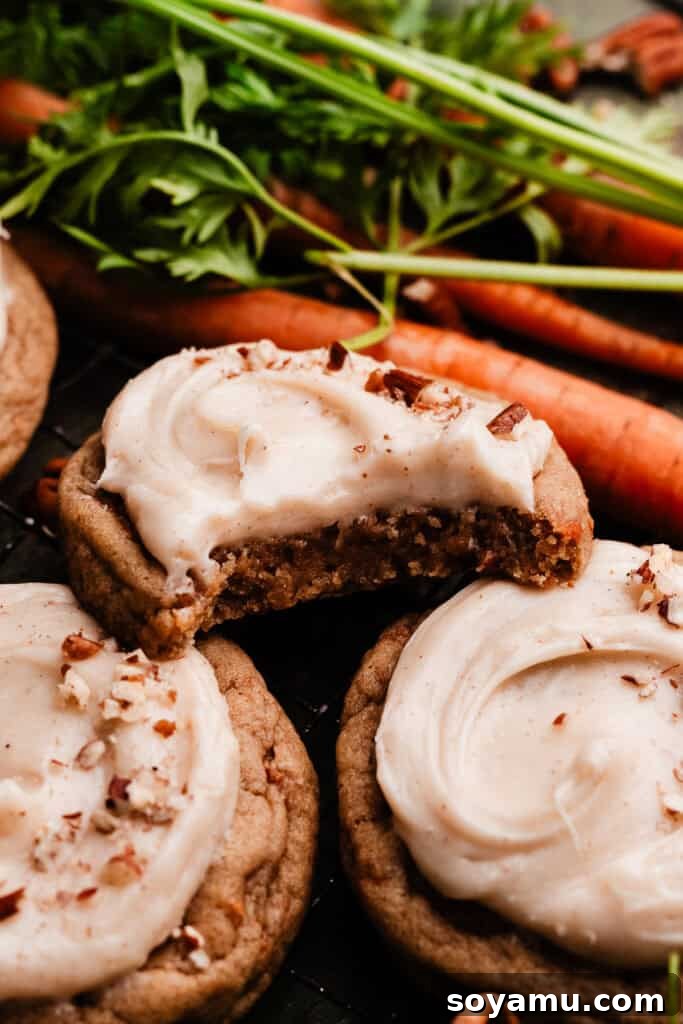
Carrot Cake Cookies are a delightful twist on a classic dessert, offering all the beloved flavors of carrot cake in a convenient, chewy cookie form. These cookies are crafted with a rich brown butter base, infused with warm, aromatic carrot cake spices, finely grated fresh carrots, and crunchy chopped pecans. Each bite delivers a perfect harmony of texture and flavor, made even more exquisite when slathered generously with a luscious, tangy brown butter cream cheese frosting. Prepare to fall in love with these irresistible treats!
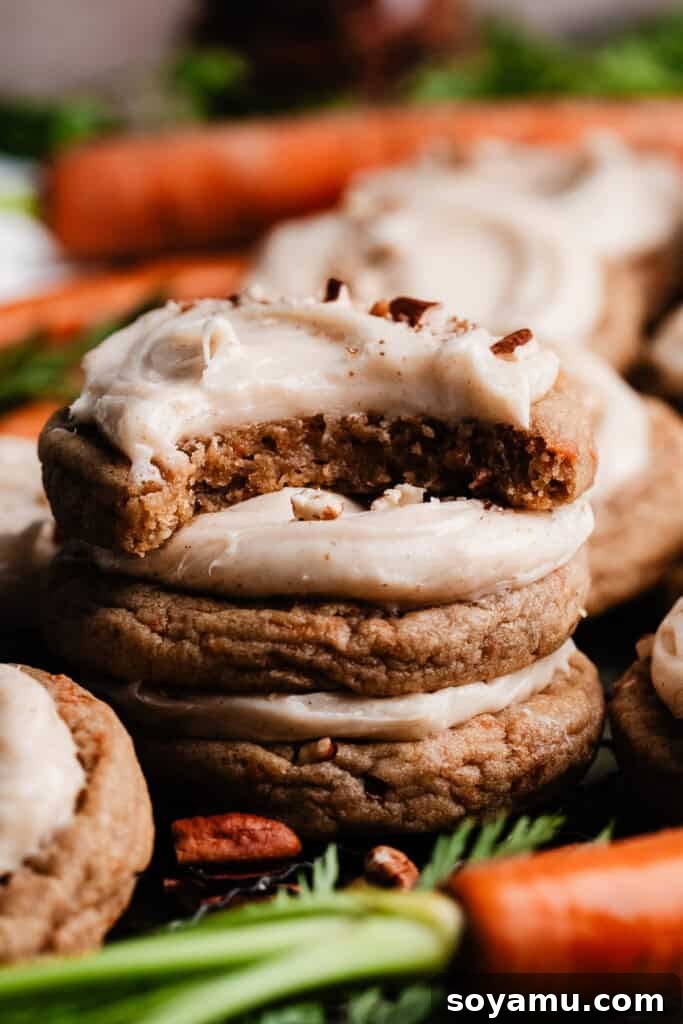
Why You’ll Adore These Chewy Carrot Cake Cookies
These Carrot Cake Cookies aren’t just delicious; they’re also surprisingly simple to make, making them a fantastic choice for both novice and experienced bakers. Here’s why this recipe will quickly become a favorite:
- Effortless One-Bowl Preparation: Say goodbye to multiple dirty dishes! This recipe streamlines the baking process, requiring just one mixing bowl and no electric mixer for the cookie dough, making clean-up a breeze.
- The Secret to Perfect Carrot Texture: Achieve perfectly grated carrots in no time with a simple food processor trick. Crucially, we’ll show you how to blot out excess moisture from the carrots, ensuring your cookies are wonderfully chewy and never cakey or overly crumbly. This step is key to their delightful texture.
- Irresistible Brown Butter Depth: The rich, nutty, and caramel notes of brown butter elevate these cookies from great to extraordinary. Browning butter is a simple step that adds unparalleled depth of flavor to both the cookies and the frosting.
- Dreamy Brown Butter Cream Cheese Frosting: The star of the show! This frosting is so good, it could be a dessert on its own. Its tangy, sweet profile, combined with the depth of brown butter, creates the perfect creamy counterpart to the spiced cookies.
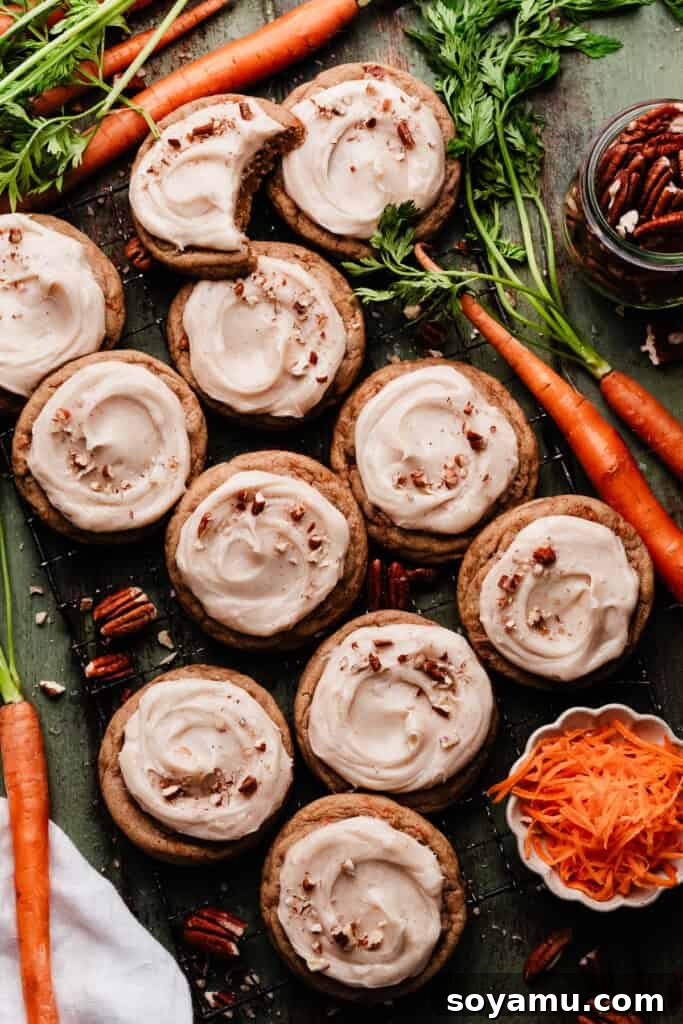
A Closer Look at the Ingredients You’ll Need
Creating these sensational carrot cake cookies starts with selecting the right ingredients. Here’s a detailed overview of what you’ll need and why each component is important. The full recipe with precise measurements can be found in the recipe card at the bottom of this page.
- Butter: The Secret to Brown Butter Magic
For this recipe, we highly recommend using salted butter. In our experience, the hint of salt perfectly balances the sweetness and enhances the complex, nutty flavors developed during the browning process. If you only have unsalted butter, you can certainly use it, but consider adding an extra pinch of salt to both the cookie dough and the frosting to achieve that optimal flavor balance. Browning the butter transforms it from a simple fat into a rich, aromatic ingredient with deep caramel and toasted nut notes, adding incredible depth to your cookies and frosting.
- All-Purpose Flour: The Foundation of Chewiness
The key to perfect cookie texture lies in accurate flour measurement. For best results, always use the “spoon and level” method: spoon your all-purpose flour into the measuring cup until it’s overflowing, then level it off with a straight edge (like the back of a knife). Avoid scooping directly with your measuring cup, as this compacts the flour, leading to an excess amount that can result in dry, crumbly, or cakey cookies. For ultimate precision, a kitchen scale is your best friend, ensuring your flour is at the exact weight needed for chewy perfection.
- Carrots: The Star of the Show
Use large, fresh carrots for the best flavor and texture. A handy trick: don’t bother peeling them! A good wash is all they need, as much of the nutrients and vibrant color are close to the skin. The real game-changer for carrot prep is your food processor. Its grating blade makes quick work of shredding carrots, saving you significant time and effort. Remember, proper moisture removal (blotting) is crucial here to ensure a chewy, rather than cakey, cookie. Have extra carrots? Don’t let them go to waste! Try them in our Single Layer Carrot Cake for another delightful treat.
- Sugars (Brown & Granulated): The Sweet Duo
This recipe uses a combination of both brown sugar and granulated sugar. Brown sugar contributes to the chewy texture and adds a lovely molasses flavor, complementing the warm spices. Granulated sugar helps with crisp edges and overall sweetness. The balance is carefully chosen to give these cookies their signature chew and delightful taste.
- Eggs: The Binder
Ensure your eggs are at room temperature. This allows them to incorporate more easily and evenly into the butter and sugar mixture, creating a smoother dough and a more consistent cookie texture.
- Vanilla Extract: Flavor Enhancer
A good quality vanilla extract is essential for rounding out the flavors in both the cookies and the frosting, adding a touch of warmth and sweetness that ties everything together.
- Baking Powder & Baking Soda: The Leavening Agents
These two work in tandem to give the cookies their ideal lift and texture without making them overly puffy or cakey. The interaction of baking soda with the acidic brown sugar and cream cheese (in the frosting context) is key.
- Warm Spices (Cinnamon, Nutmeg): The Heart of Carrot Cake
The classic flavors of cinnamon and nutmeg are indispensable for capturing the essence of carrot cake. These warm spices provide that comforting, aromatic quality we all love. For an even more complex flavor profile, consider adding a touch of ground ginger or allspice in your variations.
- Pecans: The Nutty Crunch
Chopped pecans add a wonderful textural contrast and a rich, earthy flavor that pairs beautifully with the carrots and spices. For an intensified flavor, lightly toast your pecans before adding them to the dough.
Recipe Substitutions & Creative Variations to Try
While this recipe for Carrot Cake Cookies is perfect as written, feel free to experiment and adapt it to your dietary needs or personal preferences. Here are some popular substitutions and variations:
- Dairy-Free Alternative: For those with dairy sensitivities or preferences, these cookies can be made dairy-free. Simply substitute your favorite high-quality, trusted dairy-free butter and dairy-free cream cheese. Ensure they are suitable for baking and frosting to achieve the best results.
- Nut Alternatives or Omission: If pecans aren’t your favorite, feel free to use chopped walnuts instead. Walnuts offer a similar texture and a slightly more robust flavor that also complements carrot cake wonderfully. If you need to make these cookies nut-free due to allergies or preference, simply omit the nuts entirely. The cookies will still be incredibly delicious!
- Spice it Up: While cinnamon and nutmeg are the core spices, you can enhance the flavor profile by adding a pinch of ground ginger, allspice, or even a tiny amount of cloves for a bolder, more complex spice blend.
- Add Extra Goodies: For even more texture and flavor, consider folding in a handful of golden raisins, shredded coconut, or even a few white chocolate chips into the cookie dough alongside the carrots and pecans.
- Citrus Zest Boost: A touch of orange or lemon zest in either the cookie dough or the frosting can brighten the flavors beautifully, adding a subtle tangy note that complements the sweetness and spices.
How to Make Irresistible Carrot Cake Cookies: A Step-by-Step Guide
Follow these detailed steps to create your perfect batch of chewy carrot cake cookies with luscious brown butter cream cheese frosting.
Step 1: The Art of Browning Butter – Unlocking Deep Flavor
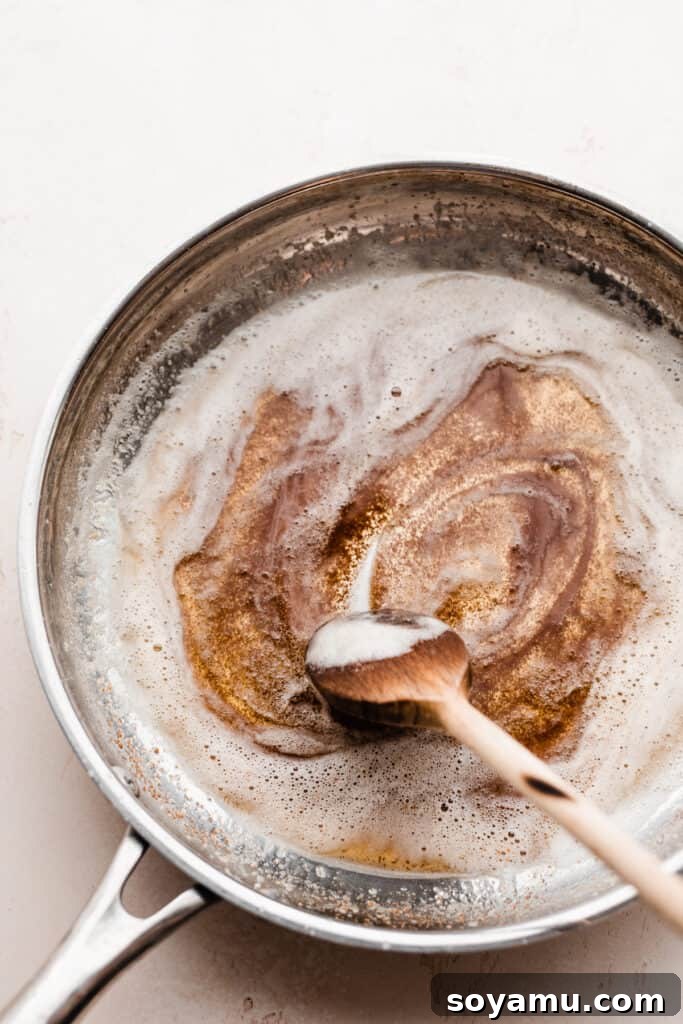
Browning butter is a simple yet transformative step that adds incredible depth to these cookies. In a medium saucepan, melt your cubed butter over medium heat. Once melted, reduce the heat to medium-low and continue cooking. Stir lazily but consistently, watching for changes. The butter will foam, then bubble, and eventually, golden brown bits will appear at the bottom of the pan, accompanied by a rich, nutty, and caramel-like aroma. This process typically takes about 5-7 minutes after the butter has fully melted. Be careful not to burn it! Immediately pour the browned butter into a large heatproof bowl, making sure to scrape all the flavorful browned bits from the bottom of the pan. These bits are crucial for the depth of flavor. Set it aside to cool to room temperature. You can even prepare this step up to a week in advance, cooling it completely in the fridge, then melting it gently in the microwave to bring it back to a room temperature, pourable state before using.
Step 2: Preparing the Perfect Carrot – The Secret to Chewy Cookies
Finely grate your carrots using a food processor (it makes this task incredibly fast and easy!) or a box grater. Once grated, measure or weigh the carrots precisely. This next step is absolutely critical for achieving chewy cookies and preventing them from becoming cakey or spreading too much: place the grated carrot in a clean kitchen towel or several layers of paper towels and squeeze out as much liquid as possible. You’ll be surprised how much moisture comes out! After blotting, weigh the carrots again. They should now weigh approximately 64-66 grams. Continue squeezing until you reach this target weight. Skipping this step will result in an overly moist dough, leading to cakey cookies that spread excessively during baking.
Step 3: Crafting the Irresistible Cookie Dough – One Bowl Wonder
Once your brown butter has cooled to room temperature (it should still be liquid or very soft, not hard), measure out 206 grams (approximately 14.5 tablespoons) for the cookie dough and add it to a large mixing bowl. Set aside the remaining 57 grams for your frosting later. Whisk the brown sugar and granulated sugar into the brown butter until well combined and smooth. Next, incorporate the room temperature eggs and vanilla extract, whisking for about 30-45 seconds until the mixture is uniform and creamy. Finally, gradually stir in your dry ingredients (flour, baking powder, baking soda, salt, cinnamon, and nutmeg) until just combined. The dough might seem a bit crumbly at first, but keep mixing, and it will come together. Then, fold in the blotted carrots and chopped pecans. Be careful not to overmix, as this can develop the gluten and lead to tougher cookies.
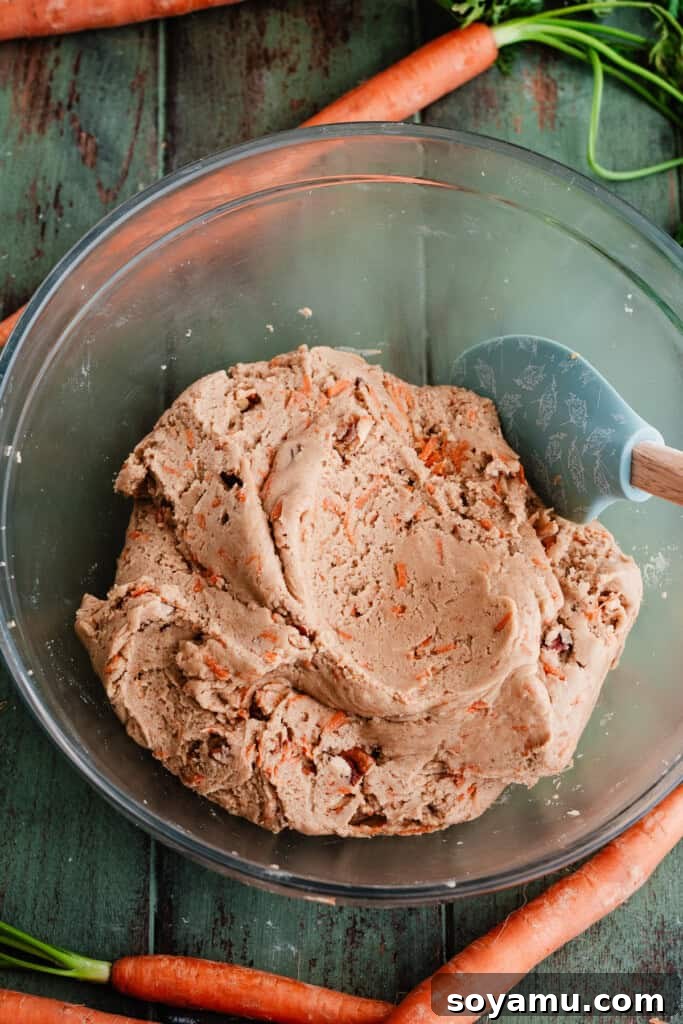
Step 4: Roll, Chill, and Await Perfection – The Key to Flavor Development
Using a cookie scoop or your hands, roll the dough into uniform balls, each weighing approximately 65 to 75 grams. This ensures consistent baking. Arrange the dough balls on a baking sheet lined with parchment paper and chill them in the refrigerator for at least 1 hour, or up to 48 hours. Chilling is a vital step that prevents the cookies from spreading too much in the oven, allows the flavors to meld and deepen, and contributes to that desirable chewy texture. For a slightly smaller cookie, you can aim for 45-50 gram dough balls, adjusting the bake time down by 1-2 minutes.

Step 5: Baking to Chewy Perfection – A Unique Temperature Trick
Preheat your oven to 365°F (185°C). While this temperature might seem unconventional, it’s specifically chosen to create cookies with perfectly crisp edges and a wonderfully chewy interior. Place 5-6 chilled cookie dough balls onto a parchment paper-lined baking sheet, ensuring enough space between them for spreading. Bake for 8-10 minutes. The cookies are done when their edges appear set and lightly golden, and the centers look slightly puffy. For perfectly round cookies, as soon as they come out of the oven, use a round cookie cutter (slightly larger than your cookies) and gently “scoot” the warm cookies into perfect circles within the cutter. Then, lightly press down on the tops with the flat bottom of a measuring cup to create a smooth surface for frosting. Allow the cookies to cool on the baking sheet for a few minutes before transferring them to a wire rack to cool completely. They must be completely cool before frosting!
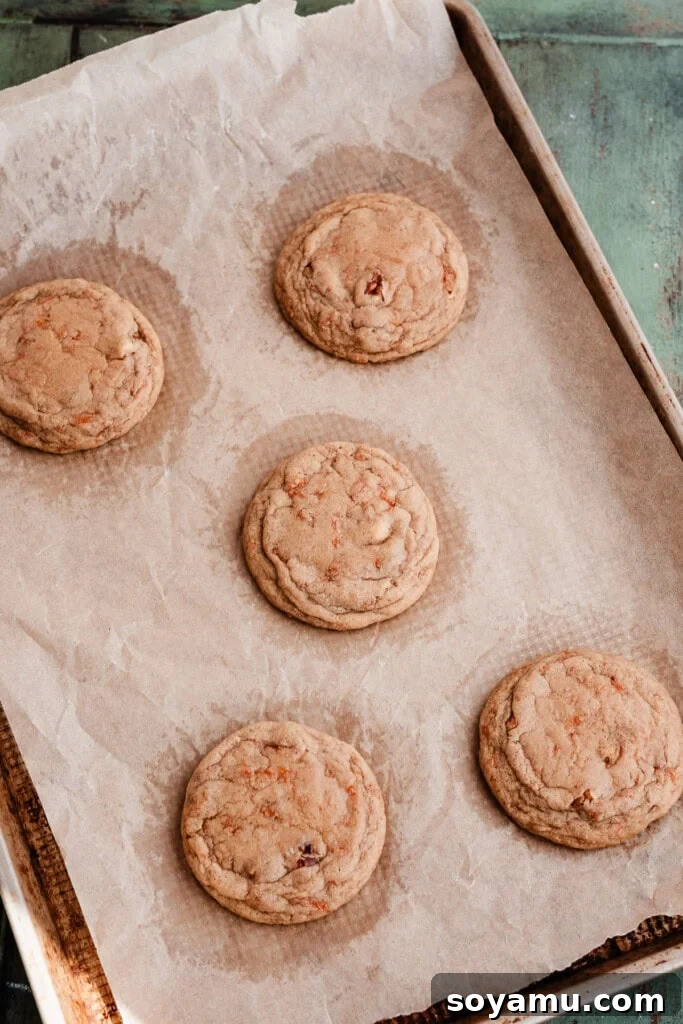
Step 6: Whipping Up the Luscious Brown Butter Cream Cheese Frosting
In a medium mixing bowl, combine the reserved 57 grams (1/4 cup) of cooled, melted brown butter with room temperature cream cheese. Use an electric mixer to cream them together on high speed for about one minute until thoroughly combined and smooth. Gradually add the powdered sugar and vanilla extract, mixing until the frosting is creamy and light. If the frosting seems too thick, add 1-2 teaspoons of milk (or dairy-free milk) until it reaches a spreadable consistency. Taste and adjust seasonings, adding a pinch of salt or a touch more cinnamon if desired. If your frosting appears too runny or “weepy,” simply refrigerate or freeze it for a short time until it firms up to a spreadable consistency. This frosting is also incredible on our Pineapple Carrot Cake!
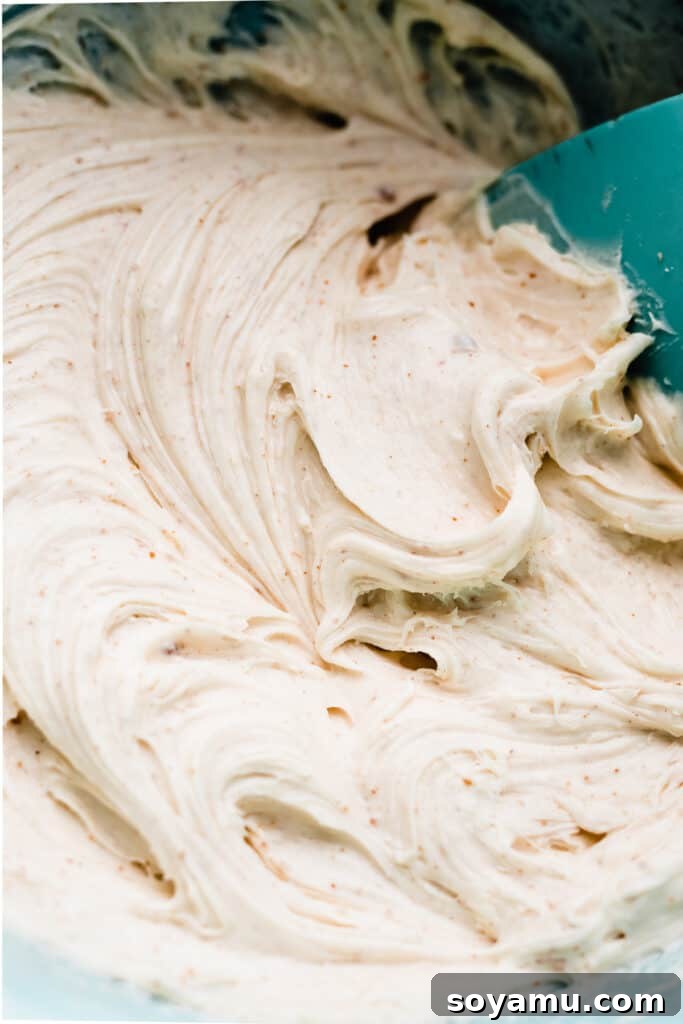
Step 7: Frost and Enjoy!
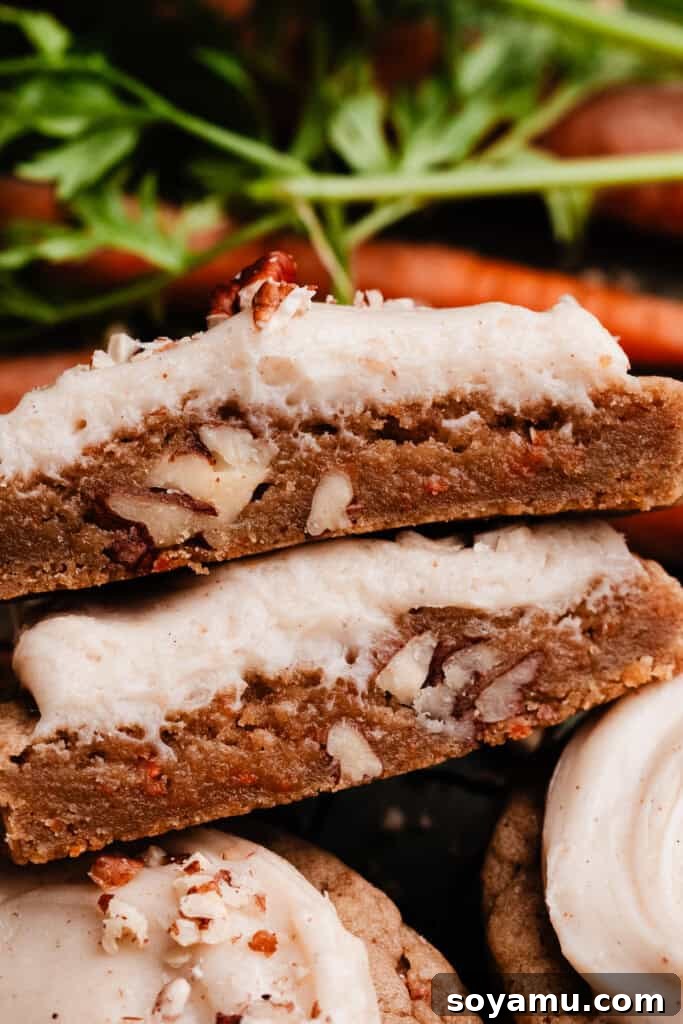
Once the cookies are completely cool, use a small cookie scoop or an offset spatula to dollop and spread the luscious brown butter cream cheese frosting onto each cookie. For a professional finish, you can pipe the frosting using a pastry bag and a decorative tip. Enjoy your freshly frosted carrot cake cookies immediately!
Serving Suggestions & Storage Tips for Your Carrot Cake Cookies
These Carrot Cake Cookies are perfect for any occasion, from casual gatherings to elegant dessert spreads. Their warm spices and creamy frosting make them especially popular during holidays like Easter or fall celebrations. Serve them with a cup of coffee, tea, or a cold glass of milk for a truly satisfying treat.
Storing Leftovers: Since the frosting contains cream cheese, it’s essential to store any leftover frosted cookies in an airtight container in the refrigerator. They will keep well for 4-5 days. For the best texture, let them come to room temperature for about 15-20 minutes before serving.
Freezing Cookie Dough & Baked Cookies: These cookies are also excellent for make-ahead convenience! You can ball the raw cookie dough and freeze it on a baking sheet until solid, then transfer to a freezer bag or airtight container. Freeze for 1-2 months. When ready to bake, place frozen dough balls on a prepared baking sheet and add 1-2 minutes to the bake time. They will hardly spread, but will be done when the edges look set. Similarly, baked and frosted cookies can be frozen. Place them on a baking sheet until solid, then wrap individually in plastic wrap and store in an airtight container for up to 1 month. Thaw in the refrigerator or at room temperature before serving.
Pro Baker’s Insights for Perfect Carrot Cake Cookies
Achieving consistently amazing baked goods often comes down to a few key techniques and tools. Here are some expert tips to ensure your Carrot Cake Cookies turn out perfectly every time:
- Grate Carrots Efficiently: A food processor is a true time-saver here! Most food processors come with a grating or shredding blade that has small holes, much like a box grater. This attachment will make grating your carrots incredibly quick and uniform, minimizing effort and mess. Remember to blot the moisture out!
- The Importance of an Oven Thermometer: Your oven’s internal thermometer can often be inaccurate, leading to inconsistent baking results. An inexpensive oven thermometer is a game-changer, allowing you to monitor the actual temperature inside your oven. Leaving one in at all times helps you calibrate your oven and ensures your bakes cook evenly and perfectly, preventing issues like over-spreading or under-baking.
- Precision with a Kitchen Scale: Baking is a science, and accurate measurements are paramount. A food scale is the most reliable way to measure dry ingredients like flour. The volume of flour can vary significantly depending on how you scoop it (e.g., spooning vs. scooping directly), and even between different measuring cup sets, as they are not universally standardized. Using a scale guarantees you have the correct weight of ingredients, leading to more consistent and successful baking outcomes.
- Room Temperature Ingredients: Ensure your butter, eggs, and cream cheese are at room temperature unless otherwise specified. Room temperature ingredients emulsify better, creating a smoother dough and frosting, which translates to a better texture in your finished product.
- Avoid Overmixing: Once you add the flour to your wet ingredients, mix only until just combined. Overmixing develops the gluten in the flour, which can lead to tough, dense cookies instead of soft and chewy ones.
- Don’t Skip the Chill Time: Chilling the dough is not just about preventing spread; it allows the flavors to deepen and the fats to solidify, contributing significantly to the cookie’s final texture and taste.
Frequently Asked Questions About Carrot Cake Cookies
A: The most common reason for cakey carrot cake cookies is too much moisture from the carrots. As long as you meticulously weighed your grated carrot both before and after blotting, and ensured you squeezed out enough liquid to reach the recommended weight (64-66 grams), your cookies should be beautifully chewy. If you skipped or rushed this crucial blotting step, the extra moisture will lead to a cake-like texture and excessive spreading.
A: Absolutely! While the recipe is designed to be one-bowl and no-mixer-required for the dough, a hand mixer or stand mixer can certainly be used, especially when mixing in the dry ingredients, carrots, and pecans. This can save some “elbow grease” and ensure the dough comes together quickly and smoothly.
A: No problem! A standard box grater (using the fine or medium holes) will work perfectly. It will just require a bit more manual effort. The key is to get the carrots finely grated, regardless of the tool, and then to properly blot out the excess moisture.
A: Yes, these cookies are excellent for making ahead! The cookie dough can be prepared and chilled in the refrigerator for up to 48 hours before baking. You can also freeze the balled dough for 1-2 months. The baked, unfrosted cookies can be stored in an airtight container at room temperature for up to 3 days, or frozen for longer. Just frost them once thawed and cooled.
A: While cinnamon and nutmeg provide the core flavor, you can enhance the spice profile with a quarter teaspoon of ground ginger, a pinch of allspice, or even a tiny touch of ground cloves for a warmer, more robust flavor. Feel free to adjust to your personal preference!
More Delicious Carrot & Easter Recipes to Love
If you enjoyed these Carrot Cake Cookies, you’ll love exploring more of our delightful recipes perfect for spring celebrations or any time you crave a comforting treat:
- Mini Carrot Cake
- Pineapple Carrot Cake
- Classic Carrot Cake
- Blueberry Cheesecake Bars
- Strawberry Cheesecake
Did you make this recipe? We’d love to hear from you! Leave a comment & star rating below!
Click the little stars in the header of the recipe card below to leave a comment & star rating, letting us know how you liked the recipe. Your feedback is invaluable and helps our small business immensely!
Carrot Cake Cookies
Stephanie Simmons
40
20
1
18
cookies
Pin
Rate
Ingredients
For the Brown Butter:
- 1 and 1/2 cups salted butter, cubed, 339 grams
For the Carrot:
- 1 cup + 2 tbsp grated carrot, 102 grams – use your food processor grater blade to make this a breeze!
For the Cookies:
- 14 and 1/2 tbsp salted butter, 206 grams (this is the weight after browning)
- 3/4 cup brown sugar, packed, you can use light or dark brown sugar! 163 grams
- 3/4 cup granulated sugar, 156 grams
- 2 large eggs, at room temperature
- 1 and 1/2 tsp vanilla extract
- 3 cups all-purpose flour, spooned & leveled , 390 grams
- 1 tsp baking powder
- 1 tsp baking soda
- 1/2 tsp salt
- 1/2 tsp cinnamon
- 1/4 tsp nutmeg
- 2/3 cup pecans, chopped
For the Frosting:
- 1/4 cup brown butter , 57 grams
- 8 ounces cream cheese , 226 grams
- 1 and 3/4 cups powdered sugar , 201 grams
- 1 tbsp vanilla extract
- pinch of salt
Instructions
-
Brown the Butter: Prep this (up to a week ahead) so it has time to cool. Brown the butter for the frosting and cookies together to save a step! Add butter to a medium saucepan over medium heat. Melt the butter, stirring occasionally. Once it’s melted, turn the heat to medium-low, and continue cooking the butter, stirring frequently. The butter will get foamy and bubbly, then turn a deep golden shade with a nutty, caramely aroma. (This will take about 4-6 minutes once the butter has melted.) Pour into a large bowl, making sure to scrape in the brown bits from the bottom of the pan, and pop into the fridge to cool until it’s at room temperature. If starting with solid brown butter from the fridge, melt it in the microwave before using. (See note about butter below.)1 and 1/2 cups salted butter, cubed
-
Prep the Carrot: Grate your carrot, and measure or weigh it out (weighing is the most accurate!). Place the grated carrot in a clean kitchen towel and squeeze out as much liquid as possible. Weigh it after removing the liquid – it should now weigh only 64 to 66 grams. Keep squeezing out more liquid until it reaches that weight. If you skip this step, the cookies will have too much liquid and will be cakey and will spread a lot in the oven.1 cup + 2 tbsp grated carrot
-
Make Cookie Dough: Measure 206 grams from your room temperature brown butter and add to a large mixing bowl. (Set aside the remaining 57 grams for the frosting. Save any leftover for a future bake!)
Whisk the sugars into the room temperature brown butter. Add the eggs and vanilla, and whisk until smooth and combined, about 30-45 seconds. Stir in the dry ingredients, then the carrots and pecans. (This takes a bit of elbow grease – feel free to use a mixer here and don’t fret if the dough seems a bit crumbly as you start mixing – it will come together!)
3/4 cup brown sugar, packed, 3/4 cup granulated sugar, 2 large eggs, at room temperature, 1 and 1/2 tsp vanilla extract, 3 cups all-purpose flour, spooned & leveled, 1 tsp baking powder, 1 tsp baking soda, 1/2 tsp salt, 1/2 tsp cinnamon, 1/4 tsp nutmeg, 2/3 cup pecans, chopped, 14 and 1/2 tbsp salted butter -
Scoop & Chill Dough Balls: Scoop dough balls 65 grams in size and chill in the fridge for at least 2 hours.
Yield: Feel free to make the cookies 45-50 grams in size to stretch the yield. Start with 1-2 mins less bake time.
-
Bake: Preheat your oven to 365℉. Place 5-6 cookies on a parchment paper lined baking sheet, with room in between for spreading. Bake for 9 to 10 minutes. The edges will appear set and the cookies will appear a tad puffy on top. Once out of the oven, immediately place a round cutter around the outside of each cookie and swirl the cookie within it to “scoot” them into perfect circles. Then, press down lightly on the top of each cookie with the flat part of a measuring cup, to make a flat surface for the frosting.
Let cookies cool on the pan set on a cooling rack until they’re set, then transfer to the cooling rack to finish cooling completely.
This bake temp may seem odd, but gives the perfect balance of a crisp exterior and chewy interior!
-
Make Frosting: Add the melted room temperature brown butter and cream cheese to a medium mixing bowl and cream on high speed with an electric mixer until well combined, about a minute. Add the powdered sugar and vanilla, and mix until creamy. If it’s not coming together, add 1-2 tsp of milk. Taste, and add a pinch of salt and or cinnamon to taste. Use a small cookie scoop to portion the frosting onto cookies, and spread it with an offset spatula.
If your frosting is weepy, refrigerate or freeze it until it’s a spreadable consistency!
8 ounces cream cheese, 1 and 3/4 cups powdered sugar, 1 tbsp vanilla extract, pinch of salt, 1/4 cup brown butter -
Serve & Store: Enjoy cookies once frosted! Store leftover cookies in an airtight container in the fridge for 4-5 days.
-
Freezing Cookie Dough & Make-Ahead Tips: Cookie dough can be balled, frozen on a sheet pan until solid, then transferred to a freezer bag or airtight container. Freeze for 1-2 months. Bake from frozen, adding 1-2 mins to the bake time. The cookies will hardly spread, but will be done when the edges appear and feel just set. Same goes if you refrigerate the dough balls (they keep 3-4 days in the fridge). Add 1 min or so to the bake time. They will not spread out of the fridge either.
Notes
Regular Butter: If you don’t want to brown your butter (but why not!?) use 206 grams or 14.5 tablespoons of regular salted butter instead.
Nutrition
Nutrition information is automatically calculated, so should only be used as an approximation.
Like this? Leave a comment below!